
Gritt raises $34 million to scale solar construction robots
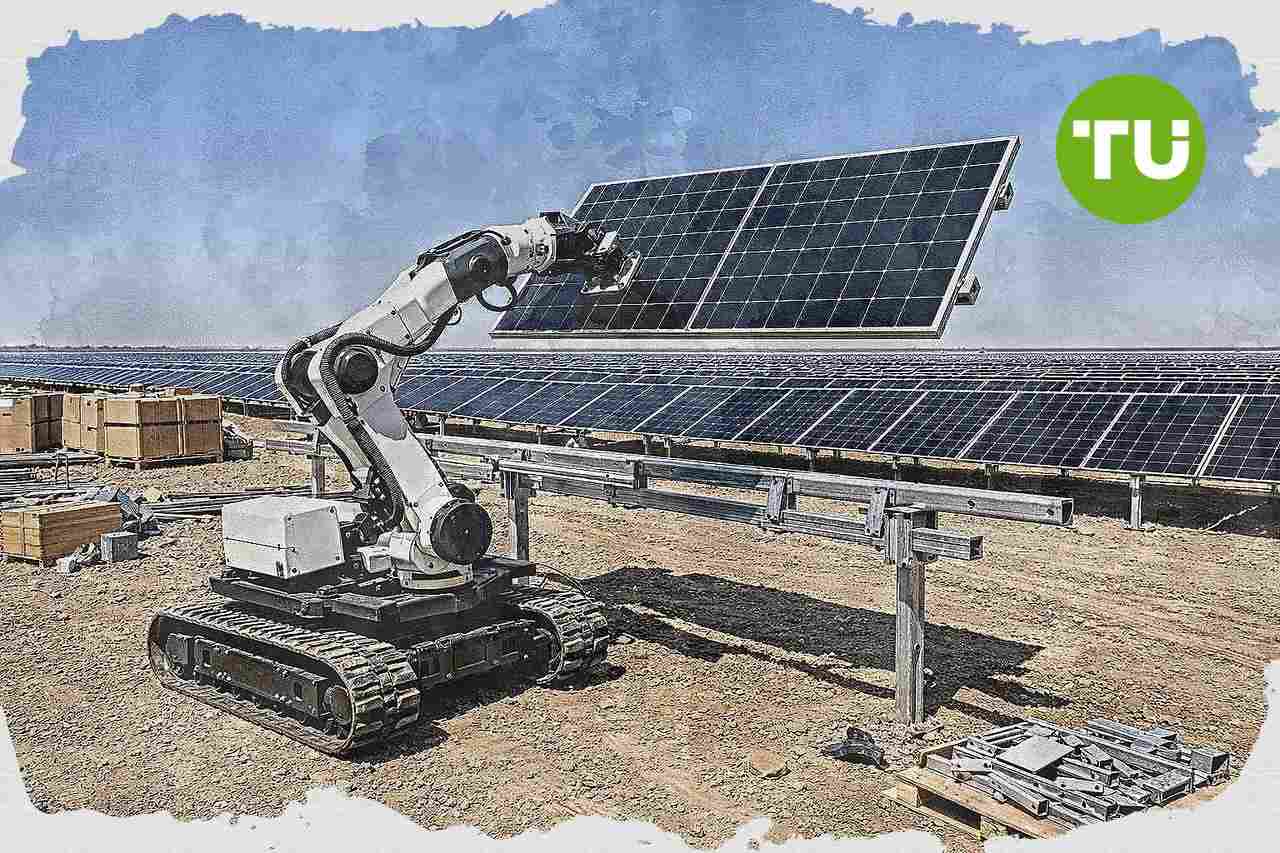
Amid a global push to expand solar capacity, labor shortages on installation sites are creating an opening for automation in difficult outdoor construction work. Gritt is emerging from stealth with $34 million in total funding as it targets solar plant deployment first and plans to expand its AI-driven robotic systems into other infrastructure tasks.
Highlights
- Gritt raised $26 million in Series A funding led by Obvious Ventures, bringing its total funding to $34 million for AI-driven solar construction robots.
- Gritt's deployed systems enable an eight-person crew to install 3,000–4,000 solar panels daily, compared to the traditional 800 panels, significantly increasing installation productivity.
- Gritt is contracted for 2.8 GW of solar installations over 18 months, plans to operate 48 systems in six months, and targets expanding into additional construction automation tasks.
Funding round and solar deployment plan
As first reported by TechCrunch, Gritt is coming out of stealth with a $26 million Series A led by Obvious Ventures, with participation from Union Square Ventures and Active Impact Investment. The round brings the startup's total funding to $34 million after an earlier seed round backed by First Round Capital, Climactic, Congruent Ventures, and VSC Ventures.Founded by Carnegie Mellon-trained roboticists Puneet Puri, chief executive, and Vishal Dugar, chief technology officer, Gritt is building AI-controlled systems for construction sites using off-the-shelf hardware such as rented skidders and robotic arms from companies including Kawasaki. Its first application focuses on unloading solar panels, transporting them to mounting structures, and positioning them with sub-millimeter accuracy before workers fasten them.
Gritt says two systems are already deployed in the field and are collecting data to improve performance. Puri says an eight-person crew typically installs about 800 panels a day, while the same-sized crew working with Gritt's systems can install 3,000 to 4,000 panels daily.
Construction market impact and expansion ambitions
The company says it is contracted to support the installation of 2.8 gigawatts of solar panels over the next 18 months, and that its customers include three of the top 10 U.S. power construction companies. It is aiming to have 48 systems operating within the next six months, positioning itself to benefit from rising demand for faster solar project delivery.Gritt is entering a competitive field that includes Luminous Robotics, Cosmic, and China's Trinabot, all of which are developing their own panel-installing robots. Gritt's reliance on commercially available vehicles and robotic arms, rather than building all hardware in-house, could affect how quickly it scales and how lean its cost base remains as adoption grows.
The startup plans to add tasks including fastening solar panels, drilling posts, and building the racks that hold the panels, before moving into other labor-intensive construction work such as tying rebar. Its founders say newer AI models make those expansions more practical because the same software pipeline can be adapted across tasks and improved over time, while also creating a broader site intelligence layer that could help crews monitor risks, protect materials, and manage inventory.
In our earlier article on IQE’s upgraded 2026 outlook, we covered how stronger first-half trading led the UK chip wafer maker to raise its revenue growth forecast to above 30%. We noted that accelerating demand for Indium Phosphide solutions used in AI infrastructure and data centres was a key driver, alongside contributions from aerospace, defence, 3D sensing and wireless products.


Latest AI News




-
 Afghanistan
-
 Albania
-
 Algeria
-
 Angola
-
 Argentina
-
 Armenia
-
 Australia
-
 Austria
-
 Azerbaijan
-
 Bahamas
-
 Bahrain
-
 Bangladesh
-
 Belarus
-
 Belgium
-
 Bolivia
-
 Botswana
-
 Brazil
-
 Brunei
-
 Bulgaria
-
 Cambodia
-
 Cameroon
-
 Canada
-
 Chile
Chile
-
 China
China
-
 Colombia
-
 Congo
Congo
-
 Costa Rica
-
 Cote d'Ivoire
-
 Croatia
-
 Cuba
Cuba
-
 Cyprus
-
 Czechia
-
 DR Congo
-
 Denmark
-
 Dominican Republic
-
 Ecuador
-
 Egypt
Egypt
-
 El Salvador
-
 Estonia
-
 Eswatini
-
 Ethiopia
-
 Finland
-
 France
-
 Georgia
-
 Germany
-
 Ghana
Ghana
-
 Greece
-
 Haiti
Haiti
-
 Hong Kong
-
 Hungary
-
 India
India
-
 Indonesia
-
 Iran, Islamic republic
-
 Iraq
Iraq
-
 Ireland
-
 Israel
-
 Italy
Italy
-
 Jamaica
-
 Japan
Japan
-
 Jordan
-
 Kazakhstan
-
 Kenya
Kenya
-
 Korea
Korea
-
 Kuwait
-
 Kyrgyzstan
-
 Laos
Laos
-
 Latvia
-
 Lebanon
-
 Lesotho
-
 Libya
Libya
-
 Lithuania
-
 Luxembourg
-
 Madagascar
-
 Malaysia
-
 Malta
Malta
-
 Mauritius
-
 Mexico
-
 Moldova
-
 Mongolia
-
 Montenegro
-
 Morocco
-
 Mozambique
-
 Myanmar
-
 Namibia
-
 Nepal
Nepal
-
 Netherlands
-
 New Zealand
-
 Nigeria
-
 North Macedonia
-
 Norway
-
 Oman
Oman
-
 Pakistan
-
 Palestine
-
 Panama
-
 Papua New Guinea
-
 Paraguay
-
 Peru
Peru
-
 Philippines
-
 Poland
-
 Portugal
-
 Puerto Rico
-
 Qatar
Qatar
-
 Reunion
-
 Romania
-
 Rwanda
-
 Saudi Arabia
-
 Serbia
-
 Singapore
-
 Slovakia
-
 Slovenia
-
 Somalia
-
 South Africa
-
 Spain
Spain
-
 Sri Lanka
-
 Sweden
-
 Switzerland
-
 Syria
Syria
-
 Taiwan
-
 Tajikistan
-
 Tanzania
-
 Thailand
-
 Trinidad and Tobago
-
 Tunisia
-
 Turkey
-
 UAE
UAE
-
 Uganda
-
 Ukraine
-
 United Kingdom
-
United States
-
 Uruguay
-
 Uzbekistan
-
 Venezuela
-
 Vietnam
-
 Yemen
Yemen
-
 Zambia
-
 Zimbabwe
- Forex
- Crypto












