
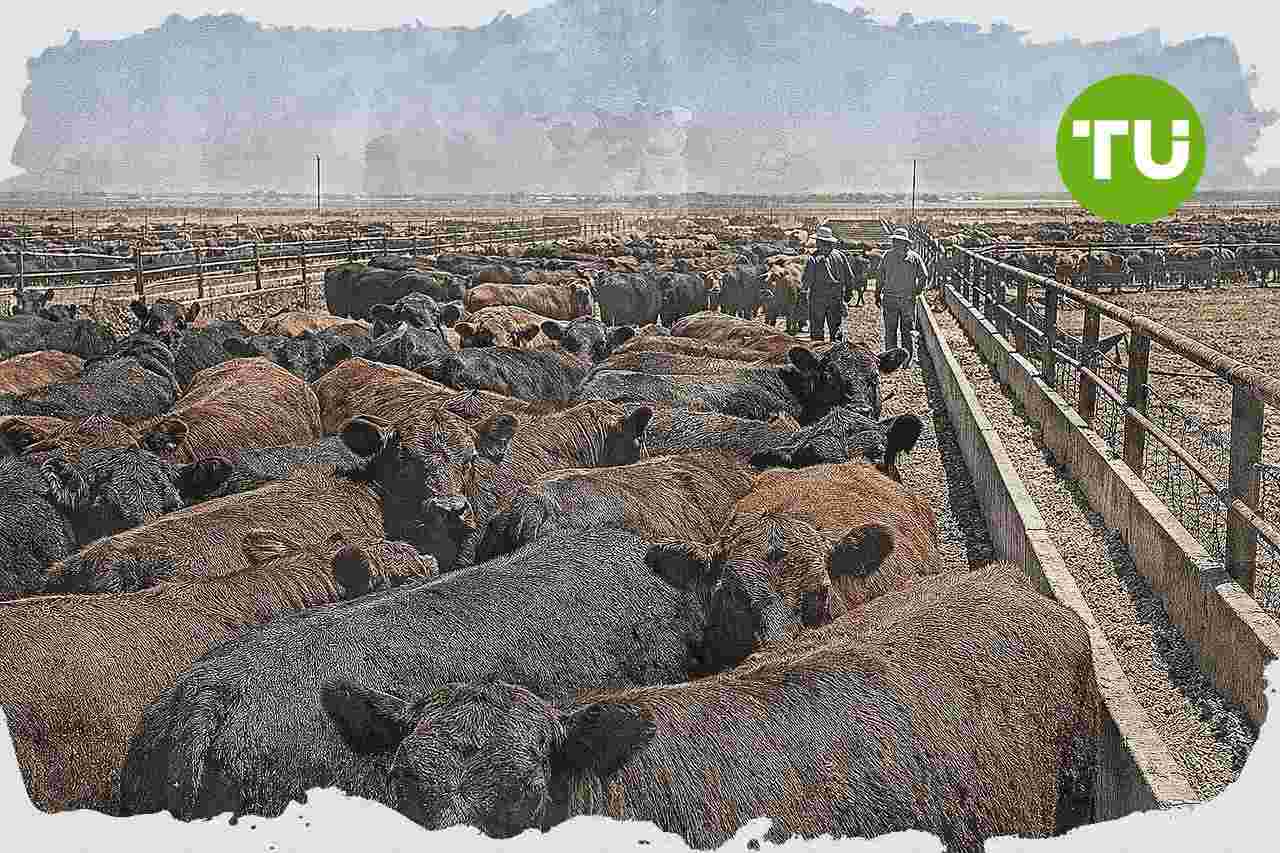
The U.S. cattle industry enters the second half of 2026 with 94.2 million head of cattle and calves on farms as of July 1. The latest federal snapshot shows a smaller beef cow herd than a year earlier, while milk cows and cattle on feed both increase.
Highlights
- The U.S. cattle and calves inventory stands at 94.2 million head as of July 1, 2026, per USDA’s July 24 Cattle report.
- Beef cows declined 1% year-on-year to 28.5 million, while the 2026 U.S. calf crop estimate is 32.5 million head, down 2% from 2025.
- Cattle on feed rose 2% to 13.2 million head, indicating continued feedlot strength despite persistent pressure on the beef cow herd.
July survey details and herd breakdown
As reported by National Agricultural Statistics Service, citing the U.S. Department of Agriculture’s National Agricultural Statistics Service, the Cattle report published on July 24 says there are 94.2 million head of cattle and calves on U.S. farms as of July 1, 2026.Within that total, all cows and heifers that have calved amount to 38.1 million head. Beef cows in the United States stand at 28.5 million, down 1% from last year, while the number of milk cows increases to 9.65 million.
The report also estimates the U.S. calf crop at 32.5 million head, down 2% from 2025. All cattle on feed reach 13.2 million head, up 2% from 2025.
Industry implications and survey scope
NASS says it surveyed more than 17,400 operators across the country during the first half of July to measure current cattle industry conditions. Producers report cattle inventories as of July 1, 2026, and the calf crop for the full year of 2026 through internet, mail or telephone responses.The figures point to continued pressure in the beef herd even as feedlot numbers rise and the dairy segment expands modestly. That mix matters for U.S. livestock markets because it shapes beef supply expectations, replacement decisions and the balance between herd rebuilding and near-term production.
In our earlier report on the legal challenge to the Trump administration’s new forced-labor tariffs, we covered how two U.S. small businesses sued in the New York trade court arguing the duties exceed presidential authority and lack sufficiently detailed country-specific findings. We also outlined what an adverse ruling could mean for import costs, future labor-linked trade restrictions, and supply chains spanning dozens of trading partners.


Latest Commodities News







-
 Afghanistan
-
 Albania
-
 Algeria
-
 Angola
-
 Argentina
-
 Armenia
-
 Australia
-
 Austria
-
 Azerbaijan
-
 Bahamas
-
 Bahrain
-
 Bangladesh
-
 Belarus
-
 Belgium
-
 Bolivia
-
 Botswana
-
 Brazil
-
 Brunei
-
 Bulgaria
-
 Cambodia
-
 Cameroon
-
 Canada
-
 Chile
Chile
-
 China
China
-
 Colombia
-
 Congo
Congo
-
 Costa Rica
-
 Cote d'Ivoire
-
 Croatia
-
 Cuba
Cuba
-
 Cyprus
-
 Czechia
-
 DR Congo
-
 Denmark
-
 Dominican Republic
-
 Ecuador
-
 Egypt
Egypt
-
 El Salvador
-
 Estonia
-
 Eswatini
-
 Ethiopia
-
 Finland
-
 France
-
 Georgia
-
 Germany
-
 Ghana
Ghana
-
 Greece
-
 Haiti
Haiti
-
 Hong Kong
-
 Hungary
-
 India
India
-
 Indonesia
-
 Iran, Islamic republic
-
 Iraq
Iraq
-
 Ireland
-
 Israel
-
 Italy
Italy
-
 Jamaica
-
 Japan
Japan
-
 Jordan
-
 Kazakhstan
-
 Kenya
Kenya
-
 Korea
Korea
-
 Kuwait
-
 Kyrgyzstan
-
 Laos
Laos
-
 Latvia
-
 Lebanon
-
 Lesotho
-
 Libya
Libya
-
 Lithuania
-
 Luxembourg
-
 Madagascar
-
 Malaysia
-
 Malta
Malta
-
 Mauritius
-
 Mexico
-
 Moldova
-
 Mongolia
-
 Montenegro
-
 Morocco
-
 Mozambique
-
 Myanmar
-
 Namibia
-
 Nepal
Nepal
-
 Netherlands
-
 New Zealand
-
 Nigeria
-
 North Macedonia
-
 Norway
-
 Oman
Oman
-
 Pakistan
-
 Palestine
-
 Panama
-
 Papua New Guinea
-
 Paraguay
-
 Peru
Peru
-
 Philippines
-
 Poland
-
 Portugal
-
 Puerto Rico
-
 Qatar
Qatar
-
 Reunion
-
 Romania
-
 Rwanda
-
 Saudi Arabia
-
 Serbia
-
 Singapore
-
 Slovakia
-
 Slovenia
-
 Somalia
-
 South Africa
-
 Spain
Spain
-
 Sri Lanka
-
 Sweden
-
 Switzerland
-
 Syria
Syria
-
 Taiwan
-
 Tajikistan
-
 Tanzania
-
 Thailand
-
 Trinidad and Tobago
-
 Tunisia
-
 Turkey
-
 UAE
UAE
-
 Uganda
-
 Ukraine
-
 United Kingdom
-
United States
-
 Uruguay
-
 Uzbekistan
-
 Venezuela
-
 Vietnam
-
 Yemen
Yemen
-
 Zambia
-
 Zimbabwe
- Forex
- Crypto












