

Apple valuation premium reflects investor demand for lower AI risk exposure

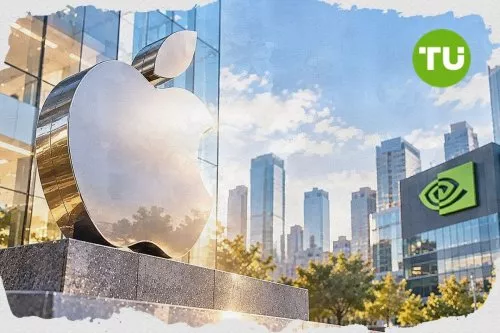
Apple is trading at a richer earnings multiple than most of its biggest technology peers as investors reassess the risks tied to the AI boom. The market is rewarding the iPhone maker's privacy-focused model and relative distance from the heaviest AI infrastructure spending, even as its own growth remains slower than other large-cap tech groups.
Highlights
- Apple trades at about 36 times forward earnings, its highest multiple since the early iPhone era, surpassing Microsoft, Alphabet, Amazon, Nvidia, and Meta.
- Investors value Apple's relative insulation from the high capital expenditure and uncertain returns of AI infrastructure compared to its tech peers.
- Apple's valuation premium reflects investor trust in its privacy-focused approach, but reliance on Google’s AI infrastructure could undermine that perception.
Valuation gap widens as AI caution grows
As reported by Financial Times, Apple has opened a sustained valuation premium over Microsoft, Alphabet, Amazon, Nvidia and Meta, with only Tesla trading on a higher price-to-earnings ratio because of weaker earnings. At about 36 times expected earnings for the coming year, Apple's multiple stands at its highest level since the early iPhone era, despite forecasts for only high single-digit earnings growth over the next few years.That divergence is notable because Apple still faces familiar constraints, including input cost inflation and slower expansion in its services business. For years, investors also discounted the stock on concerns that smartphone dominance could fade, but the current market appears more willing to pay for stability than for maximum exposure to AI-led growth.
UBS analyst David Vogt says Apple tends to act countercyclically in periods when investor risk appetite shifts. In that view, the company benefits as doubts grow over whether tens of billions of dollars in capital expenditure for AI infrastructure will generate adequate returns, leaving Apple relatively insulated because it is not leading the industry's spending race.
Trust becomes part of the investment case
Apple's premium also reflects a broader belief that trust has become a scarce asset in technology markets. The company has long built its consumer proposition around privacy, and chief executive John Ternus repeats that message at the latest iPhone launch by saying Apple Intelligence runs on-device where possible and relies on an encrypted private cloud when extra computing power is needed.That positioning contrasts with AI companies that still struggle to give clear assurances about safety, accountability and control over their products. The article argues that while firms such as Google, OpenAI and Anthropic point to industry standards, outside monitors or government oversight, they have yet to make the sort of direct, hard commitments to users that helped Apple strengthen customer loyalty.
Even so, Apple is not fully shielded from the pressures of the AI era. The company wants its devices to serve as a leading platform for AI services, but some of its foundation models are set to run on Google's infrastructure, raising questions over whether Apple can preserve its privacy promise while giving up some control. That tension suggests the company's closed ecosystem may also need to adapt, because AI services are harder to contain inside a traditional walled garden.
Our earlier article looked at the current gaps in U.S. law that leave many AI developers without a broad obligation to publicly disclose dangerous model behavior unless existing triggers apply, such as investor impact, data breaches, or consumer harm. It also highlighted new state-level moves like California’s risk-assessment disclosure requirement for large AI companies and discussed federal proposals that could introduce stricter incident-reporting and duty-of-care expectations for AI firms.










-
 Afghanistan
-
 Albania
-
 Algeria
-
 Angola
-
 Argentina
-
 Armenia
-
 Australia
-
 Austria
-
 Azerbaijan
-
 Bahamas
-
 Bahrain
-
 Bangladesh
-
 Belarus
-
 Belgium
-
 Bolivia
-
 Botswana
-
 Brazil
-
 Brunei
-
 Bulgaria
-
 Cambodia
-
 Cameroon
-
 Canada
-
 Chile
-
 China
-
 Colombia
-
 Congo
-
 Costa Rica
-
 Cote d'Ivoire
-
 Croatia
-
 Cuba
-
 Cyprus
-
 Czechia
-
 DR Congo
-
 Denmark
-
 Dominican Republic
-
 Ecuador
-
 Egypt
-
 El Salvador
-
 Estonia
-
 Eswatini
-
 Ethiopia
-
 Finland
-
 France
-
 Georgia
-
 Germany
-
 Ghana
-
 Greece
-
 Haiti
-
 Hong Kong
-
 Hungary
-
 India
-
 Indonesia
-
 Iran, Islamic republic
-
 Iraq
-
 Ireland
-
 Israel
-
 Italy
-
 Jamaica
-
 Japan
-
 Jordan
-
 Kazakhstan
-
 Kenya
-
 Korea
-
 Kuwait
-
 Kyrgyzstan
-
 Laos
-
 Latvia
-
 Lebanon
-
 Lesotho
-
 Libya
-
 Lithuania
-
 Luxembourg
-
 Madagascar
-
 Malaysia
-
 Malta
-
 Mauritius
-
 Mexico
-
 Moldova
-
 Mongolia
-
 Montenegro
-
 Morocco
-
 Mozambique
-
 Myanmar
-
 Namibia
-
 Nepal
-
 Netherlands
-
 New Zealand
-
 Nigeria
-
 North Macedonia
-
 Norway
-
 Oman
-
 Pakistan
-
 Palestine
-
 Panama
-
 Papua New Guinea
-
 Paraguay
-
 Peru
-
 Philippines
-
 Poland
-
 Portugal
-
 Puerto Rico
-
 Qatar
-
 Reunion
-
 Romania
-
 Rwanda
-
 Saudi Arabia
-
 Serbia
-
 Singapore
-
 Slovakia
-
 Slovenia
-
 Somalia
-
 South Africa
-
 Spain
-
 Sri Lanka
-
 Sweden
-
 Switzerland
-
 Syria
-
 Taiwan
-
 Tajikistan
-
 Tanzania
-
 Thailand
-
 Trinidad and Tobago
-
 Tunisia
-
 Turkey
-
 UAE
-
 Uganda
-
 Ukraine
-
 United Kingdom
-
United States
-
 Uruguay
-
 Uzbekistan
-
 Venezuela
-
 Vietnam
-
 Yemen
-
 Zambia
-
 Zimbabwe
- Forex
- Crypto












