

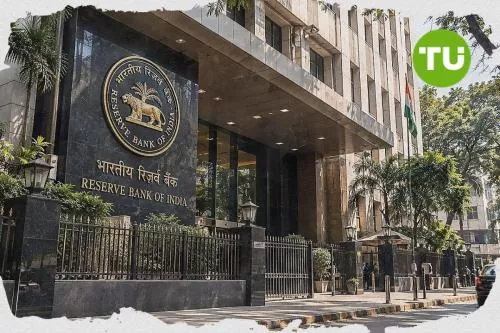
The Reserve Bank of India announced the results of the state government securities auction held on September 22

As part of the process of meeting the borrowing needs of Indian states, the Reserve Bank of India has announced the results of the state government securities auction held on September 22, 2026. The auction is also linked to financing public infrastructure investment while maintaining adequate liquidity and balanced credit flows in the economy.
Highlights
- The Reserve Bank of India announced the results of the state government securities auction held on September 22, 2026, with detailed information to be released later.
- State government securities auctions are held to meet states' financial needs and facilitate market-based borrowing.
- The auction mechanism plays a central role in promoting financial inclusion, balancing credit flows, and maintaining liquidity in the economy.
This article was translated from the original. Read the original version by our correspondent here.
Auction Results and Financing Context
According to the Reserve Bank of India's official release, the results of the yield- and price-based auction of state government securities held on September 22, 2026, have been released. This process is conducted to meet the financial requirements of the respective state governments and forms part of the broader government borrowing programme.The release stated that detailed data on the specific securities included in the auction, their yields, and bidder response will be available following further analysis. For now, the central bank has only announced the results, while greater clarity on detailed market indicators is expected later.
Potential Impact on States and the Financial System
Such auctions of state government securities remain a key means of raising funds for states' capital expenditure and other public spending. The process gives states access to market-based borrowing, while offering investors an opportunity to invest in sub-national debt instruments within a sovereign framework.According to the central bank, this mechanism also supports the broader objective of inclusive financial development. At the same time, such auctions play an important role in maintaining adequate liquidity and balancing credit flows in the economy.
Our previous report discussed the growing coordination between the central and state governments on raising financing for ‘Viksit Bharat 2047’. It noted that, given the scale of the targets, budgetary resources alone will not be sufficient. Therefore, the focus is on mobilising private and multilateral capital with state participation and making projects more bankable.





Latest Reserve Bank of India News




-
 Afghanistan
-
 Albania
-
 Algeria
-
 Angola
-
 Argentina
-
 Armenia
-
 Australia
-
 Austria
-
 Azerbaijan
-
 Bahamas
-
 Bahrain
-
 Bangladesh
-
 Belarus
-
 Belgium
-
 Bolivia
-
 Botswana
-
 Brazil
-
 Brunei
-
 Bulgaria
-
 Cambodia
-
 Cameroon
-
 Canada
-
 Chile
Chile
-
 China
China
-
 Colombia
-
 Congo
Congo
-
 Costa Rica
-
 Cote d'Ivoire
-
 Croatia
-
 Cuba
Cuba
-
 Cyprus
-
 Czechia
-
 DR Congo
-
 Denmark
-
 Dominican Republic
-
 Ecuador
-
 Egypt
Egypt
-
 El Salvador
-
 Estonia
-
 Eswatini
-
 Ethiopia
-
 Finland
-
 France
-
 Georgia
-
 Germany
-
 Ghana
Ghana
-
 Greece
-
 Haiti
Haiti
-
 Hong Kong
-
 Hungary
-
 India
India
-
 Indonesia
-
 Iran, Islamic republic
-
 Iraq
Iraq
-
 Ireland
-
 Israel
-
 Italy
Italy
-
 Jamaica
-
 Japan
Japan
-
 Jordan
-
 Kazakhstan
-
 Kenya
Kenya
-
 Korea
Korea
-
 Kuwait
-
 Kyrgyzstan
-
 Laos
Laos
-
 Latvia
-
 Lebanon
-
 Lesotho
-
 Libya
Libya
-
 Lithuania
-
 Luxembourg
-
 Madagascar
-
 Malaysia
-
 Malta
Malta
-
 Mauritius
-
 Mexico
-
 Moldova
-
 Mongolia
-
 Montenegro
-
 Morocco
-
 Mozambique
-
 Myanmar
-
 Namibia
-
 Nepal
Nepal
-
 Netherlands
-
 New Zealand
-
 Nigeria
-
 North Macedonia
-
 Norway
-
 Oman
Oman
-
 Pakistan
-
 Palestine
-
 Panama
-
 Papua New Guinea
-
 Paraguay
-
 Peru
Peru
-
 Philippines
-
 Poland
-
 Portugal
-
 Puerto Rico
-
 Qatar
Qatar
-
 Reunion
-
 Romania
-
 Rwanda
-
 Saudi Arabia
-
 Serbia
-
 Singapore
-
 Slovakia
-
 Slovenia
-
 Somalia
-
 South Africa
-
 Spain
Spain
-
 Sri Lanka
-
 Sweden
-
 Switzerland
-
 Syria
Syria
-
 Taiwan
-
 Tajikistan
-
 Tanzania
-
 Thailand
-
 Trinidad and Tobago
-
 Tunisia
-
 Turkey
-
 UAE
UAE
-
 Uganda
-
 Ukraine
-
 United Kingdom
-
United States
-
 Uruguay
-
 Uzbekistan
-
 Venezuela
-
 Vietnam
-
 Yemen
Yemen
-
 Zambia
-
 Zimbabwe
- Forex
- Crypto












