

Houthi attacks on Saudi Arabia raise fears of wider Middle East war

Houthi attacks on Riyadh's international airport have heightened fears of a wider Middle East conflict, putting Saudi Arabia under pressure to intensify its military campaign in Yemen. The escalation could also draw in the United States and regional defense partners as attacks spread to civilian infrastructure and commercial shipping.
Highlights
- Houthi strikes kill 12 people in Riyadh.
- Tanker attacks threaten regional shipping.
- Brent and WTI decline despite escalation.
According to Bloomberg, Saturday's strike killed 12 people and wounded 309, while a second attack on Sunday killed one person and injured 11. The Iran-backed Houthis claimed responsibility, describing the strikes as retaliation for Saudi military operations in Yemen, including an attack on the airport in Sanaa.
Saudi Arabia faces pressure to escalate military operations
The airport attacks followed renewed fighting near Bab el-Mandeb, a strategic waterway connecting the Red Sea with the Gulf of Aden. Houthi forces recently captured territory around the Yemeni port of Mokha, prompting a counteroffensive by government troops supported by Saudi fighter jets.Saudi-led forces say they have recaptured Mokha and destroyed several Houthi military facilities. However, the group retains Iranian-designed ballistic missiles and locally assembled attack drones capable of reaching major Saudi cities.
The strikes have disrupted hundreds of flights and forced schools and businesses in Riyadh to shift to remote operations. They also threaten to reverse the relative calm established after a United Nations-brokered truce in 2022, which had allowed Saudi Arabia to reduce its involvement in Yemen.
U.S. and regional allies consider their response
Washington faces additional pressure after an American citizen was among those killed in Saturday's attack. President Donald Trump has indicated that U.S. military action remains possible, although American support for the Saudi campaign has largely involved intelligence sharing.Turkey, Pakistan, and Egypt joined Saudi Arabia in condemning the attacks. Ankara and Islamabad signed a defense agreement with Riyadh in August, but Turkey has ruled out participating in offensive operations against the Houthis.
Saudi Arabia's security challenges are also affecting its international business agenda. Executives from major energy companies withdrew from an industry conference in Riyadh, while foreign governments issued new travel warnings.
Tanker attacks threaten regional shipping routes
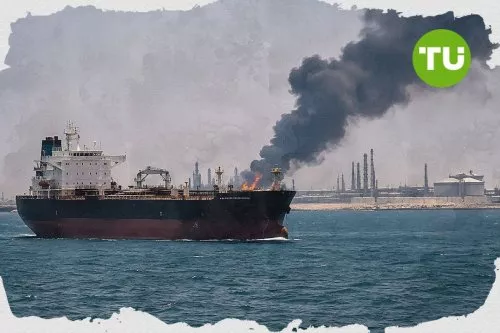
The escalation has extended to commercial shipping, with fresh attacks reported against tankers around the Strait of Hormuz. The incidents have renewed concerns about the safety of vessels transporting crude oil from the Persian Gulf to international markets.The Houthis also hold positions near Bab el-Mandeb, another critical passage for maritime trade. Continued fighting around both waterways could complicate shipping operations and increase security costs for energy exporters.
Oil prices show mixed performance despite regional tensions
Oil prices traded mixed on Monday as investors weighed the risk of further disruptions to Middle Eastern energy supplies against President Donald Trump's claim of an energy ceasefire between Russia and Ukraine.Brent crude rose 0.23% to $104.77 per barrel, gaining $0.24, while U.S. West Texas Intermediate (WTI) fell 0.23% to $91.46 per barrel, losing $0.21, according to the latest market data.
The divergence comes as Houthi attacks on Saudi Arabia and threats to commercial shipping raise concerns about regional supply security. Continued fighting near Bab el-Mandeb and renewed tanker attacks around the Strait of Hormuz could increase risks for oil shipments, even as traders assess the potential for reduced disruptions to Russian energy infrastructure.
We also reported Pakistan urges UN action to protect Red Sea shipping and advance Yemen settlement.






Latest Iran war News


-
 Afghanistan
-
 Albania
-
 Algeria
-
 Angola
-
 Argentina
-
 Armenia
-
 Australia
-
 Austria
-
 Azerbaijan
-
 Bahamas
-
 Bahrain
-
 Bangladesh
-
 Belarus
-
 Belgium
-
 Bolivia
-
 Botswana
-
 Brazil
-
 Brunei
-
 Bulgaria
-
 Cambodia
-
 Cameroon
-
 Canada
-
 Chile
-
 China
-
 Colombia
-
 Congo
-
 Costa Rica
-
 Cote d'Ivoire
-
 Croatia
-
 Cuba
-
 Cyprus
-
 Czechia
-
 DR Congo
-
 Denmark
-
 Dominican Republic
-
 Ecuador
-
 Egypt
-
 El Salvador
-
 Estonia
-
 Eswatini
-
 Ethiopia
-
 Finland
-
 France
-
 Georgia
-
 Germany
-
 Ghana
-
 Greece
-
 Haiti
-
 Hong Kong
-
 Hungary
-
 India
-
 Indonesia
-
 Iran, Islamic republic
-
 Iraq
-
 Ireland
-
 Israel
-
 Italy
-
 Jamaica
-
 Japan
-
 Jordan
-
 Kazakhstan
-
 Kenya
-
 Korea
-
 Kuwait
-
 Kyrgyzstan
-
 Laos
-
 Latvia
-
 Lebanon
-
 Lesotho
-
 Libya
-
 Lithuania
-
 Luxembourg
-
 Madagascar
-
 Malaysia
-
 Malta
-
 Mauritius
-
 Mexico
-
 Moldova
-
 Mongolia
-
 Montenegro
-
 Morocco
-
 Mozambique
-
 Myanmar
-
 Namibia
-
 Nepal
-
 Netherlands
-
 New Zealand
-
 Nigeria
-
 North Macedonia
-
 Norway
-
 Oman
-
 Pakistan
-
 Palestine
-
 Panama
-
 Papua New Guinea
-
 Paraguay
-
 Peru
-
 Philippines
-
 Poland
-
 Portugal
-
 Puerto Rico
-
 Qatar
-
 Reunion
-
 Romania
-
 Rwanda
-
 Saudi Arabia
-
 Serbia
-
 Singapore
-
 Slovakia
-
 Slovenia
-
 Somalia
-
 South Africa
-
 Spain
-
 Sri Lanka
-
 Sweden
-
 Switzerland
-
 Syria
-
 Taiwan
-
 Tajikistan
-
 Tanzania
-
 Thailand
-
 Trinidad and Tobago
-
 Tunisia
-
 Turkey
-
 UAE
-
 Uganda
-
 Ukraine
-
 United Kingdom
-
United States
-
 Uruguay
-
 Uzbekistan
-
 Venezuela
-
 Vietnam
-
 Yemen
-
 Zambia
-
 Zimbabwe
- Forex
- Crypto












