

UnitedHealth options signal elevated earnings risk ahead of quarterly report

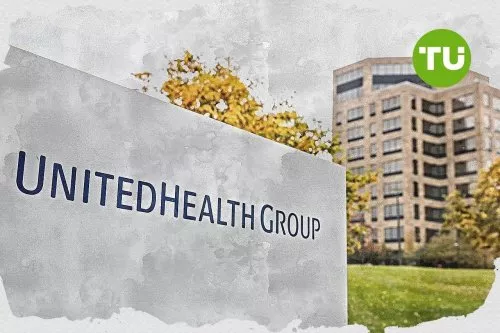
UnitedHealth Group enters its quarterly earnings report with options markets pricing in a far sharper move than the stock has recently delivered. The setup highlights investor caution around healthcare cost pressures while also creating room for derivatives strategies that seek to reduce the cost of longer-dated bullish positions.
Highlights
- Implied volatility for UnitedHealth options is about twice realized volatility ahead of October 13 earnings, with options pricing in a 6.5% earnings move.
- A November 340/420 strangle sale partly finances a January 2027 400 call, resulting in a $7.60 net debit and breakeven near $407.60 if shares remain between 340 and 420 through November expiration.
- UnitedHealth targets 13% to 16% EPS growth as U.S. commercial fee-based enrollment rises 2.9% and Medicare enrollment 4.5%, but valuation at 17 times forward earnings and flat five-year share performance signals investor caution.
Options pricing and earnings setup
As reported by CNBC, implied volatility in UnitedHealth shares is running at about twice realized volatility ahead of the company’s October 13 earnings release, indicating that options protection is unusually expensive before the report.That gap matters for traders because elevated premiums can favor short volatility strategies. Current options prices imply a roughly 6.5% earnings move, based on Cboe LiveVol data, while the market is pricing about 40% volatility for a stock that has been realizing closer to 20%. The higher reading reflects both this week’s earnings event and the stock’s history of large post-results swings, including an almost 20% drop in January and another sharp decline in April 2025.
One strategy discussed for UNH is to sell the November 340/420 strangle to help finance the purchase of the January 2027 400 call. Buying the January 400 call costs $18.20, while selling the November 420 call at $5.80 and the November 340 put at $4.80 brings in $10.60, leaving a net debit of about $7.60. If the shares finish November between 340 and 420, both short options expire worthless and the long January call is effectively held with a breakeven near $407.60 at expiration.
A move above 420 is offset by the long 400 call, while the main downside risk emerges if the stock closes below 340, which would mean assignment at an effective basis near $347.60 including the initial debit. UNH is currently about 12% to 13% below the midpoint of its two-year high and low range, and it has traded lower in five of its last eight earnings reactions.
Valuation and insurance fundamentals
Beyond the derivatives setup, the earnings case rests on whether UnitedHealth can sustain enrollment growth and underwriting margins as healthcare costs remain a headwind. Management’s target for 13% to 16% earnings-per-share growth appears achievable in the analysis, even as ACA marketplace-driven enrollment looks set to decline and weigh on a business line that had been supporting growth.UnitedHealth says 90% of its 52 million customers worldwide are in the U.S., and the company estimates it covers about 12% to 13.5% of the U.S. population. Commercial fee-based enrollment grew about 2.9% year over year between 2024 and 2025, while total Medicare enrollment grew 4.5%. Compared with U.S. workforce growth of about 1.4% over the same period, that suggests the company is still gaining market share in commercial coverage.
At roughly 17 times forward earnings, with free cash flow equal to 5.7% of enterprise value and 6.5% of market capitalization, the stock is not being priced for a strong recovery. Shares have been broadly flat over the past five years, indicating that investors remain focused on execution and medical cost trends rather than assigning a premium for renewed growth.
Our earlier article on 2027 U.S. health insurance open enrollment explained the key sign-up windows for ACA marketplace coverage and why consumers need to compare networks, formularies, deductibles, and out-of-pocket limits—not just monthly premiums. It also outlined practical trade-offs between plan types (PPO, HMO, EPO, POS) and when health savings account eligibility may matter as healthcare costs and benefit designs grow more complex.





Latest UnitedHealth News





-
 Afghanistan
-
 Albania
-
 Algeria
-
 Angola
-
 Argentina
-
 Armenia
-
 Australia
-
 Austria
-
 Azerbaijan
-
 Bahamas
-
 Bahrain
-
 Bangladesh
-
 Belarus
-
 Belgium
-
 Bolivia
-
 Botswana
-
 Brazil
-
 Brunei
-
 Bulgaria
-
 Cambodia
-
 Cameroon
-
 Canada
-
 Chile
Chile
-
 China
China
-
 Colombia
-
 Congo
Congo
-
 Costa Rica
-
 Cote d'Ivoire
-
 Croatia
-
 Cuba
Cuba
-
 Cyprus
-
 Czechia
-
 DR Congo
-
 Denmark
-
 Dominican Republic
-
 Ecuador
-
 Egypt
Egypt
-
 El Salvador
-
 Estonia
-
 Eswatini
-
 Ethiopia
-
 Finland
-
 France
-
 Georgia
-
 Germany
-
 Ghana
Ghana
-
 Greece
-
 Haiti
Haiti
-
 Hong Kong
-
 Hungary
-
 India
India
-
 Indonesia
-
 Iran, Islamic republic
-
 Iraq
Iraq
-
 Ireland
-
 Israel
-
 Italy
Italy
-
 Jamaica
-
 Japan
Japan
-
 Jordan
-
 Kazakhstan
-
 Kenya
Kenya
-
 Korea
Korea
-
 Kuwait
-
 Kyrgyzstan
-
 Laos
Laos
-
 Latvia
-
 Lebanon
-
 Lesotho
-
 Libya
Libya
-
 Lithuania
-
 Luxembourg
-
 Madagascar
-
 Malaysia
-
 Malta
Malta
-
 Mauritius
-
 Mexico
-
 Moldova
-
 Mongolia
-
 Montenegro
-
 Morocco
-
 Mozambique
-
 Myanmar
-
 Namibia
-
 Nepal
Nepal
-
 Netherlands
-
 New Zealand
-
 Nigeria
-
 North Macedonia
-
 Norway
-
 Oman
Oman
-
 Pakistan
-
 Palestine
-
 Panama
-
 Papua New Guinea
-
 Paraguay
-
 Peru
Peru
-
 Philippines
-
 Poland
-
 Portugal
-
 Puerto Rico
-
 Qatar
Qatar
-
 Reunion
-
 Romania
-
 Rwanda
-
 Saudi Arabia
-
 Serbia
-
 Singapore
-
 Slovakia
-
 Slovenia
-
 Somalia
-
 South Africa
-
 Spain
Spain
-
 Sri Lanka
-
 Sweden
-
 Switzerland
-
 Syria
Syria
-
 Taiwan
-
 Tajikistan
-
 Tanzania
-
 Thailand
-
 Trinidad and Tobago
-
 Tunisia
-
 Turkey
-
 UAE
UAE
-
 Uganda
-
 Ukraine
-
 United Kingdom
-
United States
-
 Uruguay
-
 Uzbekistan
-
 Venezuela
-
 Vietnam
-
 Yemen
Yemen
-
 Zambia
-
 Zimbabwe
- Forex
- Crypto












