

New tanker attacks deepen security concerns in Strait of Hormuz

Fresh attacks on oil tankers in the Strait of Hormuz have heightened tensions between Iran and the United States, raising concerns about the security of one of the world's most important energy shipping routes. The incidents come as Tehran threatens further military action, and Washington strengthens its regional naval presence and diplomatic efforts to ease the conflict continue.
Highlights
- Tanker attacks and mine warnings threaten shipping through Hormuz.
- Iran warns U.S. forces as Washington expands its naval presence.
- Brent and WTI decline despite continuing Middle Eastern supply risks.
According to Al Jazeera, Iranian naval forces reported several tanker incidents on Monday, including vessels allegedly striking mines in restricted shipping lanes. International maritime monitors separately documented attacks on commercial vessels, although it remains unclear whether those reports concern the same incidents.
Tanker attacks threaten shipping through Hormuz
Iran's Islamic Revolutionary Guard Corps Navy said two oil tankers struck naval mines while crossing the southern section of the strait through a route Tehran considers unauthorized. Iran's regular navy separately reported another tanker catching fire and becoming immobilized after hitting a mine farther east. Neither account has been independently verified.
The United Kingdom Maritime Trade Operations agency reported two tanker attacks on Monday. One vessel was disabled following an incident seven nautical miles north of Khasab, Oman, while another suffered an engine-room fire after being struck by an unidentified projectile. No casualties were reported.
The International Maritime Organization recorded 136 security incidents involving vessels in the Strait of Hormuz and the wider Middle East between March 1 and November 11, including 35 in October. The growing number of incidents has complicated commercial shipping through a waterway critical to global energy supplies.
Iran threatens further action as U.S. expands military presence
Iranian military spokesman Mohammad Akraminia warned commercial vessels against following routes designated by the United States, insisting that safe passage required coordination with Iranian military authorities. He also said the strait would remain restricted unless Washington accepted seven Iranian conditions.
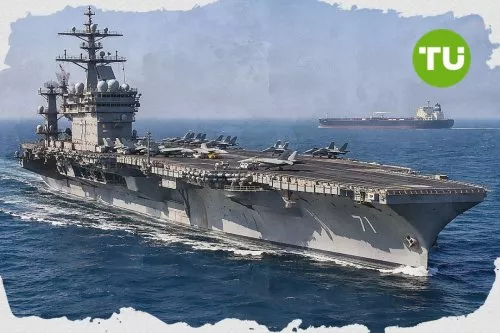
Akraminia warned that American military bases in the region remained potential targets and threatened a wider response to renewed U.S. strikes. The warnings followed the arrival of the USS Theodore Roosevelt, bringing the number of American aircraft carriers operating in the region to three.
Meanwhile, the foreign ministers of Oman and Iran discussed maritime corridor security as diplomatic efforts to reduce tensions continued. No agreement on restoring unrestricted shipping was announced, leaving commercial operators facing uncertainty over safe passage.
Security concerns extended beyond the strait. A drone alert was reported at Iraq's Khor Mor gas field on Monday, although no fresh damage was confirmed. Production had already been suspended following an earlier suspected attack that disrupted 2.8 gigawatts of electricity generation.
Oil market reaction reflects competing supply pressures
Despite the escalating security threats, crude futures declined as expectations of recovering Middle Eastern exports and sufficient global supplies outweighed immediate concerns about disruptions.
January 2027 Brent futures fell 0.42%, to $92.05 a barrel, while January WTI futures declined 0.53%, to $84.02, according to the latest market screenshots.
The decline suggests traders are distinguishing between attacks that threaten shipping and disruptions that materially reduce oil exports. Further incidents could alter that assessment if vessels are forced to avoid the strait or regional producers face sustained restrictions on deliveries.
We also reported Iran signals willingness to negotiate despite Bahrain attacks and Hormuz tensions.






Latest Iran war News



-
 Afghanistan
-
 Albania
-
 Algeria
-
 Angola
-
 Argentina
-
 Armenia
-
 Australia
-
 Austria
-
 Azerbaijan
-
 Bahamas
-
 Bahrain
-
 Bangladesh
-
 Belarus
-
 Belgium
-
 Bolivia
-
 Botswana
-
 Brazil
-
 Brunei
-
 Bulgaria
-
 Cambodia
-
 Cameroon
-
 Canada
-
 Chile
-
 China
-
 Colombia
-
 Congo
-
 Costa Rica
-
 Cote d'Ivoire
-
 Croatia
-
 Cuba
-
 Cyprus
-
 Czechia
-
 DR Congo
-
 Denmark
-
 Dominican Republic
-
 Ecuador
-
 Egypt
-
 El Salvador
-
 Estonia
-
 Eswatini
-
 Ethiopia
-
 Finland
-
 France
-
 Georgia
-
 Germany
-
 Ghana
-
 Greece
-
 Haiti
-
 Hong Kong
-
 Hungary
-
 India
-
 Indonesia
-
 Iran, Islamic republic
-
 Iraq
-
 Ireland
-
 Israel
-
 Italy
-
 Jamaica
-
 Japan
-
 Jordan
-
 Kazakhstan
-
 Kenya
-
 Korea
-
 Kuwait
-
 Kyrgyzstan
-
 Laos
-
 Latvia
-
 Lebanon
-
 Lesotho
-
 Libya
-
 Lithuania
-
 Luxembourg
-
 Madagascar
-
 Malaysia
-
 Malta
-
 Mauritius
-
 Mexico
-
 Moldova
-
 Mongolia
-
 Montenegro
-
 Morocco
-
 Mozambique
-
 Myanmar
-
 Namibia
-
 Nepal
-
 Netherlands
-
 New Zealand
-
 Nigeria
-
 North Macedonia
-
 Norway
-
 Oman
-
 Pakistan
-
 Palestine
-
 Panama
-
 Papua New Guinea
-
 Paraguay
-
 Peru
-
 Philippines
-
 Poland
-
 Portugal
-
 Puerto Rico
-
 Qatar
-
 Reunion
-
 Romania
-
 Rwanda
-
 Saudi Arabia
-
 Serbia
-
 Singapore
-
 Slovakia
-
 Slovenia
-
 Somalia
-
 South Africa
-
 Spain
-
 Sri Lanka
-
 Sweden
-
 Switzerland
-
 Syria
-
 Taiwan
-
 Tajikistan
-
 Tanzania
-
 Thailand
-
 Trinidad and Tobago
-
 Tunisia
-
 Turkey
-
 UAE
-
 Uganda
-
 Ukraine
-
 United Kingdom
-
United States
-
 Uruguay
-
 Uzbekistan
-
 Venezuela
-
 Vietnam
-
 Yemen
-
 Zambia
-
 Zimbabwe
- Forex
- Crypto












