

AfDB, EBRD deepen Africa partnership to back SMEs, energy investment

African development finance institutions are expanding joint work in West Africa as the European Bank for Reconstruction and Development broadens its footprint on the continent. Talks in Abidjan focus on faster support for small and mid-sized businesses, wider energy access and mobilising more domestic African capital for investment.
Highlights
- AfDB and EBRD outlined deeper collaboration in Abidjan on 24 November, prioritizing joint support for African SMEs and combining regulatory reform expertise with government ties.
- The EnterpRise Africa initiative targets high-growth SMEs unable to secure suitable credit, launching in multiple African countries and potentially backed by Italy's Ministry of Economy and Finance.
- Both banks co-finance energy projects like Egypt's Dandara solar plant and focus on leveraging Africa's $4 trillion in domestic savings, spotlighting initiatives such as MONIA-indexed bonds and local-currency lending.
Abidjan talks set priorities for joint projects
As reported by the EBRD, leaders of the African Development Bank Group and the European Bank for Reconstruction and Development met in Abidjan on 24 November to outline the next phase of their partnership after the EBRD opened its country office there a day earlier.AfDB President Sidi Ould Tah and EBRD President Odile Renaud-Basso discuss how the two lenders can combine AfDB's continental presence and government ties with EBRD's private-sector model and experience in regulatory reform, market development and private capital mobilisation.
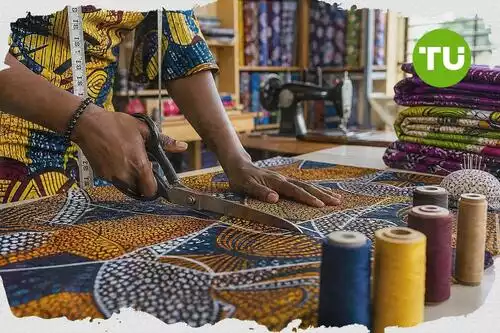
Earlier in the day, the two presidents open the Africa Small and Medium Enterprise Business Day at the Noom Hotel, where about 200 executives, investors and financial institutions gather to build support for African SMEs. Discussions centre on practical barriers including working-capital needs, access to guarantees, weak accounting capacity and the lack of tailored advisory support, with particular attention on mid-sized companies that often sit between small-business schemes and mainstream financing.
The banks are also jointly working on EnterpRise Africa, a project aimed at fast-growing SMEs that are ready to scale but struggle to find credit structures suited to their business models and growth paths. The initiative includes a private credit fund and an advisory platform, and is being considered for Benin, Côte d'Ivoire, Ghana, Kenya, Nigeria, Senegal, Burkina Faso, Burundi and the Democratic Republic of Congo. Italy is considering a contribution through its Ministry of Economy and Finance.
Energy financing and domestic capital mobilisation in focus
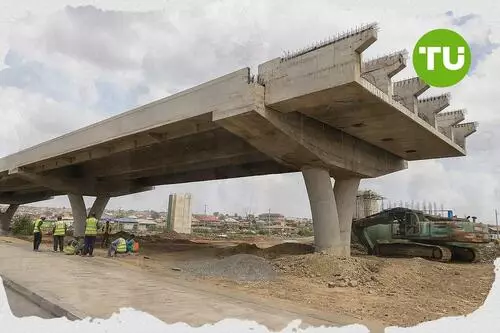
Energy cooperation is another priority as both institutions look to expand reliable and affordable power supply, meet rising demand and support cleaner energy systems through greater private investment. In Egypt, the banks are financing the Dandara solar project, which combines 500 megawatts of solar capacity with 100 megawatt-hours of battery storage under a 25-year supply contract with aluminium producer Egyptalum.The two lenders also highlight local-currency lending and the use of African savings for development as shared priorities. Africa needs about $400 billion a year for development, while holding roughly $4 trillion in domestic savings across pension funds, insurers and sovereign wealth funds, a gap that the New African Financial Architecture for Development seeks to address.
A panel in Abidjan brings together AfDB, EBRD, the West African Development Bank, the Regional Securities Exchange, NSIA Group and Côte d'Ivoire's National Social Security Fund to discuss how those resources can be channelled into productive investment. The institutions point to Morocco's MONIA benchmark as an example of cooperation, with EBRD having supported its development in 2020 and AfDB recently issuing its first Moroccan dirham bond indexed to MONIA.
The partnership between the two multilateral development banks dates back to a cooperation framework signed in May 2021 and a staff exchange arrangement launched in 2023. Since 2024, they have co-financed projects representing around 1.25 billion euros, with more opportunities under development as their overlap in African markets grows.
We have also discussed the broader context around EBRD SME programmes launching financing and advisory tools for businesses in Côte d’Ivoire.









-
 Afghanistan
-
 Albania
-
 Algeria
-
 Angola
-
 Argentina
-
 Armenia
-
 Australia
-
 Austria
-
 Azerbaijan
-
 Bahamas
-
 Bahrain
-
 Bangladesh
-
 Belarus
-
 Belgium
-
 Bolivia
-
 Botswana
-
 Brazil
-
 Brunei
-
 Bulgaria
-
 Cambodia
-
 Cameroon
-
 Canada
-
 Chile
-
 China
-
 Colombia
-
 Congo
-
 Costa Rica
-
 Cote d'Ivoire
-
 Croatia
-
 Cuba
-
 Cyprus
-
 Czechia
-
 DR Congo
-
 Denmark
-
 Dominican Republic
-
 Ecuador
-
 Egypt
-
 El Salvador
-
 Estonia
-
 Eswatini
-
 Ethiopia
-
 Finland
-
 France
-
 Georgia
-
 Germany
-
 Ghana
-
 Greece
-
 Haiti
-
 Hong Kong
-
 Hungary
-
 India
-
 Indonesia
-
 Iran, Islamic republic
-
 Iraq
-
 Ireland
-
 Israel
-
 Italy
-
 Jamaica
-
 Japan
-
 Jordan
-
 Kazakhstan
-
 Kenya
-
 Korea
-
 Kuwait
-
 Kyrgyzstan
-
 Laos
-
 Latvia
-
 Lebanon
-
 Lesotho
-
 Libya
-
 Lithuania
-
 Luxembourg
-
 Madagascar
-
 Malaysia
-
 Malta
-
 Mauritius
-
 Mexico
-
 Moldova
-
 Mongolia
-
 Montenegro
-
 Morocco
-
 Mozambique
-
 Myanmar
-
 Namibia
-
 Nepal
-
 Netherlands
-
 New Zealand
-
 Nigeria
-
 North Macedonia
-
 Norway
-
 Oman
-
 Pakistan
-
 Palestine
-
 Panama
-
 Papua New Guinea
-
 Paraguay
-
 Peru
-
 Philippines
-
 Poland
-
 Portugal
-
 Puerto Rico
-
 Qatar
-
 Reunion
-
 Romania
-
 Rwanda
-
 Saudi Arabia
-
 Serbia
-
 Singapore
-
 Slovakia
-
 Slovenia
-
 Somalia
-
 South Africa
-
 Spain
-
 Sri Lanka
-
 Sweden
-
 Switzerland
-
 Syria
-
 Taiwan
-
 Tajikistan
-
 Tanzania
-
 Thailand
-
 Trinidad and Tobago
-
 Tunisia
-
 Turkey
-
 UAE
-
 Uganda
-
 Ukraine
-
 United Kingdom
-
United States
-
 Uruguay
-
 Uzbekistan
-
 Venezuela
-
 Vietnam
-
 Yemen
-
 Zambia
-
 Zimbabwe
- Forex
- Crypto












