

Cboe flags volatile U.S. trading session as inflation and Nvidia pressure hit equities

Holiday-thinned trading leaves U.S. stocks swinging sharply before dip buyers help major indexes recover most of their early losses. Inflation data, tariff concerns and fresh scrutiny of Nvidia's governance add to investor unease as expectations for further Federal Reserve tightening remain elevated.
Highlights
- Nasdaq Composite drops as much as 4.7% intraday before closing down 0.62%, with S&P 500 trimming a 3.21% loss to end down 0.35%, and Dow Jones up 0.33% after early volatility led by Nvidia and inflation data.
- Core PCE climbs to 3.3% year over year from 3.1%, keeping Fed rate-hike odds for December alive and driving a flight to safety as 10-year Treasury yield falls to 4.85%.
- S&P Global Ratings puts Nvidia senior unsecured debt on CreditWatch with negative implications, following Moody's downgrade of its outlook to stable, citing management and governance risks.
Volatile session and policy signals
As reported by Cboe, citing Cboe Global Markets, U.S. equities endure a highly volatile session as early selling in technology shares, led by Nvidia, drags the Nasdaq Composite down as much as 4.7% intraday before buyers step back in.By the close, the Nasdaq Composite is down 0.62% and the Nasdaq 100 loses 0.64% after briefly entering bear-market territory. The S&P 500 falls as much as 3.21% and drops below 7,000 before trimming losses to end down 0.35%, while the Dow Jones Industrial Average recovers from steep early declines to close up 0.33%.
Nvidia ends the day down 3.9%, while broader weakness across technology stocks weighs on sentiment. Anthropic also comes under pressure early, falling nearly 10% from Tuesday's close and briefly slipping below a $1 trillion market value, but later rebounds to finish up 1.08%.
The market backdrop remains pressured by hotter-than-expected inflation data and renewed tariff concerns. Core Personal Consumption Expenditures, the Federal Reserve's preferred inflation gauge, rises 3.3% year over year from 3.1% in September, while headline PCE increases 3.8%, reinforcing expectations that interest rates may stay higher for longer.
The CME FedWatch tool shows a 25-basis-point rate increase in December remains in play, while the probability of another quarter-point move in January stands at 59%, down from 70% a week earlier. Investors also rotate into safer assets, pushing the 10-year Treasury yield down to 4.85%.
Volatility gauges and governance concerns
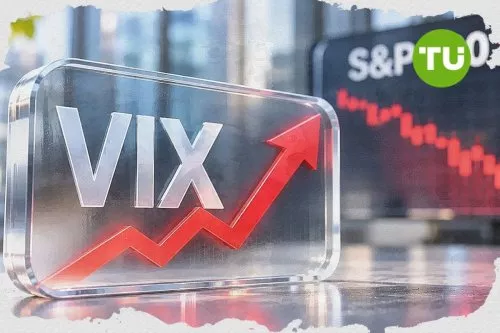
Volatility jumps early in the day before easing somewhat as the selloff moderates, but investor caution remains elevated. At the close, the Cboe Volatility Index, or VIX, sits just above 28, and options pricing implies an approximate daily move of 1.8% in the S&P 500.Nvidia faces an additional overhang after S&P Global Ratings places its senior unsecured debt on CreditWatch with negative implications, according to a press release cited in the market commentary. The ratings agency questions the effectiveness of the chipmaker's management and governance, pointing to board independence and key-man risk.
The CreditWatch action does not amount to a downgrade, but it places the debt under review for one. The move follows a similar step last week by Moody's Ratings, which lowers Nvidia's credit-rating outlook from positive to stable, also citing governance issues and the absence of a formal succession plan.
Cboe warns that the next half-day Friday session could bring further exaggerated moves because holiday trading volumes are typically thin. With fewer participants active, relatively small orders can have an outsized effect on prices before fuller market participation returns on Monday.
We have also analyzed how major pension investors are using a total portfolio approach to manage AI concentration risk.






Latest Cboe Global Markets News



-
 Afghanistan
-
 Albania
-
 Algeria
-
 Angola
-
 Argentina
-
 Armenia
-
 Australia
-
 Austria
-
 Azerbaijan
-
 Bahamas
-
 Bahrain
-
 Bangladesh
-
 Belarus
-
 Belgium
-
 Bolivia
-
 Botswana
-
 Brazil
-
 Brunei
-
 Bulgaria
-
 Cambodia
-
 Cameroon
-
 Canada
-
 Chile
-
 China
-
 Colombia
-
 Congo
-
 Costa Rica
-
 Cote d'Ivoire
-
 Croatia
-
 Cuba
-
 Cyprus
-
 Czechia
-
 DR Congo
-
 Denmark
-
 Dominican Republic
-
 Ecuador
-
 Egypt
-
 El Salvador
-
 Estonia
-
 Eswatini
-
 Ethiopia
-
 Finland
-
 France
-
 Georgia
-
 Germany
-
 Ghana
-
 Greece
-
 Haiti
-
 Hong Kong
-
 Hungary
-
 India
-
 Indonesia
-
 Iran, Islamic republic
-
 Iraq
-
 Ireland
-
 Israel
-
 Italy
-
 Jamaica
-
 Japan
-
 Jordan
-
 Kazakhstan
-
 Kenya
-
 Korea
-
 Kuwait
-
 Kyrgyzstan
-
 Laos
-
 Latvia
-
 Lebanon
-
 Lesotho
-
 Libya
-
 Lithuania
-
 Luxembourg
-
 Madagascar
-
 Malaysia
-
 Malta
-
 Mauritius
-
 Mexico
-
 Moldova
-
 Mongolia
-
 Montenegro
-
 Morocco
-
 Mozambique
-
 Myanmar
-
 Namibia
-
 Nepal
-
 Netherlands
-
 New Zealand
-
 Nigeria
-
 North Macedonia
-
 Norway
-
 Oman
-
 Pakistan
-
 Palestine
-
 Panama
-
 Papua New Guinea
-
 Paraguay
-
 Peru
-
 Philippines
-
 Poland
-
 Portugal
-
 Puerto Rico
-
 Qatar
-
 Reunion
-
 Romania
-
 Rwanda
-
 Saudi Arabia
-
 Serbia
-
 Singapore
-
 Slovakia
-
 Slovenia
-
 Somalia
-
 South Africa
-
 Spain
-
 Sri Lanka
-
 Sweden
-
 Switzerland
-
 Syria
-
 Taiwan
-
 Tajikistan
-
 Tanzania
-
 Thailand
-
 Trinidad and Tobago
-
 Tunisia
-
 Turkey
-
 UAE
-
 Uganda
-
 Ukraine
-
 United Kingdom
-
United States
-
 Uruguay
-
 Uzbekistan
-
 Venezuela
-
 Vietnam
-
 Yemen
-
 Zambia
-
 Zimbabwe
- Forex
- Crypto












