

Bangladesh Bank expands dollar swap use as LC payment pressure lifts FX demand

Bangladesh's central bank is turning to dollar swaps with commercial lenders as near-term demand for foreign currency rises around government letter of credit payments. The move aims to keep the taka-dollar rate within Tk125 while limiting further direct sales from foreign exchange reserves.
Highlights
- Bangladesh Bank has initiated dollar-taka swaps with commercial banks, supplementing $800 million in reserve sales, to address rising FX demand from intensified LC payment pressure, notably for Petrobangla and BPC.
- Despite $28.55 billion in remittance and export earnings vs. over $25 billion in imports (July–October), the current account deficit stands at $1.33 billion for July–September, with the exchange rate remaining elevated.
- Bankers warn that if market conditions do not improve by the time swaps mature, the central bank may face renewed FX pressure and might need further interventions or swap rollovers.
Swap plan targets immediate payment strain
As first reported by The Business Standard, Bangladesh Bank has decided to conduct dollar swaps with commercial banks after direct reserve sales failed to bring down the exchange rate. A senior central bank official confirms the move, and commercial banks have already been formally informed of the decision.Bankers say the pressure is intensifying over the next two to three days, particularly for government LCs linked to Petrobangla and Bangladesh Petroleum Corporation. Some banks buy remittances from aggregators at Tk125.20 to Tk125.30 per dollar, showing continued stress in the market even though many lenders currently hold positive net open positions.
A taka-dollar swap allows banks and the central bank to exchange taka and U.S. dollars for a fixed period, with the original currencies returned later under agreed terms and interest. Bangladesh Bank introduced the facility for commercial banks on 15 February 2024, with tenures ranging from seven to 90 days, and officials say the structure supports market liquidity without immediately reducing headline reserve levels.
Reserve management and market impact remain in focus
Zahid Hussain, former lead economist at the World Bank's Dhaka office, says the swap can temporarily ease dollar shortages but does not remove the underlying imbalance between supply and demand. He warns that if market conditions do not improve by the time the swaps mature, the central bank could face the same pressure again when it seeks to recover the dollars.Bangladesh Bank has sold about $800 million from reserves during the current fiscal year, but the exchange rate remains elevated. According to Bangladesh Bank and the Export Promotion Bureau, the current account deficit stands at $1.33 billion in July to September of the current fiscal year, while remittance and export earnings total $28.55 billion between July and October and imports exceed $25 billion.
Private bank officials say part of the volatility reflects uneven dollar access across lenders, with banks that lack strong export earnings and rely heavily on remittances buying dollars aggressively to meet import obligations. One banker says some institutions continue holding dollars in anticipation of further gains, while another says payment bunching around a U.S. public holiday adds temporary demand pressure and similar strain could reappear on the 30th of this month.
Bankers add that the swap mechanism may need to be rolled over or paired with direct market intervention if Bangladesh Bank wants to avoid renewed pressure when short-dated swap maturities arrive. They say stronger remittance inflows ahead of Ramadan and in December could help lenders repay borrowed dollars, but sustained stability still depends on broader improvements in market fundamentals.
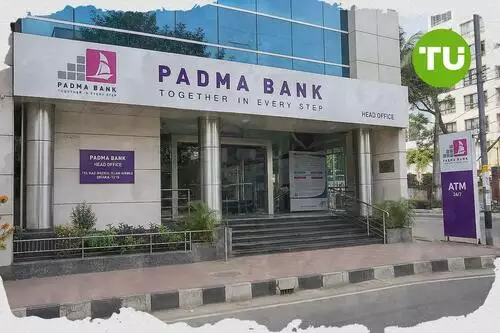
We have also looked at the Padma Bank resolution as Bangladesh Bank weighed options including a sale, merger, closure or recapitalisation.






Latest Bangladesh News



-
 Afghanistan
-
 Albania
-
 Algeria
-
 Angola
-
 Argentina
-
 Armenia
-
 Australia
-
 Austria
-
 Azerbaijan
-
 Bahamas
-
 Bahrain
-
 Bangladesh
-
 Belarus
-
 Belgium
-
 Bolivia
-
 Botswana
-
 Brazil
-
 Brunei
-
 Bulgaria
-
 Cambodia
-
 Cameroon
-
 Canada
-
 Chile
-
 China
-
 Colombia
-
 Congo
-
 Costa Rica
-
 Cote d'Ivoire
-
 Croatia
-
 Cuba
-
 Cyprus
-
 Czechia
-
 DR Congo
-
 Denmark
-
 Dominican Republic
-
 Ecuador
-
 Egypt
-
 El Salvador
-
 Estonia
-
 Eswatini
-
 Ethiopia
-
 Finland
-
 France
-
 Georgia
-
 Germany
-
 Ghana
-
 Greece
-
 Haiti
-
 Hong Kong
-
 Hungary
-
 India
-
 Indonesia
-
 Iran, Islamic republic
-
 Iraq
-
 Ireland
-
 Israel
-
 Italy
-
 Jamaica
-
 Japan
-
 Jordan
-
 Kazakhstan
-
 Kenya
-
 Korea
-
 Kuwait
-
 Kyrgyzstan
-
 Laos
-
 Latvia
-
 Lebanon
-
 Lesotho
-
 Libya
-
 Lithuania
-
 Luxembourg
-
 Madagascar
-
 Malaysia
-
 Malta
-
 Mauritius
-
 Mexico
-
 Moldova
-
 Mongolia
-
 Montenegro
-
 Morocco
-
 Mozambique
-
 Myanmar
-
 Namibia
-
 Nepal
-
 Netherlands
-
 New Zealand
-
 Nigeria
-
 North Macedonia
-
 Norway
-
 Oman
-
 Pakistan
-
 Palestine
-
 Panama
-
 Papua New Guinea
-
 Paraguay
-
 Peru
-
 Philippines
-
 Poland
-
 Portugal
-
 Puerto Rico
-
 Qatar
-
 Reunion
-
 Romania
-
 Rwanda
-
 Saudi Arabia
-
 Serbia
-
 Singapore
-
 Slovakia
-
 Slovenia
-
 Somalia
-
 South Africa
-
 Spain
-
 Sri Lanka
-
 Sweden
-
 Switzerland
-
 Syria
-
 Taiwan
-
 Tajikistan
-
 Tanzania
-
 Thailand
-
 Trinidad and Tobago
-
 Tunisia
-
 Turkey
-
 UAE
-
 Uganda
-
 Ukraine
-
 United Kingdom
-
United States
-
 Uruguay
-
 Uzbekistan
-
 Venezuela
-
 Vietnam
-
 Yemen
-
 Zambia
-
 Zimbabwe
- Forex
- Crypto












