

SEALSQ shares technical analysis: Selloff signals bearish setup

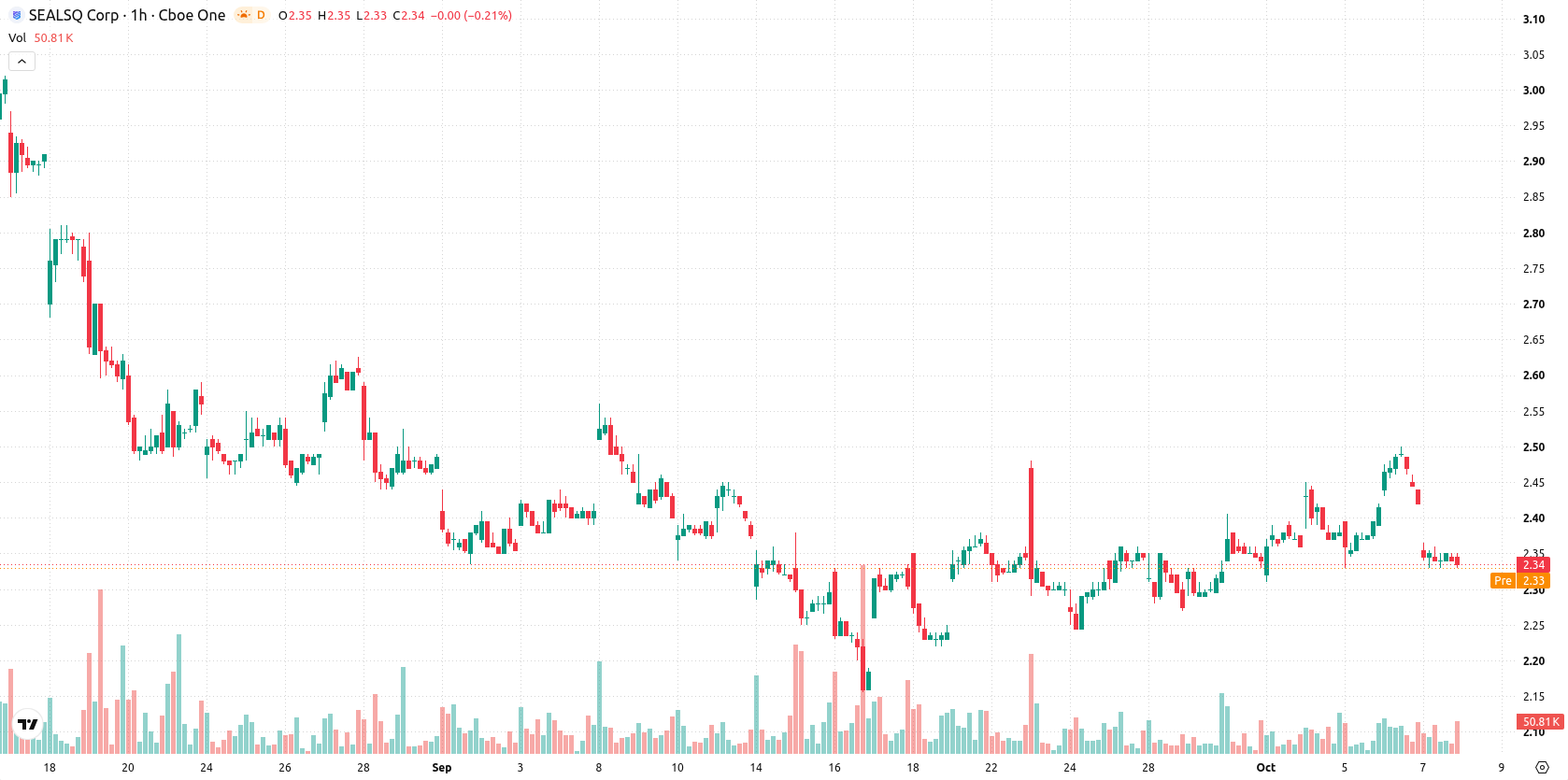
SEALSQ (LAES) stock is trading at $2.34 after closing down 3.9% for the session. The price movement places the stock below its primary moving averages at this stage of the trading day.
 1.18
1.53
Highlights
- SEALSQ Corp. stock saw call option purchases surge to 38,886 contracts, up 76% from typical daily volume.
- Unusually high options trading activity signals increased speculative positioning and the potential for short-term volatility.
- Technical indicators show persistent selling pressure, with the stock expected to consolidate in a $2.26 to $2.42 range and a continued downward move highly probable.
Speculative call option surge drives volatility amid broad selling
SEALSQ Corp. saw a notable surge in options market activity, as traders purchased 38,886 call options—marking a 76% jump from the typical daily volume of 22,116, according to Defenseworld. This elevated trading points to increased speculative participation and a tactical buildup of positions, which can spur short-term volatility and shape immediate market sentiment. The spike in options activity reflects a heightened focus by market participants, though price action has remained under broader selling pressure.
Bearish signals persist as technicals show oversold conditions
On the hourly chart, LAES remains below both the MA-20 at $2.40 and the MA-50 at $2.37, with the daily timeframe showing sustained pressure beneath the MA-200 at $3.15. Immediate resistance is indicated by the Ichimoku Kijun level at $2.42. Momentum signals are discouraging, as MACD and ADX both register a sell bias. The RSI stands at 38.83 and, along with CCI and Stoch RSI, signals an oversold environment. Bull/Bear Power highlights ongoing seller dominance, while the Awesome Oscillator corroborates the prevailing negative momentum.
Consolidation expected as breakout risk remains skewed to downside
For the short term, the most likely scenario is a period of consolidation for LAES within the $2.26 to $2.42 band, consistent with typical volatility seen in recent sessions. The probability of a sharp upward reversal remains very low, while the likelihood of continued declines is very high. Should the price break above the $2.42 resistance, further upside could be tested, while rejection and a move below $2.26 may open the way for additional losses in the coming sessions.
Earlier, analysts noted that SEALSQ was demonstrating short-term technical resilience amid longer-term bearish pressures and persistent downside risk. The current surge in options activity and ongoing negative momentum further highlight the importance of monitoring the $2.26 to $2.42 range as the key battleground for near-term price direction.










-
 Afghanistan
-
 Albania
-
 Algeria
-
 Angola
-
 Argentina
-
 Armenia
-
 Australia
-
 Austria
-
 Azerbaijan
-
 Bahamas
-
 Bahrain
-
 Bangladesh
-
 Belarus
-
 Belgium
-
 Bolivia
-
 Botswana
-
 Brazil
-
 Brunei
-
 Bulgaria
-
 Cambodia
-
 Cameroon
-
 Canada
-
 Chile
-
 China
-
 Colombia
-
 Congo
-
 Costa Rica
-
 Cote d'Ivoire
-
 Croatia
-
 Cuba
-
 Cyprus
-
 Czechia
-
 DR Congo
-
 Denmark
-
 Dominican Republic
-
 Ecuador
-
 Egypt
-
 El Salvador
-
 Estonia
-
 Eswatini
-
 Ethiopia
-
 Finland
-
 France
-
 Georgia
-
 Germany
-
 Ghana
-
 Greece
-
 Haiti
-
 Hong Kong
-
 Hungary
-
 India
-
 Indonesia
-
 Iran, Islamic republic
-
 Iraq
-
 Ireland
-
 Israel
-
 Italy
-
 Jamaica
-
 Japan
-
 Jordan
-
 Kazakhstan
-
 Kenya
-
 Korea
-
 Kuwait
-
 Kyrgyzstan
-
 Laos
-
 Latvia
-
 Lebanon
-
 Lesotho
-
 Libya
-
 Lithuania
-
 Luxembourg
-
 Madagascar
-
 Malaysia
-
 Malta
-
 Mauritius
-
 Mexico
-
 Moldova
-
 Mongolia
-
 Montenegro
-
 Morocco
-
 Mozambique
-
 Myanmar
-
 Namibia
-
 Nepal
-
 Netherlands
-
 New Zealand
-
 Nigeria
-
 North Macedonia
-
 Norway
-
 Oman
-
 Pakistan
-
 Palestine
-
 Panama
-
 Papua New Guinea
-
 Paraguay
-
 Peru
-
 Philippines
-
 Poland
-
 Portugal
-
 Puerto Rico
-
 Qatar
-
 Reunion
-
 Romania
-
 Rwanda
-
 Saudi Arabia
-
 Serbia
-
 Singapore
-
 Slovakia
-
 Slovenia
-
 Somalia
-
 South Africa
-
 Spain
-
 Sri Lanka
-
 Sweden
-
 Switzerland
-
 Syria
-
 Taiwan
-
 Tajikistan
-
 Tanzania
-
 Thailand
-
 Trinidad and Tobago
-
 Tunisia
-
 Turkey
-
 UAE
-
 Uganda
-
 Ukraine
-
 United Kingdom
-
United States
-
 Uruguay
-
 Uzbekistan
-
 Venezuela
-
 Vietnam
-
 Yemen
-
 Zambia
-
 Zimbabwe
- Forex
- Crypto












