

Weiss Ratings flags five AI infrastructure stocks over debt risks

A sharp sell-off in AI infrastructure names is focusing investor attention on the balance-sheet strain behind the data-center expansion boom. Weiss Ratings compares CoreWeave, Applied Digital, Nebius, IREN and Hut 8 as debt-heavy neocloud and AI cloud operators facing different levels of financing risk.
Highlights
- CoreWeave holds the highest debt risk with $48 billion to $50 billion in bonds and loans against $5.5 billion cash and over 15% bond yields.
- Applied Digital reported a $184 million quarterly loss, $243 million in net interest expense, and $6.4 billion in debt versus $2.95 billion in cash at end-August.
- Weiss Ratings warns investors are starting to favor AI infrastructure firms with project-backed or customer-linked financing as credit markets tighten and leverage risks rise.
Debt pressures emerge across neocloud operators
As reported by Weiss Ratings, the latest tech-sector pullback is exposing how heavily some AI infrastructure companies rely on borrowed capital to fund GPUs, data centers and cloud capacity. The report argues that the main vulnerability is not only current operating losses, but also the risk that future expansion becomes harder to finance if bond yields remain elevated.CoreWeave stands out as the most exposed name in the group. Weiss says the company had $35.1 billion of recourse and non-recourse debt as of June 30, with subsequent borrowing lifting bonds and loans to roughly $48 billion to $50 billion, against $5.5 billion in cash at midyear. It also points to $640 million in second-quarter net interest expense and a $626 million quarterly loss, while yields on some of the company’s bonds move above 15%, a level associated with distressed debt.
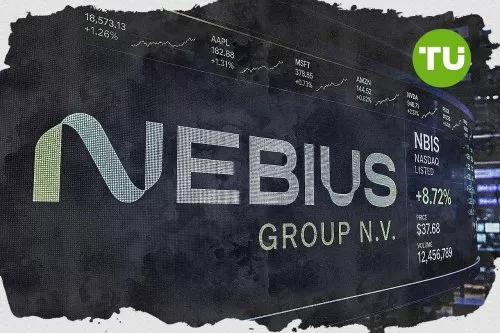
The report places Applied Digital next on its risk list, citing about $6.4 billion in debt, including $6.09 billion of senior secured notes, alongside $2.95 billion in cash at the end of August. Weiss says the company posted a $184 million quarterly loss and paid $243 million in interest during the quarter. Nebius is presented as a more complex case, with $8.55 billion in debt as of June 30, later increased by $775 million in secured financing and $5.75 billion in convertible notes, although the company also holds $8 billion in cash and expects customer prepayments.
Different funding structures shape sector risk
Weiss describes neoclouds as specialist AI cloud providers that concentrate on GPU computing power rather than broader cloud services. That model can benefit from strong AI demand, but it also requires large and repeated capital spending on hardware that can lose economic value quickly as newer chips improve performance and rental pricing shifts.The report says this dynamic creates uneven risk across operators. IREN, which is transitioning from bitcoin mining toward AI cloud services, had roughly $7.6 billion of borrowings at fiscal year-end, but also $5.9 billion in unrestricted cash and $1.7 billion in restricted cash. Hut 8, meanwhile, is described as potentially the least vulnerable of the five because its $7.5 billion in AI data-center financing sits largely at the project level, backed by long-term leases and with no general-recourse debt at the parent company level, according to the report.
For the wider U.S. AI infrastructure market, the comparison suggests investors are beginning to differentiate between companies with heavy corporate leverage and those using project-backed or customer-linked financing. Weiss argues that if credit markets stop funding AI expansion at almost any cost, the businesses most dependent on frequent debt issuance are likely to face the greatest pressure, even as overall AI demand remains strong.
In our earlier article on U.S. AI data center expansion, we examined how the buildout is running into higher financing costs, construction delays, and power constraints that are making some projects less credible. We also noted that tightening capital conditions and investor scrutiny could pressure developers to prove they can deliver projects on time and keep costs under control as demand for AI capacity remains strong.





Latest Nebius Group N.V. News


-
 Afghanistan
-
 Albania
-
 Algeria
-
 Angola
-
 Argentina
-
 Armenia
-
 Australia
-
 Austria
-
 Azerbaijan
-
 Bahamas
-
 Bahrain
-
 Bangladesh
-
 Belarus
-
 Belgium
-
 Bolivia
-
 Botswana
-
 Brazil
-
 Brunei
-
 Bulgaria
-
 Cambodia
-
 Cameroon
-
 Canada
-
 Chile
-
 China
-
 Colombia
-
 Congo
-
 Costa Rica
-
 Cote d'Ivoire
-
 Croatia
-
 Cuba
-
 Cyprus
-
 Czechia
-
 DR Congo
-
 Denmark
-
 Dominican Republic
-
 Ecuador
-
 Egypt
-
 El Salvador
-
 Estonia
-
 Eswatini
-
 Ethiopia
-
 Finland
-
 France
-
 Georgia
-
 Germany
-
 Ghana
-
 Greece
-
 Haiti
-
 Hong Kong
-
 Hungary
-
 India
-
 Indonesia
-
 Iran, Islamic republic
-
 Iraq
-
 Ireland
-
 Israel
-
 Italy
-
 Jamaica
-
 Japan
-
 Jordan
-
 Kazakhstan
-
 Kenya
-
 Korea
-
 Kuwait
-
 Kyrgyzstan
-
 Laos
-
 Latvia
-
 Lebanon
-
 Lesotho
-
 Libya
-
 Lithuania
-
 Luxembourg
-
 Madagascar
-
 Malaysia
-
 Malta
-
 Mauritius
-
 Mexico
-
 Moldova
-
 Mongolia
-
 Montenegro
-
 Morocco
-
 Mozambique
-
 Myanmar
-
 Namibia
-
 Nepal
-
 Netherlands
-
 New Zealand
-
 Nigeria
-
 North Macedonia
-
 Norway
-
 Oman
-
 Pakistan
-
 Palestine
-
 Panama
-
 Papua New Guinea
-
 Paraguay
-
 Peru
-
 Philippines
-
 Poland
-
 Portugal
-
 Puerto Rico
-
 Qatar
-
 Reunion
-
 Romania
-
 Rwanda
-
 Saudi Arabia
-
 Serbia
-
 Singapore
-
 Slovakia
-
 Slovenia
-
 Somalia
-
 South Africa
-
 Spain
-
 Sri Lanka
-
 Sweden
-
 Switzerland
-
 Syria
-
 Taiwan
-
 Tajikistan
-
 Tanzania
-
 Thailand
-
 Trinidad and Tobago
-
 Tunisia
-
 Turkey
-
 UAE
-
 Uganda
-
 Ukraine
-
 United Kingdom
-
United States
-
 Uruguay
-
 Uzbekistan
-
 Venezuela
-
 Vietnam
-
 Yemen
-
 Zambia
-
 Zimbabwe
- Forex
- Crypto












