

Corporate bond market offers rare yield opportunity as AI borrowing reshapes issuance

Elevated Treasury yields and steady rate expectations are making investment-grade corporate bonds look unusually attractive for income-focused investors. The opportunity is especially visible in debt issued by large technology companies funding artificial intelligence projects, although rising leverage and concentration risks are prompting calls for caution.
Highlights
- 10-year Treasury yields near 5% and Fed rate pause create rare buying opportunity in high-quality corporate bonds, especially for AA-rated companies.
- Hyperscalers like Microsoft, Alphabet, Amazon, Meta, and Oracle drove 2025 AI-related bond issuance to $93 billion, exceeding the $35 billion average from 2020-2024, with the VettaFi AI Hyperscaler Bond Index yielding 6.51% in September.
- AI-driven debt is leading to increased concentration, with hyperscalers comprising over 20% of the 10-year-plus investment grade index and more than 40% of their 2026 issuance in maturities of 20 years or longer.
AI-driven issuance lifts corporate bond appeal
As reported by CNBC, fixed income specialists say the current market backdrop is creating an uncommon entry point for buyers of high-quality corporate debt. With the 10-year Treasury yield near 5% and the Federal Reserve expected to leave rates unchanged at its Wednesday FOMC meeting, investors are able to buy highly rated corporate bonds at yields that are rarely available in this segment of the market.Much of that opportunity is centered on hyperscalers such as Alphabet, Amazon, Meta and Microsoft, which are issuing debt to fund chips, data centers and power capacity tied to AI expansion. Steven Purdy, group managing director and co-head of global credit at TCW, says investors are not usually able to buy AA-rated or similarly rated companies at such attractive yields.
Joseph Matus of Cerity Partners says the largest hyperscalers still have strong balance sheets and manageable debt loads, even as borrowing rises. The VettaFi AI Hyperscaler Bond Index, which tracks debt from large technology groups including Microsoft, Alphabet, Oracle, Amazon and Meta, yielded 6.51% at the end of September.
Investors are tolerating the heavier issuance because many of the projects financed so far are proving profitable, but signs of strain are emerging in parts of the market. Meta's free cash flow has turned negative for the first time since its 2012 IPO, CoreWeave's bonds have fallen in October as debt concerns mount, and Oracle's debt was downgraded by S&P Global Ratings in July to the lowest tier of investment grade.
Selective positioning gains importance
Published forecasts suggest AI-linked borrowing may continue at a heavy pace over the next year. JPMorgan said in June that more than $4 trillion in AI-related debt could be issued through 2030, while 2025 issuance from hyperscalers reached $93 billion, well above the roughly $35 billion annual average seen from 2020 through 2024.That supply outlook is strengthening the case for careful security selection rather than broad exposure alone. Brian Barnhurst of PGIM Credit says investors have many choices and can afford to be deliberate, while Priya Misra of JPMorgan Asset Management says 10- and 20-year hyperscaler bonds may offer income and possible capital gains if rates stop rising.
Analysts also expect companies to combine debt with equity financing for AI expansion. Meta this week outlined a capital plan that includes selling up to $95 billion in various stock offerings and said it plans to fund investment through a mix of operating cash flow, investment-grade debt, strategic partnerships and equity capital.
Diversification remains a central theme for advisers, particularly because many investors already hold the same large technology names through equities. Market participants including BondBloxx and Dynasty are pointing to selective opportunities in lower-rated investment-grade bonds and active fixed income strategies, while some wealth managers are extending maturities to around seven to eight years to capture income across the curve.
Concentration is becoming harder to ignore. In investment grade, hyperscalers now make up more than 20% of the 10-year-plus index, and estimates show more than 40% of hyperscaler issuance in 2026 has come in maturities of 20 years or longer.
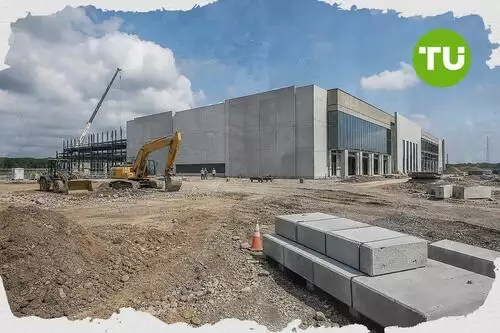
In our earlier coverage of the rising costs and delays in U.S. AI data center buildouts, we highlighted how higher rates, inflation, and power constraints are making large-scale projects harder to finance and execute. We also noted that a significant share of planned facilities may prove unrealistic, while market signals such as CoreWeave’s sell-off and cost overruns at projects like Cipher’s pointed to growing investor caution. The takeaway was that demand for AI remains strong, but the key test is whether developers can deliver on time and turn massive capital needs into sustainable returns.






Latest META News



-
 Afghanistan
-
 Albania
-
 Algeria
-
 Angola
-
 Argentina
-
 Armenia
-
 Australia
-
 Austria
-
 Azerbaijan
-
 Bahamas
-
 Bahrain
-
 Bangladesh
-
 Belarus
-
 Belgium
-
 Bolivia
-
 Botswana
-
 Brazil
-
 Brunei
-
 Bulgaria
-
 Cambodia
-
 Cameroon
-
 Canada
-
 Chile
-
 China
-
 Colombia
-
 Congo
-
 Costa Rica
-
 Cote d'Ivoire
-
 Croatia
-
 Cuba
-
 Cyprus
-
 Czechia
-
 DR Congo
-
 Denmark
-
 Dominican Republic
-
 Ecuador
-
 Egypt
-
 El Salvador
-
 Estonia
-
 Eswatini
-
 Ethiopia
-
 Finland
-
 France
-
 Georgia
-
 Germany
-
 Ghana
-
 Greece
-
 Haiti
-
 Hong Kong
-
 Hungary
-
 India
-
 Indonesia
-
 Iran, Islamic republic
-
 Iraq
-
 Ireland
-
 Israel
-
 Italy
-
 Jamaica
-
 Japan
-
 Jordan
-
 Kazakhstan
-
 Kenya
-
 Korea
-
 Kuwait
-
 Kyrgyzstan
-
 Laos
-
 Latvia
-
 Lebanon
-
 Lesotho
-
 Libya
-
 Lithuania
-
 Luxembourg
-
 Madagascar
-
 Malaysia
-
 Malta
-
 Mauritius
-
 Mexico
-
 Moldova
-
 Mongolia
-
 Montenegro
-
 Morocco
-
 Mozambique
-
 Myanmar
-
 Namibia
-
 Nepal
-
 Netherlands
-
 New Zealand
-
 Nigeria
-
 North Macedonia
-
 Norway
-
 Oman
-
 Pakistan
-
 Palestine
-
 Panama
-
 Papua New Guinea
-
 Paraguay
-
 Peru
-
 Philippines
-
 Poland
-
 Portugal
-
 Puerto Rico
-
 Qatar
-
 Reunion
-
 Romania
-
 Rwanda
-
 Saudi Arabia
-
 Serbia
-
 Singapore
-
 Slovakia
-
 Slovenia
-
 Somalia
-
 South Africa
-
 Spain
-
 Sri Lanka
-
 Sweden
-
 Switzerland
-
 Syria
-
 Taiwan
-
 Tajikistan
-
 Tanzania
-
 Thailand
-
 Trinidad and Tobago
-
 Tunisia
-
 Turkey
-
 UAE
-
 Uganda
-
 Ukraine
-
 United Kingdom
-
United States
-
 Uruguay
-
 Uzbekistan
-
 Venezuela
-
 Vietnam
-
 Yemen
-
 Zambia
-
 Zimbabwe
- Forex
- Crypto












