

Intel shares plunge 29% after earnings report in worst drop since 1974

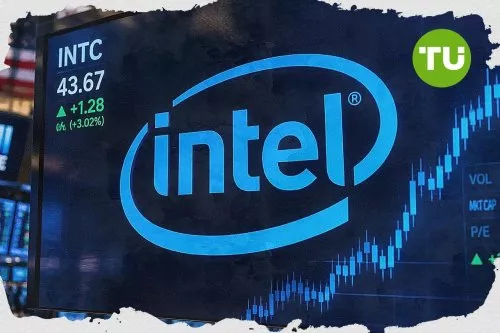
Shares of U.S. chipmaker Intel plunged 29% to $65, marking their worst single-day performance since 1974. The sell-off was triggered by weak revenue guidance, server chip production problems, and declining demand for personal computer processors.
The decline occurred on October 30, 2026, following the release of Intel's quarterly earnings report, according to TradingView. Before the drop, the company's shares had gained approximately 150% since the beginning of the year amid expectations of a business recovery and stronger demand for artificial intelligence computing capacity.
Despite beating analysts' third-quarter earnings estimates, Intel's revenue came in slightly below expectations. Additional pressure came from the company's fourth-quarter outlook, which also fell short of Wall Street forecasts.
Intel faces server chip shortages and weak PC demand
The company's main challenge was a mismatch between production capacity and market demand. Intel produced too many personal computer processors, sales of which slowed due to high memory prices, while failing to supply enough server chips.
Meanwhile, revenue from its data center and AI division surged nearly 80% year over year to $7.3 billion. Demand remained strong among cloud providers, enterprise customers, and AI infrastructure operators.
Intel CEO Lip-Bu Tan said industry-wide server processor shipments could grow by 30% annually in 2026 and 2027. According to him, growth would be even stronger if additional manufacturing capacity were available.
The situation was further complicated by an explosion at Intel's plant in Israel in October, which disrupted production. The company also warned that the downturn in the personal computer segment could continue into 2027.
Following the earnings release, Bank of America, Roth Capital Partners, and Seaport Research Partners downgraded Intel shares from buy to neutral. JPMorgan and Goldman Sachs maintained their neutral ratings but lowered their price targets.
Seaport analyst Jay Goldberg believes the company needs to address its planning and capacity issues before its shares become attractive to buy again. Meanwhile, KeyBanc analyst John Vinh described the sell-off as excessive, suggesting that server processor shipments could recover in the second half of 2027.
Intel's decline hits tech sector and U.S. government investment
The stock plunge also affected the U.S. government's stake in Intel. According to CNBC calculations, the value of the government's 433 million shares fell by approximately $11 billion, although the investment still carries an unrealized gain of around $20 billion.
Analysts see the company's long-term prospects as tied to the expansion of its contract chip manufacturing business. However, the segment is not expected to make a significant contribution to financial results before 2030.
Intel's decline coincided with a broader sell-off in technology stocks on Wall Street. Investors are increasingly questioning whether companies' massive spending on artificial intelligence infrastructure can generate corresponding profit growth quickly enough.
Against this backdrop, major U.S. stock indexes recorded their worst daily performance since June 2026. Despite the decline, the broader market remained approximately 3.1% below its all-time high.
Earlier, we reported that AMD shares fell more than 7% following Intel's weak outlook. Negative expectations surrounding processor demand and manufacturing constraints intensified pressure across the semiconductor sector.










-
 Afghanistan
-
 Albania
-
 Algeria
-
 Angola
-
 Argentina
-
 Armenia
-
 Australia
-
 Austria
-
 Azerbaijan
-
 Bahamas
-
 Bahrain
-
 Bangladesh
-
 Belarus
-
 Belgium
-
 Bolivia
-
 Botswana
-
 Brazil
-
 Brunei
-
 Bulgaria
-
 Cambodia
-
 Cameroon
-
 Canada
-
 Chile
-
 China
-
 Colombia
-
 Congo
-
 Costa Rica
-
 Cote d'Ivoire
-
 Croatia
-
 Cuba
-
 Cyprus
-
 Czechia
-
 DR Congo
-
 Denmark
-
 Dominican Republic
-
 Ecuador
-
 Egypt
-
 El Salvador
-
 Estonia
-
 Eswatini
-
 Ethiopia
-
 Finland
-
 France
-
 Georgia
-
 Germany
-
 Ghana
-
 Greece
-
 Haiti
-
 Hong Kong
-
 Hungary
-
 India
-
 Indonesia
-
 Iran, Islamic republic
-
 Iraq
-
 Ireland
-
 Israel
-
 Italy
-
 Jamaica
-
 Japan
-
 Jordan
-
 Kazakhstan
-
 Kenya
-
 Korea
-
 Kuwait
-
 Kyrgyzstan
-
 Laos
-
 Latvia
-
 Lebanon
-
 Lesotho
-
 Libya
-
 Lithuania
-
 Luxembourg
-
 Madagascar
-
 Malaysia
-
 Malta
-
 Mauritius
-
 Mexico
-
 Moldova
-
 Mongolia
-
 Montenegro
-
 Morocco
-
 Mozambique
-
 Myanmar
-
 Namibia
-
 Nepal
-
 Netherlands
-
 New Zealand
-
 Nigeria
-
 North Macedonia
-
 Norway
-
 Oman
-
 Pakistan
-
 Palestine
-
 Panama
-
 Papua New Guinea
-
 Paraguay
-
 Peru
-
 Philippines
-
 Poland
-
 Portugal
-
 Puerto Rico
-
 Qatar
-
 Reunion
-
 Romania
-
 Rwanda
-
 Saudi Arabia
-
 Serbia
-
 Singapore
-
 Slovakia
-
 Slovenia
-
 Somalia
-
 South Africa
-
 Spain
-
 Sri Lanka
-
 Sweden
-
 Switzerland
-
 Syria
-
 Taiwan
-
 Tajikistan
-
 Tanzania
-
 Thailand
-
 Trinidad and Tobago
-
 Tunisia
-
 Turkey
-
 UAE
-
 Uganda
-
 Ukraine
-
 United Kingdom
-
United States
-
 Uruguay
-
 Uzbekistan
-
 Venezuela
-
 Vietnam
-
 Yemen
-
 Zambia
-
 Zimbabwe
- Forex
- Crypto












