

Google struggles below $300 despite new AI chip advances

GOOGL is trading around $290–291 on November 10, once again facing selling pressure after recovering toward resistance near $300. On the 4H chart, the price remains well below its main medium-term moving averages, so any rise should still be viewed as a corrective rebound following the sharp decline from October highs above $400.
 296.33

U.S. inflation adds to pressure on technology stocks
Today's U.S. consumer inflation data, which came in above expectations, added to the pressure on MSFT. According to the Bureau of Labor Statistics, October CPI rose 0.4% month over month, compared with a forecast of 0.3%, while core inflation reached 0.3%, exceeding expectations of 0.2%. As a result, the 10-year U.S. Treasury yield approached 4.95%, while Nasdaq 100 futures lost more than 1% following the release.
This reaction increased the probability of a Fed rate hike in December and raised financing costs for technology companies. The implications are particularly significant for Alphabet, as the company is investing record amounts in computing infrastructure while relying on substantial future revenue growth from artificial intelligence.
New TPU processors strengthen Google's challenge to Nvidia
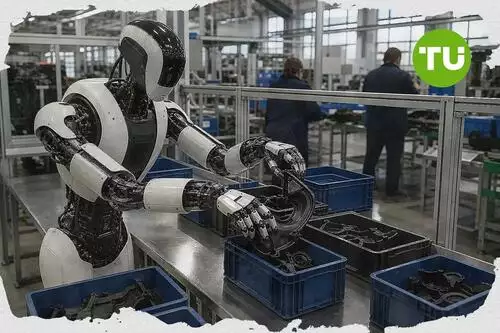
The main new corporate development was Google's November 9 presentation of two specialized eighth-generation TPU processors — 8tx and 8i Max. The company continues to expand its proprietary lineup of artificial intelligence accelerators, offering an alternative to Nvidia hardware for different categories of enterprise customers. The TPU 8tx is primarily designed for government agencies and organizations in regulated industries that require additional protection of confidential data during computing operations.
The new architecture combines Google's accelerators with AMD processors and hardware encryption, delivering, according to the company, up to twice the performance of the previous solution with minimal speed losses from data protection. Meanwhile, the TPU 8i Max is designed to process particularly large volumes of data and complex AI tasks, including programming, mathematical calculations, and pharmaceutical research.
Combining two chips in a single module increases available memory capacity and computing power. More importantly, Google is gradually transforming TPU from an internal tool for Search, YouTube, and Gemini into a standalone commercial product that enterprise customers can use both in Google Cloud and directly in their own data centers.
According to the company, the number of TPU customers is approaching 100. This creates an additional potential source of revenue growth and allows Alphabet to compete for infrastructure budgets from companies that previously relied primarily on Nvidia solutions. However, the success of this strategy will depend on Google's ability to ensure large-scale deliveries of the new accelerators and maintain competitive usage costs.
Bearish risks persist below key resistance
Nevertheless, as long as MSFT trades below $300, the risks of a break below support around $280 and a decline toward $260–250 will persist. A breakout above this resistance, as I already noted in the article Google rebounds toward $300 as strong fundamentals support recovery, would lead to a rise toward $310–320.






Latest Google News



-
 Afghanistan
-
 Albania
-
 Algeria
-
 Angola
-
 Argentina
-
 Armenia
-
 Australia
-
 Austria
-
 Azerbaijan
-
 Bahamas
-
 Bahrain
-
 Bangladesh
-
 Belarus
-
 Belgium
-
 Bolivia
-
 Botswana
-
 Brazil
-
 Brunei
-
 Bulgaria
-
 Cambodia
-
 Cameroon
-
 Canada
-
 Chile
-
 China
-
 Colombia
-
 Congo
-
 Costa Rica
-
 Cote d'Ivoire
-
 Croatia
-
 Cuba
-
 Cyprus
-
 Czechia
-
 DR Congo
-
 Denmark
-
 Dominican Republic
-
 Ecuador
-
 Egypt
-
 El Salvador
-
 Estonia
-
 Eswatini
-
 Ethiopia
-
 Finland
-
 France
-
 Georgia
-
 Germany
-
 Ghana
-
 Greece
-
 Haiti
-
 Hong Kong
-
 Hungary
-
 India
-
 Indonesia
-
 Iran, Islamic republic
-
 Iraq
-
 Ireland
-
 Israel
-
 Italy
-
 Jamaica
-
 Japan
-
 Jordan
-
 Kazakhstan
-
 Kenya
-
 Korea
-
 Kuwait
-
 Kyrgyzstan
-
 Laos
-
 Latvia
-
 Lebanon
-
 Lesotho
-
 Libya
-
 Lithuania
-
 Luxembourg
-
 Madagascar
-
 Malaysia
-
 Malta
-
 Mauritius
-
 Mexico
-
 Moldova
-
 Mongolia
-
 Montenegro
-
 Morocco
-
 Mozambique
-
 Myanmar
-
 Namibia
-
 Nepal
-
 Netherlands
-
 New Zealand
-
 Nigeria
-
 North Macedonia
-
 Norway
-
 Oman
-
 Pakistan
-
 Palestine
-
 Panama
-
 Papua New Guinea
-
 Paraguay
-
 Peru
-
 Philippines
-
 Poland
-
 Portugal
-
 Puerto Rico
-
 Qatar
-
 Reunion
-
 Romania
-
 Rwanda
-
 Saudi Arabia
-
 Serbia
-
 Singapore
-
 Slovakia
-
 Slovenia
-
 Somalia
-
 South Africa
-
 Spain
-
 Sri Lanka
-
 Sweden
-
 Switzerland
-
 Syria
-
 Taiwan
-
 Tajikistan
-
 Tanzania
-
 Thailand
-
 Trinidad and Tobago
-
 Tunisia
-
 Turkey
-
 UAE
-
 Uganda
-
 Ukraine
-
 United Kingdom
-
United States
-
 Uruguay
-
 Uzbekistan
-
 Venezuela
-
 Vietnam
-
 Yemen
-
 Zambia
-
 Zimbabwe
- Forex
- Crypto












