

Panmure Liberum analyst signals stock exit as S&P 500 breaks key level

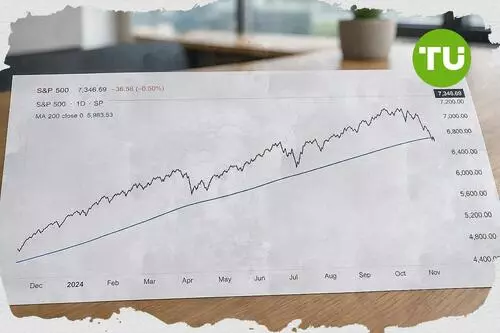
Investor enthusiasm around Anthropic's expected Nasdaq debut is colliding with a sharply more defensive market view from at least one strategist on Nov. 19. Joachim Klement of Panmure Liberum says he is selling all stocks in his personal portfolio and shifting into long-term government bonds after the S&P 500 falls below its 200-day moving average.
Highlights
- Klement moves fully defensive after S&P 500 breaks below its 200-day moving average, exiting all equities and rotating into long-term government bonds.
- Panmure Liberum warns AI bubble could burst, triggering potential 30% or greater stock-market declines, estimating almost 50% probability of a crash next year.
- Klement expects heightened uncertainty and limited upside or downside near-term, recommending London’s FTSE 100 for relative protection amid ongoing selloff in AI-related shares.
Defensive shift tied to technical trigger
As reported by CNBC, Klement says in a Thursday note that he is moving to a fully defensive position after the S&P 500 breaks below its 200-day moving average, a signal he uses to exit equities globally, not only in the U.S.He confirms that the move applies to all stocks in his personal holdings. Klement says the indicator is not foolproof, but argues that market dynamics have turned decisively bearish, prompting him to sell equities and rotate into long-term government bonds.
Klement has warned about an artificial intelligence bubble since May and says he has become increasingly bearish since the end of summer. Under his approach, he returns to stocks only if the S&P 500 rises back above the same technical level.
AI bubble concerns and market implications
Panmure Liberum's team says the AI bubble could burst and lead to stock-market declines of 30% or more. The group has previously pointed to the possibility of an AI-driven market crash in 2027 and says the probability for next year has risen to almost 50%.Klement recommends that investors go fully defensive as price momentum shifts downward. He also points to London's FTSE 100 as a market that may offer relative protection in a broader sell-off, highlighting stocks that have held up better during declines in AI-linked shares.
He says the market is entering a period of heightened uncertainty with limited upside or downside in the near term, adding that the current moment marks "the end of the beginning" rather than the start of a final market capitulation.
As we noted earlier, FTSE 100 slump showed defensive heavyweights dragging London shares even as miners rebounded.






Latest S&P 500 News



-
 Afghanistan
-
 Albania
-
 Algeria
-
 Angola
-
 Argentina
-
 Armenia
-
 Australia
-
 Austria
-
 Azerbaijan
-
 Bahamas
-
 Bahrain
-
 Bangladesh
-
 Belarus
-
 Belgium
-
 Bolivia
-
 Botswana
-
 Brazil
-
 Brunei
-
 Bulgaria
-
 Cambodia
-
 Cameroon
-
 Canada
-
 Chile
-
 China
-
 Colombia
-
 Congo
-
 Costa Rica
-
 Cote d'Ivoire
-
 Croatia
-
 Cuba
-
 Cyprus
-
 Czechia
-
 DR Congo
-
 Denmark
-
 Dominican Republic
-
 Ecuador
-
 Egypt
-
 El Salvador
-
 Estonia
-
 Eswatini
-
 Ethiopia
-
 Finland
-
 France
-
 Georgia
-
 Germany
-
 Ghana
-
 Greece
-
 Haiti
-
 Hong Kong
-
 Hungary
-
 India
-
 Indonesia
-
 Iran, Islamic republic
-
 Iraq
-
 Ireland
-
 Israel
-
 Italy
-
 Jamaica
-
 Japan
-
 Jordan
-
 Kazakhstan
-
 Kenya
-
 Korea
-
 Kuwait
-
 Kyrgyzstan
-
 Laos
-
 Latvia
-
 Lebanon
-
 Lesotho
-
 Libya
-
 Lithuania
-
 Luxembourg
-
 Madagascar
-
 Malaysia
-
 Malta
-
 Mauritius
-
 Mexico
-
 Moldova
-
 Mongolia
-
 Montenegro
-
 Morocco
-
 Mozambique
-
 Myanmar
-
 Namibia
-
 Nepal
-
 Netherlands
-
 New Zealand
-
 Nigeria
-
 North Macedonia
-
 Norway
-
 Oman
-
 Pakistan
-
 Palestine
-
 Panama
-
 Papua New Guinea
-
 Paraguay
-
 Peru
-
 Philippines
-
 Poland
-
 Portugal
-
 Puerto Rico
-
 Qatar
-
 Reunion
-
 Romania
-
 Rwanda
-
 Saudi Arabia
-
 Serbia
-
 Singapore
-
 Slovakia
-
 Slovenia
-
 Somalia
-
 South Africa
-
 Spain
-
 Sri Lanka
-
 Sweden
-
 Switzerland
-
 Syria
-
 Taiwan
-
 Tajikistan
-
 Tanzania
-
 Thailand
-
 Trinidad and Tobago
-
 Tunisia
-
 Turkey
-
 UAE
-
 Uganda
-
 Ukraine
-
 United Kingdom
-
United States
-
 Uruguay
-
 Uzbekistan
-
 Venezuela
-
 Vietnam
-
 Yemen
-
 Zambia
-
 Zimbabwe
- Forex
- Crypto












