

Microsoft slides while warning US ban on Chinese transceivers may disrupt AI infrastructure expansion

Microsoft (MSFT) stock is trading at $483.21 with a 3.03% decline at 15:31 (ET) on November 20, 2026. The move comes as geopolitical risks mount over potential U.S. restrictions on Chinese-made optical hardware, with implications for the company’s AI segment. Investors are watching for official decisions that could escalate supply chain disruption or inflate costs for MSFT’s infrastructure buildout.
 503.80
527.95
Highlights
- Microsoft warns that a U.S. ban on Chinese optical transceivers threatens AI infrastructure expansion in the United States.
- Disruption to the supply of optical transceivers could delay or increase costs for Microsoft cloud and AI projects.
- Shares of Microsoft trade under key short-term moving averages with bearish momentum, facing resistance near $520 and support at $443.
Geopolitical hardware risks threaten Microsoft’s AI buildout
According to Reuters, Microsoft warned the Trump administration on November 10, 2026, that a proposed U.S. ban on Chinese-made optical transceivers could threaten the buildout of artificial intelligence infrastructure in the United States.
The company’s warning highlights that restricting access to these key hardware components would disrupt supply chains for AI and data center operations. Such disruptions could result in delays or increased costs for MSFT as it seeks to expand its cloud and AI infrastructure.
This risk channel presents a potential obstacle for MSFT’s strategic growth plans, leaving the company and the broader sector exposed to ongoing policy uncertainty.
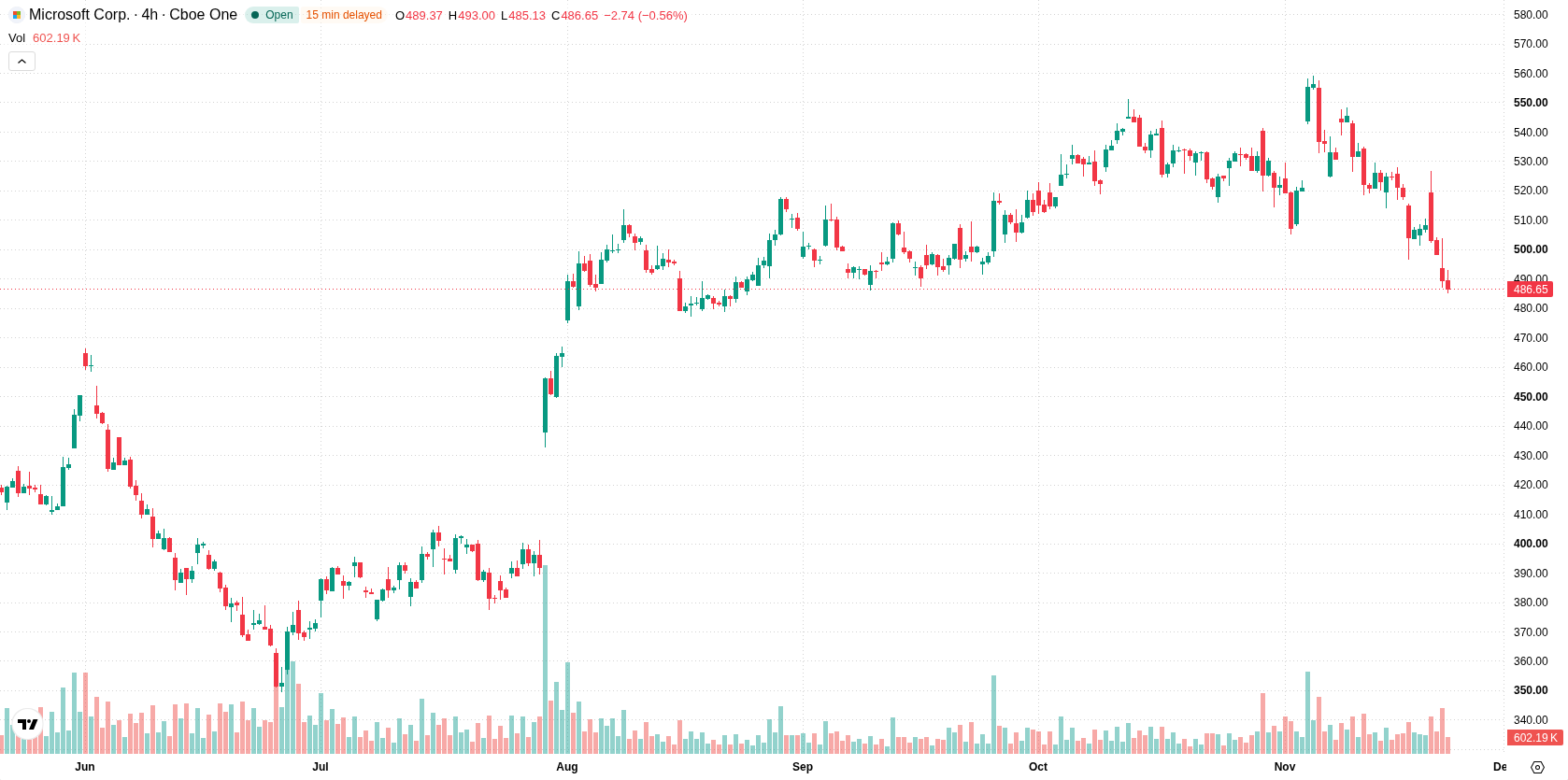
Downward momentum as MSFT trades below major moving averages
With geopolitical supply chain concerns weighing, MSFT is trading below both the D1 SMA-50 at $520.21 and the H4 SMA-20 at $516.98. The price remains above the D1 SMA-200 at $443.17, positioning the stock within a broad long-term uptrend but under near-term pressure.
Momentum metrics show bearish signals on the H4 chart, with RSI in an oversold zone and both MACD and ADX indicating sell. The H4 Kijun at $523.07 continues to act as a resistance ceiling for price action.
Supply chain decisions to shape next move toward $520 or $443
A resolution or easing of policy risks around Chinese hardware imports would be required for stabilization. For now, any sustained recovery faces resistance around $520, while a break toward the $443 support area could confirm downside risk if supply chain concerns intensify.
Earlier, analysts noted that Microsoft remained under near-term pressure despite expanding its enterprise automation and AI capabilities. The latest developments add a new dimension, as heightened geopolitical risks tied to potential U.S. restrictions on Chinese hardware now pose a key variable for the stock’s direction, making future policy clarity crucial for stabilization.









-
 Afghanistan
-
 Albania
-
 Algeria
-
 Angola
-
 Argentina
-
 Armenia
-
 Australia
-
 Austria
-
 Azerbaijan
-
 Bahamas
-
 Bahrain
-
 Bangladesh
-
 Belarus
-
 Belgium
-
 Bolivia
-
 Botswana
-
 Brazil
-
 Brunei
-
 Bulgaria
-
 Cambodia
-
 Cameroon
-
 Canada
-
 Chile
-
 China
-
 Colombia
-
 Congo
-
 Costa Rica
-
 Cote d'Ivoire
-
 Croatia
-
 Cuba
-
 Cyprus
-
 Czechia
-
 DR Congo
-
 Denmark
-
 Dominican Republic
-
 Ecuador
-
 Egypt
-
 El Salvador
-
 Estonia
-
 Eswatini
-
 Ethiopia
-
 Finland
-
 France
-
 Georgia
-
 Germany
-
 Ghana
-
 Greece
-
 Haiti
-
 Hong Kong
-
 Hungary
-
 India
-
 Indonesia
-
 Iran, Islamic republic
-
 Iraq
-
 Ireland
-
 Israel
-
 Italy
-
 Jamaica
-
 Japan
-
 Jordan
-
 Kazakhstan
-
 Kenya
-
 Korea
-
 Kuwait
-
 Kyrgyzstan
-
 Laos
-
 Latvia
-
 Lebanon
-
 Lesotho
-
 Libya
-
 Lithuania
-
 Luxembourg
-
 Madagascar
-
 Malaysia
-
 Malta
-
 Mauritius
-
 Mexico
-
 Moldova
-
 Mongolia
-
 Montenegro
-
 Morocco
-
 Mozambique
-
 Myanmar
-
 Namibia
-
 Nepal
-
 Netherlands
-
 New Zealand
-
 Nigeria
-
 North Macedonia
-
 Norway
-
 Oman
-
 Pakistan
-
 Palestine
-
 Panama
-
 Papua New Guinea
-
 Paraguay
-
 Peru
-
 Philippines
-
 Poland
-
 Portugal
-
 Puerto Rico
-
 Qatar
-
 Reunion
-
 Romania
-
 Rwanda
-
 Saudi Arabia
-
 Serbia
-
 Singapore
-
 Slovakia
-
 Slovenia
-
 Somalia
-
 South Africa
-
 Spain
-
 Sri Lanka
-
 Sweden
-
 Switzerland
-
 Syria
-
 Taiwan
-
 Tajikistan
-
 Tanzania
-
 Thailand
-
 Trinidad and Tobago
-
 Tunisia
-
 Turkey
-
 UAE
-
 Uganda
-
 Ukraine
-
 United Kingdom
-
United States
-
 Uruguay
-
 Uzbekistan
-
 Venezuela
-
 Vietnam
-
 Yemen
-
 Zambia
-
 Zimbabwe
- Forex
- Crypto












