

China’s BYD seeks to acquire car factory in France

The world’s largest electric vehicle manufacturer, BYD, is in exclusive talks to acquire a car factory in France from British company Ineos. The deal would allow the Chinese automaker to expand its presence in the European market, while Ineos plans to relocate production to the U.S. to avoid import tariffs.
According to Bloomberg, the facility is located in Hambach, near France’s border with Germany. The factory previously manufactured Smart cars and currently produces Ineos Grenadier and Quartermaster SUVs.
BYD said it intends to manufacture vehicles at the facility with European consumers’ preferences in mind. Meanwhile, production of Ineos SUVs at the plant will continue over the medium term.
The British company, owned by billionaire Jim Ratcliffe, has already shortlisted several potential locations for a factory in the U.S. Ineos expects to launch production in its largest market in 2028.
Chinese automakers expand their presence in Europe
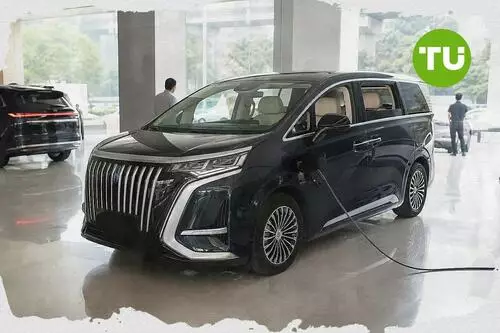
BYD is actively expanding its European presence amid intense price competition in China. The company is launching vehicle production in Hungary and plans to open additional factories across the region. Earlier this year, BYD also introduced its premium Denza brand to the European market.
In October, vehicle registrations for BYD and fellow Chinese automaker Chery more than doubled in Europe, driven by competitively priced electric and hybrid models.
However, BYD’s expansion has also encountered legal challenges. Last week, a Dutch court temporarily banned the company from selling its Ti7 SUV in the European Union, citing excessive similarities between its design and that of the Land Rover Defender.
Ratcliffe’s automotive business faces difficulties
Jim Ratcliffe launched his own automotive manufacturing business after Jaguar Land Rover discontinued production of the classic Defender model. However, the venture proved costly, while import tariffs introduced by the Donald Trump administration complicated Ineos’ plans to achieve profitability.
Relocating production to the U.S. would allow the British company to reduce tariff-related costs, while acquiring the French factory would enable BYD to expand its local manufacturing operations in Europe.
Automotive wars go beyond economics
The global automotive market is becoming an arena of trade and geopolitical confrontation between the U.S., Europe, and China. In 2025, the Donald Trump administration imposed 25% tariffs on vehicle imports, subsequently reducing them to 15% for the European Union, Japan, and South Korea. The European Union, in turn, introduced additional tariffs of up to 35.3% on Chinese electric vehicles, accusing Beijing of providing unfair government subsidies to manufacturers. Governments are seeking to protect domestic industries, preserve jobs, and encourage the relocation of manufacturing operations to their territories.
However, the confrontation extends beyond tariffs. Citing national security concerns, the U.S. is introducing restrictions on sales of vehicles equipped with Chinese software starting with the 2027 model year. Meanwhile, Western countries are seeking to reduce their dependence on China for battery manufacturing and critical materials. According to the International Energy Agency (IEA), China accounted for approximately 75% of global electric vehicle production and more than 80% of battery cell manufacturing in 2025. Under these circumstances, establishing factories in Europe offers Chinese companies a way to maintain access to a major market while bypassing some trade barriers.
As previously reported, BYD faced a sales ban in the EU.






Latest BYD News



-
 Afghanistan
-
 Albania
-
 Algeria
-
 Angola
-
 Argentina
-
 Armenia
-
 Australia
-
 Austria
-
 Azerbaijan
-
 Bahamas
-
 Bahrain
-
 Bangladesh
-
 Belarus
-
 Belgium
-
 Bolivia
-
 Botswana
-
 Brazil
-
 Brunei
-
 Bulgaria
-
 Cambodia
-
 Cameroon
-
 Canada
-
 Chile
-
 China
-
 Colombia
-
 Congo
-
 Costa Rica
-
 Cote d'Ivoire
-
 Croatia
-
 Cuba
-
 Cyprus
-
 Czechia
-
 DR Congo
-
 Denmark
-
 Dominican Republic
-
 Ecuador
-
 Egypt
-
 El Salvador
-
 Estonia
-
 Eswatini
-
 Ethiopia
-
 Finland
-
 France
-
 Georgia
-
 Germany
-
 Ghana
-
 Greece
-
 Haiti
-
 Hong Kong
-
 Hungary
-
 India
-
 Indonesia
-
 Iran, Islamic republic
-
 Iraq
-
 Ireland
-
 Israel
-
 Italy
-
 Jamaica
-
 Japan
-
 Jordan
-
 Kazakhstan
-
 Kenya
-
 Korea
-
 Kuwait
-
 Kyrgyzstan
-
 Laos
-
 Latvia
-
 Lebanon
-
 Lesotho
-
 Libya
-
 Lithuania
-
 Luxembourg
-
 Madagascar
-
 Malaysia
-
 Malta
-
 Mauritius
-
 Mexico
-
 Moldova
-
 Mongolia
-
 Montenegro
-
 Morocco
-
 Mozambique
-
 Myanmar
-
 Namibia
-
 Nepal
-
 Netherlands
-
 New Zealand
-
 Nigeria
-
 North Macedonia
-
 Norway
-
 Oman
-
 Pakistan
-
 Palestine
-
 Panama
-
 Papua New Guinea
-
 Paraguay
-
 Peru
-
 Philippines
-
 Poland
-
 Portugal
-
 Puerto Rico
-
 Qatar
-
 Reunion
-
 Romania
-
 Rwanda
-
 Saudi Arabia
-
 Serbia
-
 Singapore
-
 Slovakia
-
 Slovenia
-
 Somalia
-
 South Africa
-
 Spain
-
 Sri Lanka
-
 Sweden
-
 Switzerland
-
 Syria
-
 Taiwan
-
 Tajikistan
-
 Tanzania
-
 Thailand
-
 Trinidad and Tobago
-
 Tunisia
-
 Turkey
-
 UAE
-
 Uganda
-
 Ukraine
-
 United Kingdom
-
United States
-
 Uruguay
-
 Uzbekistan
-
 Venezuela
-
 Vietnam
-
 Yemen
-
 Zambia
-
 Zimbabwe
- Forex
- Crypto












