David Tepper Net Worth, Biography and Key Insights


David Tepper’s Profile Summary
|
Company
|
Appaloosa Management |
|---|---|
|
Position
|
Founder and President |
|
Source of wealth
|
Hedge fund management via Appaloosa Management Investments in distressed debt Sports team ownership (Carolina Panthers, Charlotte FC) |
|
Also known as
|
Philanthropist Sports Team Owner |
|
Age
|
69 |
|
Education
|
University of Pittsburgh – Bachelor of Science in Economics Carnegie Mellon University – Master of Business Administration (MBA) |
|
Citizenship
|
United States |
|
Residence
|
Palm Beach, Florida |
|
Family
|
Spouse: Nicole Tepper Children: Three children |
|
Website, Social Media
|
Biography
David Alan Tepper, born on September 11, 1957, in Pittsburgh, Pennsylvania, is one of the most successful hedge fund managers in the world. After earning a degree in economics from the University of Pittsburgh and an MBA from Carnegie Mellon University, Tepper began his career at Goldman Sachs. There, he specialized in high-yield bonds and distressed debt, a focus that set the foundation for his future success.In 1993, frustrated by being passed over for partnership at Goldman Sachs, Tepper co-founded Appaloosa Management. The firm became famous for investing in distressed companies, and Tepper gained widespread recognition during the 2008 financial crisis when he made billions by betting on recovering financial stocks like Bank of America and Citigroup. His investment strategy often focuses on turning around companies on the brink of bankruptcy, making Appaloosa one of the most successful hedge funds in the world. Tepper is also the owner of the Carolina Panthers (NFL) and Charlotte FC (MLS), further expanding his influence beyond finance
-
How did David Tepper make money?
David Tepper, founder and CEO of Appaloosa Management, has become one of the world’s most successful investors thanks to his ability to profit from crises. He cut his teeth in finance at Republic Steel and then took a position as an analyst at Keystone Mutual Funds. But the defining moment of his career was a decade at Goldman Sachs, where he worked in asset management and developed a reputation as an expert in distressed debt.
In 1993, Tepper founded Appaloosa Management, which specialized in investing in distressed companies and undervalued assets. The company’s main income came from high-yield bonds and shares of companies in financial trouble. One of Tepper’s most successful deals was investing in bank stocks during the 2008 financial crisis. Appaloosa acquired Bank of America and Citigroup at rock-bottom levels, which earned the fund more than $7 billion in profits after the markets recovered.
Today, Appaloosa Management manages tens of billions of dollars in assets, and the fund’s average annual return is about 25%, which confirms its leadership in the hedge fund industry. Tepper’s capitalization also includes investments in real estate and the sports sector. In 2018, he acquired the Carolina Panthers (NFL) team for $2.3 billion, which was the largest investment in a sports club at the time.
David Tepper’s net worth is estimated at $18 billion, and Appaloosa Management remains one of the most influential companies in the alternative investment market. -
What is David Tepper net worth?
As of 2026, David Tepper’s net worth is estimated to be $23.7B.
What is David Tepper also known as?
Tepper is well-known for his philanthropic efforts, particularly his donations to Carnegie Mellon University, where he contributed over $120 million to create the David A. Tepper School of Business. He is also active in the sports world, owning the Carolina Panthers and Charlotte FC, solidifying his influence in both finance and sportsProminent achievements
Highest-earning hedge fund manager in 2009 and 2012Owner of Carolina Panthers (NFL) and Charlotte FC (MLS)
Donated over $120 million to establish the Tepper School of Business at Carnegie Mellon University
As of June 2025, Appaloosa Management managed approximately $6.45 billion, with major positions in Alibaba, UnitedHealth Group, Amazon, Vistra, and NRG Energy.
Trading Strategy
David Tepper's trading strategy is based on a contrarian and value-oriented approach, especially during times of market distress. He gained widespread recognition in 2009 after making large bets on undervalued bank stocks like Bank of America and Citigroup when most investors were avoiding risk. Tepper relies heavily on fundamental analysis, seeking out temporarily mispriced assets with strong recovery potential.
He remains a flexible and adaptive investor, not confined to a single style. Depending on market conditions, he may invest in equities, bonds, or other asset classes. He pays close attention to central bank policies, inflation trends, and credit markets. Tepper’s approach combines strong conviction with disciplined risk management, enabling him to achieve high returns while remaining responsive to shifts in the economic landscape.
What are David Tepper’s key insights?
David Tepper is known for his contrarian investment approach, focusing on distressed assets and betting on companies during downturns. His success in navigating volatile markets, particularly during the 2008 financial crisis, has earned him a reputation for being one of the boldest investors on Wall Street
Personal life
In 1986, he married Marlene Resnick Tepper;[58] they have three children. In 2016, he and his wife divorced.[59] In 2019, he married Nicole Bronish after a long-term relationship
Useful insights
Advanced investment strategies

For those who have mastered the basics, the next step is exploring advanced investment strategies. These books delve into the complexities of portfolio management and alternative asset classes, offering sophisticated approaches to building wealth.
-
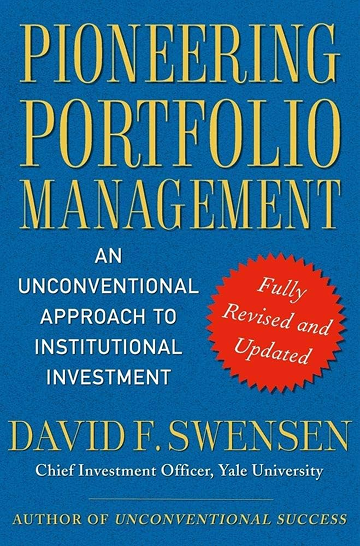
David Swensen - "Pioneering Portfolio Management"
-
Summary:
In this book, Swensen, who successfully managed Yale's endowment fund, outlines his investment philosophy, emphasizing diversification, a long-term perspective, and the inclusion of alternative asset classes such as hedge funds, private equity, and real estate. This approach aims to balance risk and reward to maximize returns for institutional investors.
-
Why read it:
Swensen’s methods are widely regarded as groundbreaking and have been adopted by many large institutional investors. His book is essential for anyone looking to build a robust, diversified portfolio with a focus on steady, long-term growth.
-
-
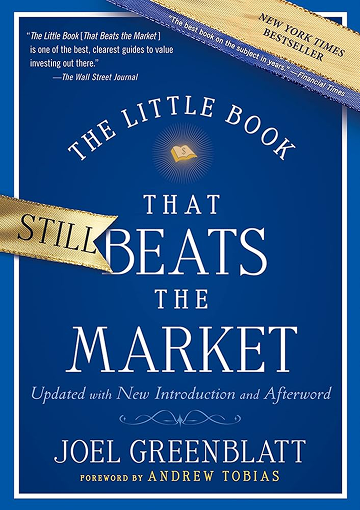
Joel Greenblatt - "The Little Book That Still Beats the Market"
-
Summary:
Greenblatt presents a simple yet effective formula for investing in value stocks. His "magic formula" identifies companies that are both undervalued and have high earnings yields, providing a clear strategy for beating the market. Greenblatt simplifies complex financial concepts for individual investors, making the book accessible to both beginners and experienced traders.
-
Why read it:
Greenblatt’s formula has consistently outperformed the market, making this book a practical guide for investors looking for a straightforward, effective strategy. It’s particularly useful for those who prefer a hands-on approach to stock selection without the need for deep financial expertise.
-
Other profiles in category
Popular Financial Guides
Editors' Top Picks and Insights






Latest Financial News

French stocks deepen underperformance as debt fears hit banks and cyclicals

Perda chairman faces 15 corruption charges linked to the Perda-Tech project in Penang

Ukraine flags Trump-Putin ties as geopolitical risk

-
 Afghanistan
-
 Albania
-
 Algeria
-
 Angola
-
 Argentina
-
 Armenia
-
 Australia
-
 Austria
-
 Azerbaijan
-
 Bahamas
-
 Bahrain
-
 Bangladesh
-
 Belarus
-
 Belgium
-
 Bolivia
-
 Botswana
-
 Brazil
-
 Brunei
-
 Bulgaria
-
 Cambodia
-
 Cameroon
-
 Canada
-
 Chile
Chile
-
 China
China
-
 Colombia
-
 Congo
Congo
-
 Costa Rica
-
 Cote d'Ivoire
-
 Croatia
-
 Cuba
Cuba
-
 Cyprus
-
 Czechia
-
 DR Congo
-
 Denmark
-
 Dominican Republic
-
 Ecuador
-
 Egypt
Egypt
-
 El Salvador
-
 Estonia
-
 Eswatini
-
 Ethiopia
-
 Finland
-
 France
-
 Georgia
-
 Germany
-
 Ghana
Ghana
-
 Greece
-
 Haiti
Haiti
-
 Hong Kong
-
 Hungary
-
 India
India
-
 Indonesia
-
 Iran, Islamic republic
-
 Iraq
Iraq
-
 Ireland
-
 Israel
-
 Italy
Italy
-
 Jamaica
-
 Japan
Japan
-
 Jordan
-
 Kazakhstan
-
 Kenya
Kenya
-
 Korea
Korea
-
 Kuwait
-
 Kyrgyzstan
-
 Laos
Laos
-
 Latvia
-
 Lebanon
-
 Lesotho
-
 Libya
Libya
-
 Lithuania
-
 Luxembourg
-
 Madagascar
-
 Malaysia
-
 Malta
Malta
-
 Mauritius
-
 Mexico
-
 Moldova
-
 Mongolia
-
 Montenegro
-
 Morocco
-
 Mozambique
-
 Myanmar
-
 Namibia
-
 Nepal
Nepal
-
 Netherlands
-
 New Zealand
-
 Nigeria
-
 North Macedonia
-
 Norway
-
 Oman
Oman
-
 Pakistan
-
 Palestine
-
 Panama
-
 Papua New Guinea
-
 Paraguay
-
 Peru
Peru
-
 Philippines
-
 Poland
-
 Portugal
-
 Puerto Rico
-
 Qatar
Qatar
-
 Reunion
-
 Romania
-
 Rwanda
-
 Saudi Arabia
-
 Serbia
-
 Singapore
-
 Slovakia
-
 Slovenia
-
 Somalia
-
 South Africa
-
 Spain
Spain
-
 Sri Lanka
-
 Sweden
-
 Switzerland
-
 Syria
Syria
-
 Taiwan
-
 Tajikistan
-
 Tanzania
-
 Thailand
-
 Trinidad and Tobago
-
 Tunisia
-
 Turkey
-
 UAE
UAE
-
 Uganda
-
 Ukraine
-
 United Kingdom
-
United States
-
 Uruguay
-
 Uzbekistan
-
 Venezuela
-
 Vietnam
-
 Yemen
Yemen
-
 Zambia
-
 Zimbabwe
- Forex
- Crypto












