Francine von Finck Net Worth, Biography and Key Insights



Francine von Finck’s Profile Summary
|
Company
|
Merck Finck & Co. (Historical connection) |
|---|---|
|
Position
|
Inherited wealth, not involved in operational roles |
|
Source of wealth
|
Inheritance and investments in banking, insurance, and real estate. |
|
Also known as
|
Francine Le Tanneux von Saint Paul |
|
Age
|
81 |
|
Education
|
No data |
|
Citizenship
|
Germany |
|
Residence
|
Thurgau, Switzerland |
|
Family
|
Widowed, four children |
|
Website, Social Media
|
No data |
Biography
Francine von Finck, born on January 1, 1945, is a German heiress who rose to prominence following the passing of her husband, August von Finck Jr., in November 2021. August von Finck Jr. was a celebrated German businessman and billionaire, known for his pivotal role in managing and expanding the family’s wealth. Francine inherited a significant portion of this fortune alongside her four children.The foundation of the von Finck family’s wealth was laid in 1870 by Wilhelm von Finck, who co-founded Merck Finck & Co., a prestigious private bank that played a key role in shaping the German financial landscape. The family also had stakes in notable institutions like Munich Re and Allianz, two global financial giants. In the 1990s, under August’s leadership, the family strategically sold their stake in Merck Finck and Allianz to Barclays Bank, diversifying their wealth into various investment sectors, including real estate, hospitality, and other private ventures.
Francine and her family are known for their dedication to privacy, rarely engaging in public events or media interactions. They reside in Thurgau, Switzerland, continuing the family’s tradition of discretion while managing their vast portfolio of investments. As of 2025, Francine’s net worth is estimated at $9.2 billion. Despite the lack of public appearances, Francine’s quiet yet firm stewardship of the von Finck family’s wealth reflects a commitment to preserving their legacy while navigating the complexities of modern financial markets.
-
How did Francine von Finck make money?
Jonathan Gray's ascent in the business world is marked by strategic acumen and a series of calculated decisions that propelled him to billionaire status. Gray began his career at Blackstone Group, a leading global investment firm, where he joined the mergers and acquisitions advisory group straight out of college. Recognizing the potential in real estate, he transitioned to Blackstone's newly formed real estate private equity group.
In the early 1990s, Gray played a pivotal role in acquiring a series of distressed properties, capitalizing on the downturn in the real estate market. His strategic foresight was evident as he led Blackstone's investments in the hotel industry, notably the acquisition of Hilton Hotels in 2007 for $26 billion. This deal, executed at the height of the market, showcased Gray's confidence in the long-term value of real estate assets.
Under his leadership, Blackstone's real estate division grew exponentially, becoming the largest real estate private equity firm globally. Gray's emphasis on large-scale acquisitions and his ability to identify undervalued assets were instrumental in this growth. His strategic vision extended to the public markets, where he oversaw the initial public offering of Hilton Worldwide Holdings in 2013, generating substantial returns for investors.
Gray's business success is rooted in his analytical approach and his ability to anticipate market trends. By focusing on large, complex transactions and maintaining a disciplined investment strategy, he has built a diversified portfolio that includes significant holdings in various sectors of the real estate market. His leadership at Blackstone has not only solidified his personal wealth but has also positioned the firm as a dominant force in the global real estate industry. -
What is Francine von Finck net worth?
As of 2026, Francine von Finck’s net worth is estimated to be $9.9B.
What is Francine von Finck also known as?
Francine von Finck is recognized as a prominent member of the von Finck family, known for their vast financial empire built through banking, insurance, and real estate.Prominent achievements
Francine von Finck has successfully managed the inheritance of a multi-billion-dollar fortune, ensuring the continuation of her family’s financial legacy. Her ability to maintain discretion and strategic investment focus has solidified her family’s reputation in global finance.What are Francine von Finck’s key insights?
Francine and her family follow a philosophy centered on privacy, long-term value preservation, and diversification of investments. Their approach emphasizes maintaining their financial legacy without public exposure.
Personal life
Francine has four children: August François, Maximilian Rudolf, Luitpold Ferdinand, and Maria Theresia. They jointly manage the inherited family wealth, maintaining a low public profile and continuing the tradition of financial stewardship established by their predecessors.
Useful insights
Understanding market forces

In my experience, to truly succeed as an investor, it’s essential to understand the driving forces behind market behavior. Market movements aren’t random—they’re influenced by a range of economic theories and dynamics. The following books provide valuable insights into these forces, offering a deeper understanding of how global financial markets operate and what shapes their trends.
-
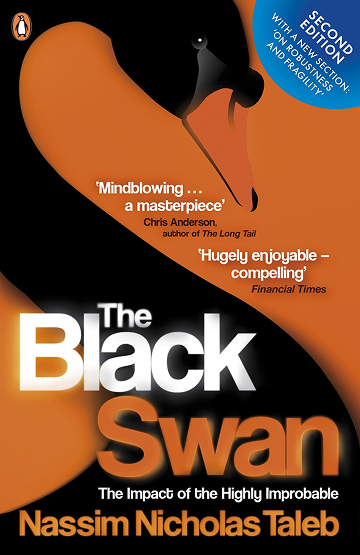
Nassim Nicholas Taleb - "The Black Swan"
-
Summary:
Taleb explores the concept of rare, unpredictable events—so-called "Black Swans"—that can have massive impacts on markets and society. These events are often overlooked by traditional risk management models, leading to devastating consequences when they occur. Taleb illustrates how these unpredictable shocks shape our world, often more than gradual, expected changes.
-
Why read it:
This book challenges conventional thinking about risk and uncertainty, showing that many major historical and financial events were "Black Swans." It's a vital read for investors who want to build resilience in the face of market volatility.
-
-
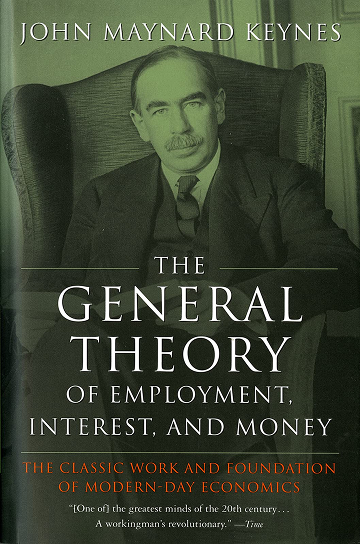
John Maynard Keynes - "The General Theory of Employment, Interest, and Money"
-
Summary:
Keynes revolutionized economics by focusing on total demand within an economy and its effect on output and inflation. His theory suggested that government intervention could stabilize economic cycles through fiscal and monetary policy. The book also explains the consequences of under-consumption and the role of interest rates in managing economic stability.
-
Why read it:
For investors interested in macroeconomic trends and policy impacts, Keynes’ work is essential. Understanding the Keynesian framework can help investors predict how government actions might influence market performance.
-
Other profiles in category
Popular Financial Guides
Editors' Top Picks and Insights

AI without limits: How dangerous are neural networks?

Worldcoin on Wall Street: From iris scans to ETF

Mark Cuban's wealth philosophy: Why stocks matter more than salary or crypto

Dangerous but indispensable: Why the crypto market needs bridges

Markus Levin: DePIN could power the AI agent economy

Pokémon cards for $2,500: How collectibles became a new form of gambling
Latest Financial News

USD/NOK technical analysis: Trades near kr9.674 resistance

Southwest Airlines posts higher quarterly profit as summer earnings outlook misses forecasts

CSX second-quarter profit and revenue rise on intermodal demand

-
 Afghanistan
-
 Albania
-
 Algeria
-
 Angola
-
 Argentina
-
 Armenia
-
 Australia
-
 Austria
-
 Azerbaijan
-
 Bahamas
-
 Bahrain
-
 Bangladesh
-
 Belarus
-
 Belgium
-
 Bolivia
-
 Botswana
-
 Brazil
-
 Brunei
-
 Bulgaria
-
 Cambodia
-
 Cameroon
-
 Canada
-
 Chile
Chile
-
 China
China
-
 Colombia
-
 Congo
Congo
-
 Costa Rica
-
 Cote d'Ivoire
-
 Croatia
-
 Cuba
Cuba
-
 Cyprus
-
 Czechia
-
 DR Congo
-
 Denmark
-
 Dominican Republic
-
 Ecuador
-
 Egypt
Egypt
-
 El Salvador
-
 Estonia
-
 Eswatini
-
 Ethiopia
-
 Finland
-
 France
-
 Georgia
-
 Germany
-
 Ghana
Ghana
-
 Greece
-
 Haiti
Haiti
-
 Hong Kong
-
 Hungary
-
 India
India
-
 Indonesia
-
 Iran, Islamic republic
-
 Iraq
Iraq
-
 Ireland
-
 Israel
-
 Italy
Italy
-
 Jamaica
-
 Japan
Japan
-
 Jordan
-
 Kazakhstan
-
 Kenya
Kenya
-
 Korea
Korea
-
 Kuwait
-
 Kyrgyzstan
-
 Laos
Laos
-
 Latvia
-
 Lebanon
-
 Lesotho
-
 Libya
Libya
-
 Lithuania
-
 Luxembourg
-
 Madagascar
-
 Malaysia
-
 Malta
Malta
-
 Mauritius
-
 Mexico
-
 Moldova
-
 Mongolia
-
 Montenegro
-
 Morocco
-
 Mozambique
-
 Myanmar
-
 Namibia
-
 Nepal
Nepal
-
 Netherlands
-
 New Zealand
-
 Nigeria
-
 North Macedonia
-
 Norway
-
 Oman
Oman
-
 Pakistan
-
 Palestine
-
 Panama
-
 Papua New Guinea
-
 Paraguay
-
 Peru
Peru
-
 Philippines
-
 Poland
-
 Portugal
-
 Puerto Rico
-
 Qatar
Qatar
-
 Reunion
-
 Romania
-
 Rwanda
-
 Saudi Arabia
-
 Serbia
-
 Singapore
-
 Slovakia
-
 Slovenia
-
 Somalia
-
 South Africa
-
 Spain
Spain
-
 Sri Lanka
-
 Sweden
-
 Switzerland
-
 Syria
Syria
-
 Taiwan
-
 Tajikistan
-
 Tanzania
-
 Thailand
-
 Trinidad and Tobago
-
 Tunisia
-
 Turkey
-
 UAE
UAE
-
 Uganda
-
 Ukraine
-
 United Kingdom
-
United States
-
 Uruguay
-
 Uzbekistan
-
 Venezuela
-
 Vietnam
-
 Yemen
Yemen
-
 Zambia
-
 Zimbabwe
- Forex
- Crypto












