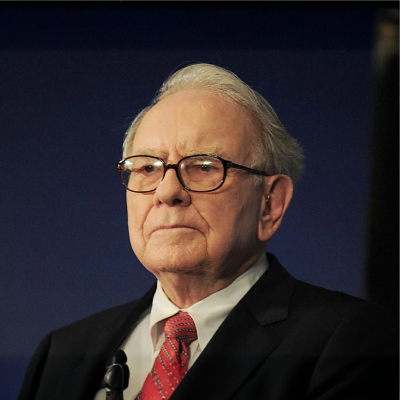
Warren Buffett Net Worth, Biography and Key Insights


Warren Buffett’s Profile Summary
|
Company
|
Berkshire Hathaway |
|---|---|
|
Position
|
Warren Buffett is the Chairman and CEO of Berkshire Hathaway, a position he has held since 1970 |
|
Source of wealth
|
Warren Buffett's wealth primarily derives from his position as CEO and Chairman of Berkshire Hathaway, and ownership stakes in a wide range of companies |
|
Also known as
|
Warren Buffett is also known as a philanthropist, co-founder of the Giving Pledge, and author of various articles and letters on investing and philanthropy. |
|
Age
|
96 |
|
Education
|
University of Nebraska - Bachelor of Science in Business Administration. Columbia Business School - Master of Science in Economics |
|
Citizenship
|
United States |
|
Residence
|
Omaha, Nebraska, USA |
|
Family
|
Warren Buffett's immediate family includes: Wives: Susan Buffett (deceased), Astrid Menks. Children: Susan Alice Buffett, Howard Graham Buffett, Peter Andrew Buffett. Siblings: Doris Buffett (deceased), Roberta Buffett |
|
Website, Social Media
|
https://www.berkshirehathaway.com/ |
Biography
Warren Edward Buffett, born on August 30, 1930, in Omaha, Nebraska, is one of the most renowned investors in the world, often referred to as the "Oracle of Omaha." He demonstrated an early interest in business and investing, purchasing his first stock at the age of 11. After earning a bachelor's degree in business administration from the University of Nebraska, he went on to obtain a master's in economics from Columbia University, where he studied under Benjamin Graham, a mentor who significantly influenced his investment philosophy. Buffett began his career in investment partnerships before taking the helm at Berkshire Hathaway in 1970. Under his leadership, the company transformed from a struggling textile manufacturer into a diversified holding company with substantial interests in various sectors, including insurance, utilities, and consumer goods. Buffett's investment strategy is characterized by a long-term value investing approach, focusing on companies with strong fundamentals and competitive advantages. His leadership has resulted in a staggering increase in Berkshire's stock price, with an overall gain of more than 5,500,000% since he took control.-
How did Warren Buffett make money?
Warren Buffett, the billionaire and head of the investment conglomerate Berkshire Hathaway, is considered one of the most successful investors in history. His entrepreneurial journey began in his teens, when he used his first earnings to buy stocks. In 1956, Buffett founded the Buffett Partnership, within which he managed investors' capital using his strategy of deep analysis of undervalued companies. This fund became the basis for his future success.
A key stage in Buffett's career was the acquisition of the textile company Berkshire Hathaway in 1965. Initially, he planned to maintain its profile, but later abandoned textile production and focused on turning the company into an investment holding company. Berkshire Hathaway's main source of capital was insurance premiums accumulated by companies such as GEICO and General Re. Buffett invested these funds in the purchase of shares and stakes in various businesses.
Berkshire Hathaway owns large stakes in such giants as Apple (more than $150 billion), Coca-Cola, American Express and Bank of America. In addition, the company fully controls such enterprises as the BNSF Railway corporation, the battery manufacturer Duracell and the Dairy Queen restaurant chain. Berkshire Hathaway's revenue in 2022 was $282 billion, making it one of the most successful corporations in the world.
Buffett is also known for his approach to business acquisitions: he chooses companies with sustainable profits, reliable management and significant growth potential. This approach has allowed Berkshire Hathaway to turn into an empire with a market capitalization of more than $700 billion. Buffett's personal fortune exceeds $120 billion, making him one of the richest people in the world. -
What is Warren Buffett net worth?
As of 2026, Warren Buffett’s net worth is estimated to be $150.38 B.
What is Warren Buffett also known as?
Warren Buffett has made significant contributions to philanthropy, notably through the Giving Pledge, which he co-founded with Bill and Melinda Gates in 2010. This initiative encourages billionaires to commit to giving away the majority of their wealth to charitable causes during their lifetimes or through their wills. Buffett's philanthropic focus areas include education and healthcare. He has directed substantial funds to initiatives aimed at improving educational opportunities for underserved communities and enhancing healthcare access globally. Buffett is recognized for his humility and straightforward approach to wealth management, often sharing his investment wisdom through letters to Berkshire Hathaway shareholders and public discussions. His down-to-earth lifestyle contrasts with the vast fortune he has amassed, making him a relatable figure in the world of finance and philanthropyProminent achievements
Recognized as "Person of the Year" by Time magazine. Pioneered the Giving Pledge, committing to donate the majority of his wealth to charity. His investments have contributed to Berkshire Hathaway becoming one of the largest companies in the world, with a peak market cap exceeding $700 billion. Authored the annual letters to Berkshire Hathaway shareholders, which are widely regarded as influential in the business worldMid-2025: Berkshire Hathaway’s cash holdings reached a record ~$350 billion, the largest among U.S. public companies.
Trading Strategy
Warren Buffett’s strategy is based on value investing—buying fundamentally strong companies at prices below their intrinsic value and holding them for the long term. He focuses on businesses with predictable earnings, strong management, and a durable competitive advantage (moat). Buffett avoids short-term speculation and rarely invests in businesses he doesn’t fully understand.
He prefers companies with stable cash flows and high returns on capital, often in sectors like insurance, consumer goods, and banking. Buffett also emphasizes patience, discipline, and capital preservation, using market downturns as opportunities to buy quality assets at a discount. His approach relies on long-term compounding rather than frequent trading.
What are Warren Buffett’s key insights?
Warren Buffett's business philosophy centers on several key principles: Value Investing: He advocates for investing in undervalued companies with strong fundamentals. Long-Term Focus: Buffett emphasizes the importance of patience and long-term perspectives in investing. Integrity and Trust: He stresses the value of honesty and building relationships based on trust. Continuous Learning: Buffett dedicates a significant portion of his day to reading, reflecting his belief in the importance of knowledge and self-improvement
Personal life
Susan Buffett: Warren's first wife, who was an active philanthropist and a singer, passed away in 2004. They had three children together. Astrid Menks: Warren's second wife, who he married in 2006. She was introduced to him by Susan and played a significant role in his life after Susan's passing. Children: Susan Alice Buffett: She is involved in various charitable organizations and has been married and divorced. Howard Graham Buffett: A businessman and philanthropist, he leads the Howard G. Buffett Foundation, focusing on food security and conservation. Peter Andrew Buffett: A musician and philanthropist, he co-chairs the NoVo Foundation, promoting social change and empowerment for women and indigenous communities
Useful insights
Advanced investment strategies

For those who have mastered the basics, the next step is exploring advanced investment strategies. These books delve into the complexities of portfolio management and alternative asset classes, offering sophisticated approaches to building wealth.
-
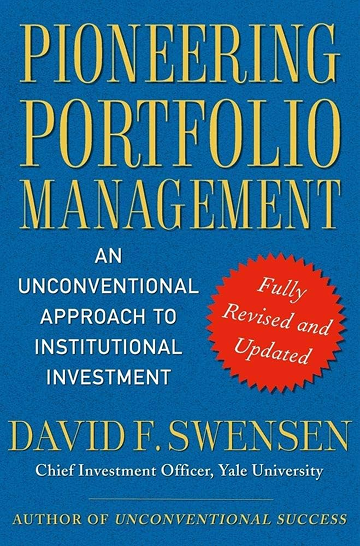
David Swensen - "Pioneering Portfolio Management"
-
Summary:
In this book, Swensen, who successfully managed Yale's endowment fund, outlines his investment philosophy, emphasizing diversification, a long-term perspective, and the inclusion of alternative asset classes such as hedge funds, private equity, and real estate. This approach aims to balance risk and reward to maximize returns for institutional investors.
-
Why read it:
Swensen’s methods are widely regarded as groundbreaking and have been adopted by many large institutional investors. His book is essential for anyone looking to build a robust, diversified portfolio with a focus on steady, long-term growth.
-
-
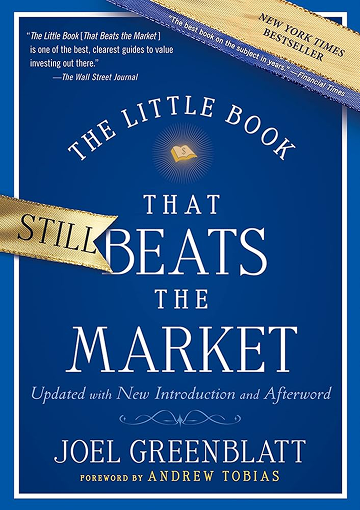
Joel Greenblatt - "The Little Book That Still Beats the Market"
-
Summary:
Greenblatt presents a simple yet effective formula for investing in value stocks. His "magic formula" identifies companies that are both undervalued and have high earnings yields, providing a clear strategy for beating the market. Greenblatt simplifies complex financial concepts for individual investors, making the book accessible to both beginners and experienced traders.
-
Why read it:
Greenblatt’s formula has consistently outperformed the market, making this book a practical guide for investors looking for a straightforward, effective strategy. It’s particularly useful for those who prefer a hands-on approach to stock selection without the need for deep financial expertise.
-
Other profiles in category
Popular Financial Guides
Editors' Top Picks and Insights






Latest Financial News

Menara Asia launches construction procurement platform to address quality and compliance gaps in Malaysia

Astaka Padu, Kimlun expand joint venture for RM450 million serviced apartment project in Johor Bahru

South African executive incentive payouts surge in JSE Top 200 pay review

-
 Afghanistan
-
 Albania
-
 Algeria
-
 Angola
-
 Argentina
-
 Armenia
-
 Australia
-
 Austria
-
 Azerbaijan
-
 Bahamas
-
 Bahrain
-
 Bangladesh
-
 Belarus
-
 Belgium
-
 Bolivia
-
 Botswana
-
 Brazil
-
 Brunei
-
 Bulgaria
-
 Cambodia
-
 Cameroon
-
 Canada
-
 Chile
Chile
-
 China
China
-
 Colombia
-
 Congo
Congo
-
 Costa Rica
-
 Cote d'Ivoire
-
 Croatia
-
 Cuba
Cuba
-
 Cyprus
-
 Czechia
-
 DR Congo
-
 Denmark
-
 Dominican Republic
-
 Ecuador
-
 Egypt
Egypt
-
 El Salvador
-
 Estonia
-
 Eswatini
-
 Ethiopia
-
 Finland
-
 France
-
 Georgia
-
 Germany
-
 Ghana
Ghana
-
 Greece
-
 Haiti
Haiti
-
 Hong Kong
-
 Hungary
-
 India
India
-
 Indonesia
-
 Iran, Islamic republic
-
 Iraq
Iraq
-
 Ireland
-
 Israel
-
 Italy
Italy
-
 Jamaica
-
 Japan
Japan
-
 Jordan
-
 Kazakhstan
-
 Kenya
Kenya
-
 Korea
Korea
-
 Kuwait
-
 Kyrgyzstan
-
 Laos
Laos
-
 Latvia
-
 Lebanon
-
 Lesotho
-
 Libya
Libya
-
 Lithuania
-
 Luxembourg
-
 Madagascar
-
 Malaysia
-
 Malta
Malta
-
 Mauritius
-
 Mexico
-
 Moldova
-
 Mongolia
-
 Montenegro
-
 Morocco
-
 Mozambique
-
 Myanmar
-
 Namibia
-
 Nepal
Nepal
-
 Netherlands
-
 New Zealand
-
 Nigeria
-
 North Macedonia
-
 Norway
-
 Oman
Oman
-
 Pakistan
-
 Palestine
-
 Panama
-
 Papua New Guinea
-
 Paraguay
-
 Peru
Peru
-
 Philippines
-
 Poland
-
 Portugal
-
 Puerto Rico
-
 Qatar
Qatar
-
 Reunion
-
 Romania
-
 Rwanda
-
 Saudi Arabia
-
 Serbia
-
 Singapore
-
 Slovakia
-
 Slovenia
-
 Somalia
-
 South Africa
-
 Spain
Spain
-
 Sri Lanka
-
 Sweden
-
 Switzerland
-
 Syria
Syria
-
 Taiwan
-
 Tajikistan
-
 Tanzania
-
 Thailand
-
 Trinidad and Tobago
-
 Tunisia
-
 Turkey
-
 UAE
UAE
-
 Uganda
-
 Ukraine
-
 United Kingdom
-
United States
-
 Uruguay
-
 Uzbekistan
-
 Venezuela
-
 Vietnam
-
 Yemen
Yemen
-
 Zambia
-
 Zimbabwe
- Forex
- Crypto












