
William Eckhardt Biography, Career, Net Worth, and Key Insight


William Eckhardt’s Profile Summary
|
Company
|
Eckhardt Trading Company |
|---|---|
|
Position
|
Founder, Chairman, and Chief Research Scientist of Eckhardt Trading Company. |
|
Source of wealth
|
Management and performance fees from Eckhardt Trading Company, earnings from futures trading, and investments in systematic trading strategies |
|
Also known as
|
Philosopher, donor to scientific research, co-creator of Turtle Trading Experiment. |
|
Age
|
71 |
|
Education
|
DePaul University - Bachelor’s degree in Mathematics, University of Chicago - Master’s degree in Mathematics |
|
Citizenship
|
United States |
|
Residence
|
Chicago, IL, USA |
|
Family
|
There is little publicly available information regarding William Eckhardt’s family. He is known to maintain a private life, and no details about his spouse or children have been disclosed in the verified sources available. |
|
Website, Social Media
|
https://www.eckhardttrading.com/ |
Biography
William Eckhardt is a prominent American trader and fund manager, renowned for his pioneering work in futures trading. He was born in 1955 and holds both a Bachelor’s degree in Mathematics from DePaul University (1969) and a Master’s degree in Mathematics from the University of Chicago (1970). He started his career in trading after leaving his doctoral research at the University of Chicago in 1974, where he studied mathematical logic. Eckhardt is well-known for his role in the Turtle Trading Experiment, alongside his partner Richard Dennis, which aimed to prove whether trading skills could be systematically taught. This experiment led to a highly successful group of traders, earning significant profits. In 1991, he founded Eckhardt Trading Company, a systematic futures trading firm that specializes in quantitative trading strategies. Throughout his career, Eckhardt has been at the forefront of applying mathematical models and statistical principles to trading, contributing extensively to research in futures price action, risk management, and the development of cutting-edge trading systems. In addition to his trading accomplishments, he has made substantial contributions to scientific research, particularly in physics and philosophy, through the William Eckhardt Research Center at the University of Chicago-
How did William Eckhardt make money?
William Eckhardt makes money in the following areas:
Management and performance fees from Eckhardt Trading Company, earnings from futures trading, and investments in systematic trading strategies
-
What is William Eckhardt net worth?
As of 2026, there is no publicly available and reliable information regarding William Eckhardt’s net worth.
What is William Eckhardt also known as?
William Eckhardt is recognized for his philosophical contributions, especially in areas like decision theory, the philosophy of science, and paradoxes in probability theory. He has written academic papers on these subjects and explored concepts such as the illusory nature of time and the mind-body problem. Furthermore, Eckhardt is known for his philanthropic efforts, particularly his financial support for the University of Chicago's William Eckhardt Research Center, which focuses on molecular engineering and astrophysics. His role as co-creator of the famous Turtle Trading Experiment alongside Richard Dennis also highlights his influence in the field of systematic tradingProminent achievements
William Eckhardt co-created the highly successful Turtle Trading Experiment, contributed to systematic trading through Eckhardt Trading Company, and has been recognized for his role in developing technical trading systems. His firm has managed over $1 billion in assets at its peak. In 2017, he was inducted into the FIA Futures Hall of Fame. Additionally, the University of Chicago honored him by naming the William Eckhardt Research Center after his significant donations to support molecular engineering and astrophysics research.Trading Strategy
William Eckhardt is known for developing systematic, quantitative trend-following strategies, refined during his work with Richard Dennis on the Turtle Traders experiment. He believes that discretionary trading is prone to cognitive biases and instead relies on rule-based systems that are statistically tested over large data samples. Eckhardt uses a portfolio approach across multiple uncorrelated markets, employing mechanical entry and exit signals—often based on breakout systems, volatility filters, and moving averages.
Risk management is central to his strategy: positions are sized based on market volatility (e.g., ATR-based position sizing), and drawdowns are controlled through risk limits per system and per portfolio. Eckhardt emphasizes that consistency, discipline, and statistical edge matter more than trade-by-trade outcomes. He advocates for rigorous backtesting and stresses that long-term profitability comes from executing a system with precision, regardless of short-term performance fluctuations.
What are William Eckhardt’s key insights?
William Eckhardt’s business philosophy revolves around the rigorous application of mathematical models and statistical principles to futures trading. He emphasizes the importance of data-driven decision-making and the pitfalls of statistical misinterpretation, especially in commodity markets. His involvement in the Turtle Trading Experiment showcased his analytical mindset, even when he initially doubted that trading skills could be taught. He also views trading as a scientific discipline, where ongoing research and innovation are key to staying competitive in evolving markets.
Personal life
There are no verified records or sources detailing the members of William Eckhardt's immediate family, such as a spouse or children. His personal life remains largely private, with no mention of significant family ties in the public domain.
Useful insights
Understanding trading psychology and decision-making
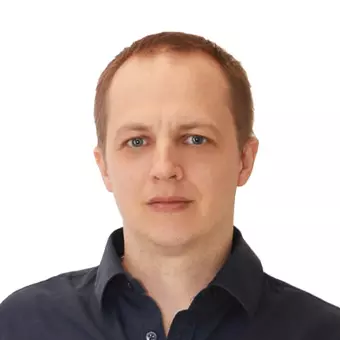
Successful traders often attribute their achievements to mastering the psychology of trading. These books delve into the mental challenges traders face and how to overcome them.
-
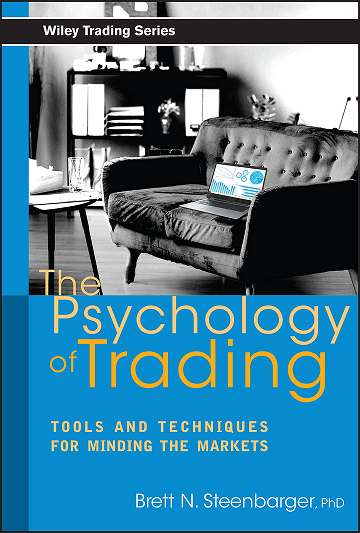
Brett N. Steenbarger - "The Psychology of Trading"
-
Summary:
Steenbarger, a psychologist and active trader, combines insights from psychology and trading to help traders improve their mental resilience. The book focuses on emotional regulation, cognitive biases, and how to develop a mindset conducive to consistent profits.
-
Why read it:
This book is invaluable for traders struggling with the emotional aspects of trading. Steenbarger’s approach integrates psychology with trading strategies, helping traders understand how to maintain discipline and emotional control.
-
-
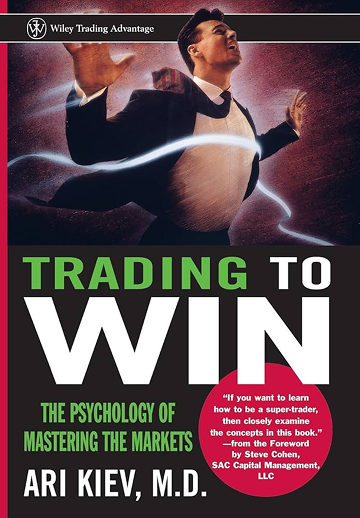
Ari Kiev - "Trading to Win"
-
Summary:
Kiev focuses on the mental challenges of trading, particularly around goal-setting, maintaining discipline, and handling losses. The book offers techniques for improving performance through mental toughness and goal-oriented strategies.
-
Why read it:
Kiev’s insights help traders develop the mental stamina needed for long-term success. This book is perfect for those looking to break through psychological barriers and perform consistently in high-pressure trading environments.
-
Other profiles in category
Popular Financial Guides
Editors' Top Picks and Insights






Latest Financial News

Menara Asia launches construction procurement platform to address quality and compliance gaps in Malaysia

Astaka Padu, Kimlun expand joint venture for RM450 million serviced apartment project in Johor Bahru

South African executive incentive payouts surge in JSE Top 200 pay review

-
 Afghanistan
-
 Albania
-
 Algeria
-
 Angola
-
 Argentina
-
 Armenia
-
 Australia
-
 Austria
-
 Azerbaijan
-
 Bahamas
-
 Bahrain
-
 Bangladesh
-
 Belarus
-
 Belgium
-
 Bolivia
-
 Botswana
-
 Brazil
-
 Brunei
-
 Bulgaria
-
 Cambodia
-
 Cameroon
-
 Canada
-
 Chile
Chile
-
 China
China
-
 Colombia
-
 Congo
Congo
-
 Costa Rica
-
 Cote d'Ivoire
-
 Croatia
-
 Cuba
Cuba
-
 Cyprus
-
 Czechia
-
 DR Congo
-
 Denmark
-
 Dominican Republic
-
 Ecuador
-
 Egypt
Egypt
-
 El Salvador
-
 Estonia
-
 Eswatini
-
 Ethiopia
-
 Finland
-
 France
-
 Georgia
-
 Germany
-
 Ghana
Ghana
-
 Greece
-
 Haiti
Haiti
-
 Hong Kong
-
 Hungary
-
 India
India
-
 Indonesia
-
 Iran, Islamic republic
-
 Iraq
Iraq
-
 Ireland
-
 Israel
-
 Italy
Italy
-
 Jamaica
-
 Japan
Japan
-
 Jordan
-
 Kazakhstan
-
 Kenya
Kenya
-
 Korea
Korea
-
 Kuwait
-
 Kyrgyzstan
-
 Laos
Laos
-
 Latvia
-
 Lebanon
-
 Lesotho
-
 Libya
Libya
-
 Lithuania
-
 Luxembourg
-
 Madagascar
-
 Malaysia
-
 Malta
Malta
-
 Mauritius
-
 Mexico
-
 Moldova
-
 Mongolia
-
 Montenegro
-
 Morocco
-
 Mozambique
-
 Myanmar
-
 Namibia
-
 Nepal
Nepal
-
 Netherlands
-
 New Zealand
-
 Nigeria
-
 North Macedonia
-
 Norway
-
 Oman
Oman
-
 Pakistan
-
 Palestine
-
 Panama
-
 Papua New Guinea
-
 Paraguay
-
 Peru
Peru
-
 Philippines
-
 Poland
-
 Portugal
-
 Puerto Rico
-
 Qatar
Qatar
-
 Reunion
-
 Romania
-
 Rwanda
-
 Saudi Arabia
-
 Serbia
-
 Singapore
-
 Slovakia
-
 Slovenia
-
 Somalia
-
 South Africa
-
 Spain
Spain
-
 Sri Lanka
-
 Sweden
-
 Switzerland
-
 Syria
Syria
-
 Taiwan
-
 Tajikistan
-
 Tanzania
-
 Thailand
-
 Trinidad and Tobago
-
 Tunisia
-
 Turkey
-
 UAE
UAE
-
 Uganda
-
 Ukraine
-
 United Kingdom
-
United States
-
 Uruguay
-
 Uzbekistan
-
 Venezuela
-
 Vietnam
-
 Yemen
Yemen
-
 Zambia
-
 Zimbabwe
- Forex
- Crypto












