
Online Finance Courses In 2026


Editorial Note: While we adhere to strict Editorial Integrity, this post may contain references to products from our partners. Here's an explanation for How We Make Money. None of the data and information on this webpage constitutes investment advice according to our Disclaimer.
The best online finance courses in 2026 are available on:
Coursera. University-level finance courses with recognized certificates and degrees.
Kara Crypto. Practical trading course covering exchange basics, market analysis, risk management, and strategy development for crypto beginners.
eToro Trading Academy. Free beginner-focused education on stock trading and copy trading with platform-based examples.
edX. Academic finance education from top universities with free audit options.
Udemy. Affordable, practical finance courses for all skill levels.
Khan Academy. Completely free finance education for beginners.
LinkedIn Learning. Career-focused finance courses integrated with professional profiles.
Skillshare. Short, practical finance lessons for everyday money management.
Harvard Online. Premium finance courses with elite academic credibility.
MIT OpenCourseWare. Free access to advanced university-level finance materials.
FutureLearn. Structured finance courses with a strong real-world focus.
Online finance courses in 2026 have become one of the most practical ways to build financial literacy and improve money management skills. Learners can study budgeting, debt management, investing basics, and long-term financial planning at their own pace using free and paid platforms.
This guide explains where to take online finance courses, which platforms offer the best options, and whether free finance courses are effective for beginners and long-term learning goals.
Best online finance courses in 2026
In 2026, learners can choose from many platforms offering online finance courses for different goals and experience levels. Below are the best options, starting with platforms that provide the widest course selection and strongest educational value.
Coursera

Coursera offers university-level finance courses developed by leading global universities and financial institutions. The platform covers personal finance, investing, corporate finance, and financial analysis, making it suitable for both beginners and professionals. Learners can study at their own pace and earn recognized certificates or even full degrees.

- Pros
- Cons
Wide course selection. Strong coverage across all finance topics.
University-backed content. High academic credibility.
Flexible learning. Self-paced courses with certificates available.
Paid certificates. Free access is limited to audit mode.
Academic structure. Some courses require time commitment.
Kara Crypto
Kara Crypto is a course founded by Viktoras Karapetjanc, a trader with over 20 years of experience. In addition to teaching, Karapetjanc actively shares market insights through blogs on various social media platforms, including Telegram. He also runs a YouTube channel and hosts live sessions on TikTok, where he analyzes current market conditions, trends, and price movements.
The course is focused on cryptocurrency investing. The training program covers chart analysis, trading psychology, news interpretation, trade journaling and performance analysis, as well as the basics of algorithmic trading. These topics are relevant for both short-term crypto trading and long-term investment in digital assets.
Kara Crypto offers a free introductory course. The full course is available for $149, with unlimited lifetime access to the video lessons.

- Pros
- Cons
Experienced instructor. Taught by a trader with long-term market experience.
Crypto-focused content. Covers both trading and investing in digital assets.
Lifetime access. No time limits on course materials.
Free entry option. Basic course available at no cost.
Limited asset scope. Focused mainly on cryptocurrencies.
Self-directed learning. Requires discipline without structured assessments.
eToro Trading Academy


Stock trading and copy trading are some of the most popular ways of investing among young people. But if you truly want to master these skills, you should have solid knowledge about them and lots of trading experience.
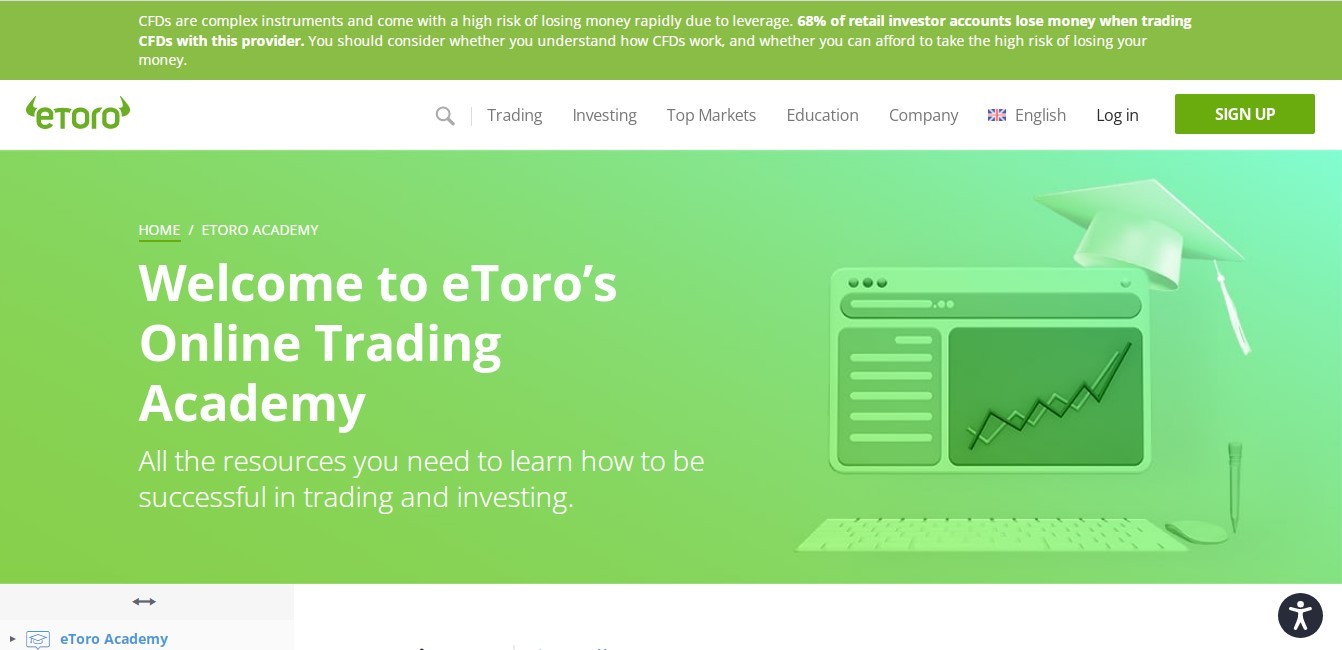
To help beginner traders learn the basics of stock trading and copy trading, the popular online broker eToro created a free trading course for them. This course consists of over 100 educational videos and readings that explain trading terminology, how to use copy trading, how to trade stocks with the eToro broker, how to do your market research, how to pick stocks, and other essential trading tips.
- Pros
- Cons
Free educational content. No payment required to access materials.
Beginner-friendly format. Short videos and clear explanations.
Practical focus. Covers stock trading and copy trading basics.
Platform-specific. Content is closely tied to eToro tools.
Limited depth. Less suitable for advanced traders.
edX
Provides finance courses developed by world-class universities, focusing on economics, financial markets, and corporate finance.
- Pros
- Cons
Strong academic quality. University-designed curricula.
Free access option. Learn without paying for certificates.
Certificate costs. Paid credentials can be expensive.
Theory-focused. Limited practical application.
Udemy
Features a large selection of finance courses created by independent instructors, covering budgeting, investing, and financial modeling.

- Pros
- Cons
Low prices. Frequent discounts.
Wide variety. Many practical finance topics.
Quality varies. Depends on the instructor.
No formal credentials. Certificates have limited recognition.
Khan Academy
Delivers free finance and economics lessons focused on core financial principles and everyday money skills.

- Pros
- Cons
100% free. No paywalls.
Beginner-friendly. Clear explanations.
Basic level. Limited advanced topics.
No certificates. Not career-focused.
LinkedIn Learning
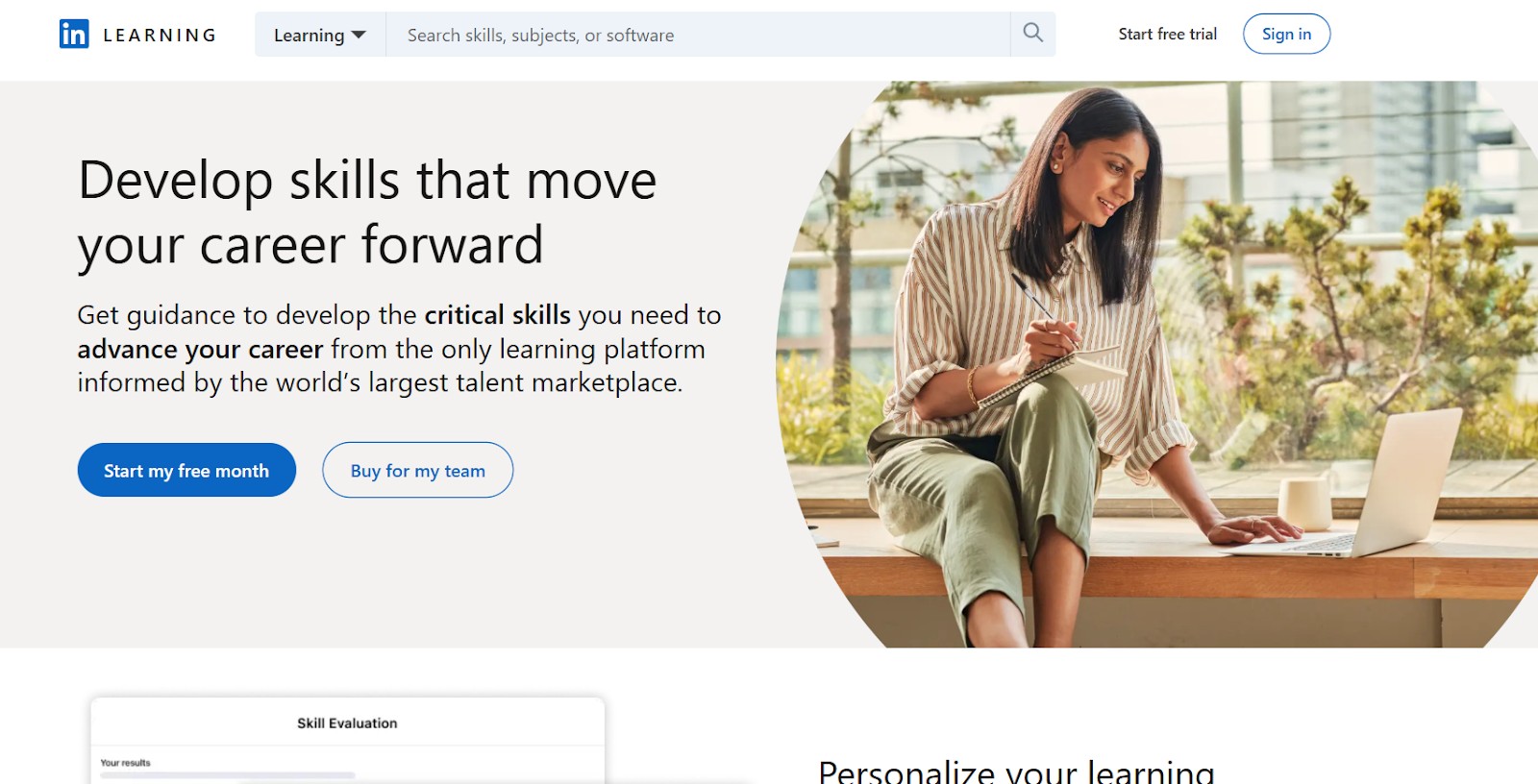
Offers finance and business courses designed for workplace and career development.
- Pros
- Cons
Career focus. Skills aligned with workplace needs.
Profile integration. Certificates visible on LinkedIn.
Subscription required. No permanent free access.
Limited depth. Not academic-level finance.
Skillshare
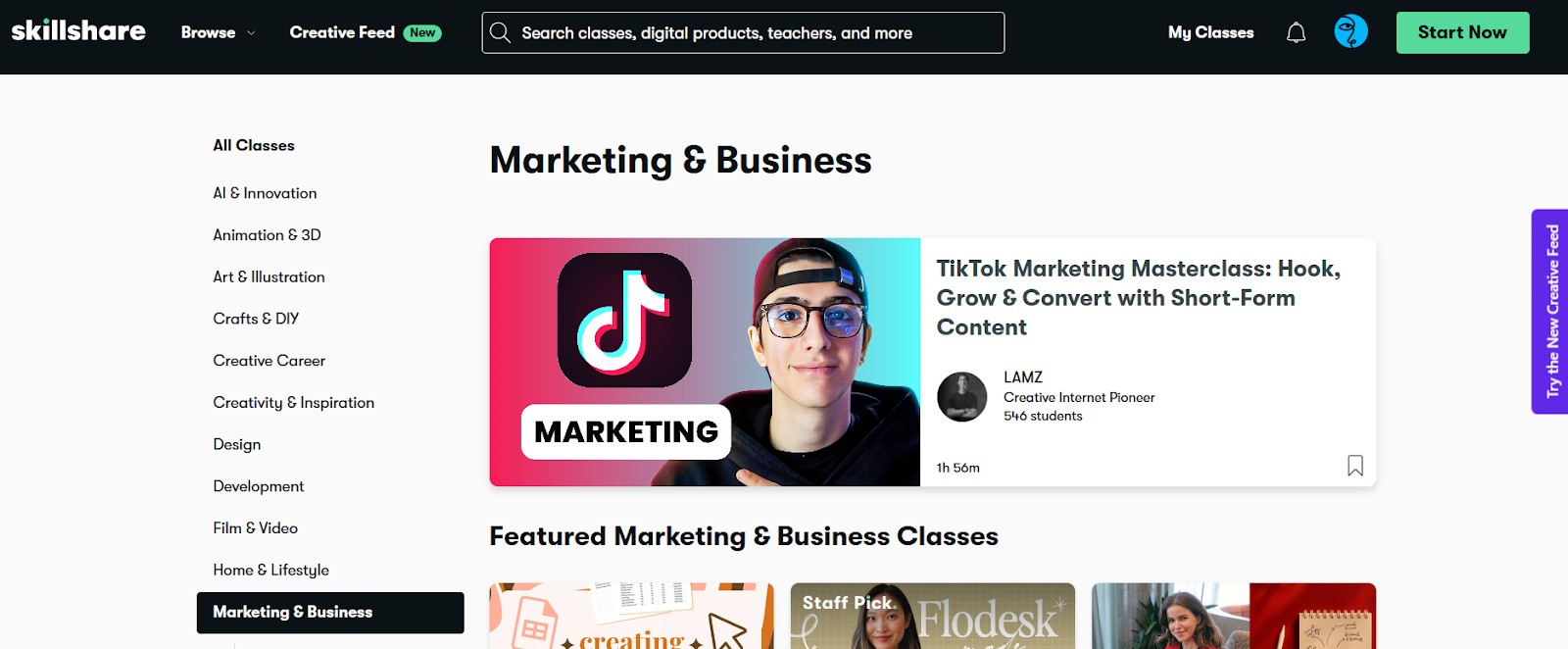
Provides short, practical finance classes related to personal money management and entrepreneurship.
- Pros
- Cons
Practical format. Short, easy lessons.
Affordable access. Subscription-based.
Limited scope. Not comprehensive.
No credentials. Informal learning only.
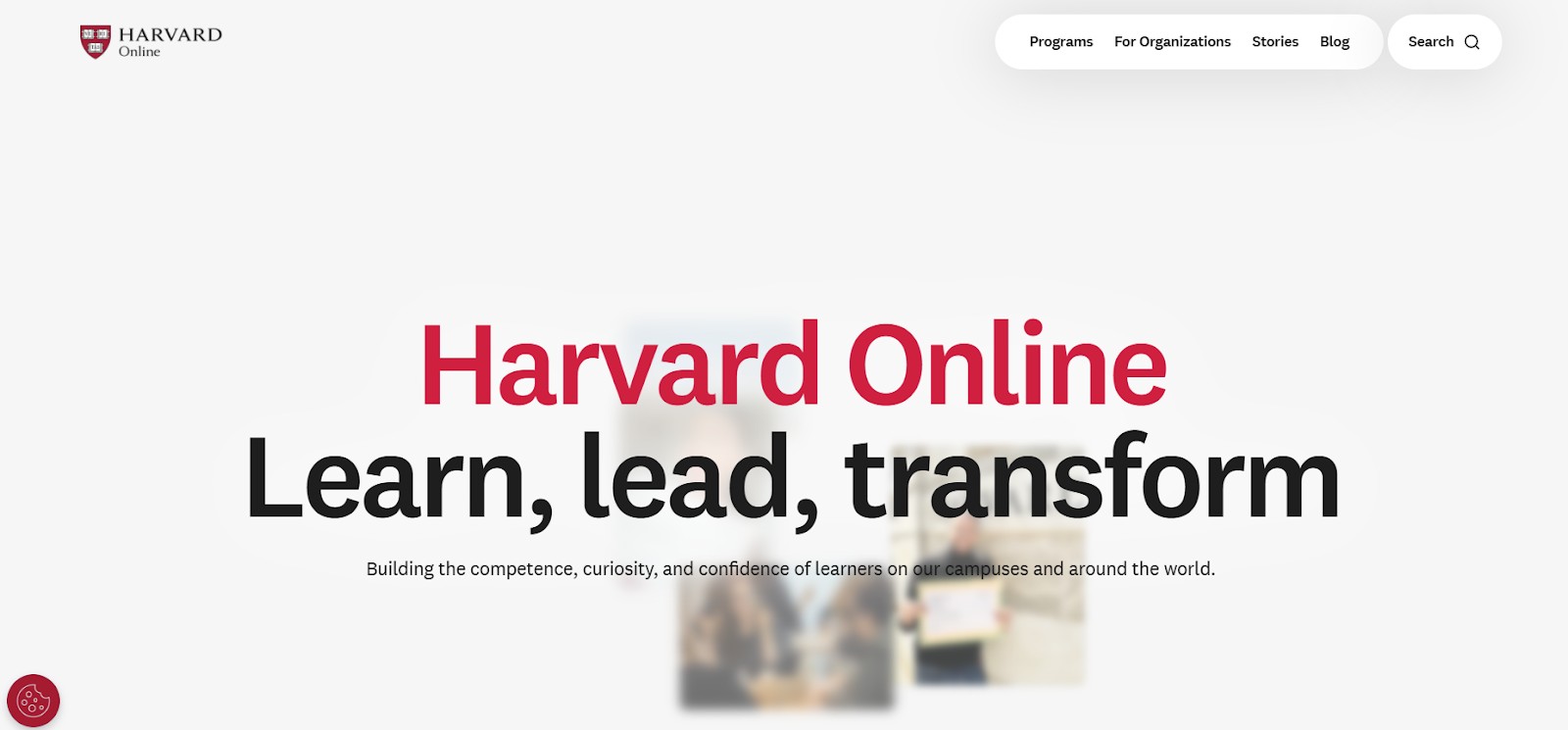
Harvard Online
Delivers premium finance and economics courses taught by Harvard faculty.
- Pros
- Cons
Elite academic quality. Strong global recognition.
In-depth content. Advanced finance concepts.
High cost. Premium pricing.
Time-intensive. Demanding programs.
MIT OpenCourseWare
Offers free access to full finance and economics course materials from MIT.

- Pros
- Cons
Free university content. No cost.
Advanced topics. Deep academic material.
No certificates. Self-study only.
No guidance. Requires discipline.
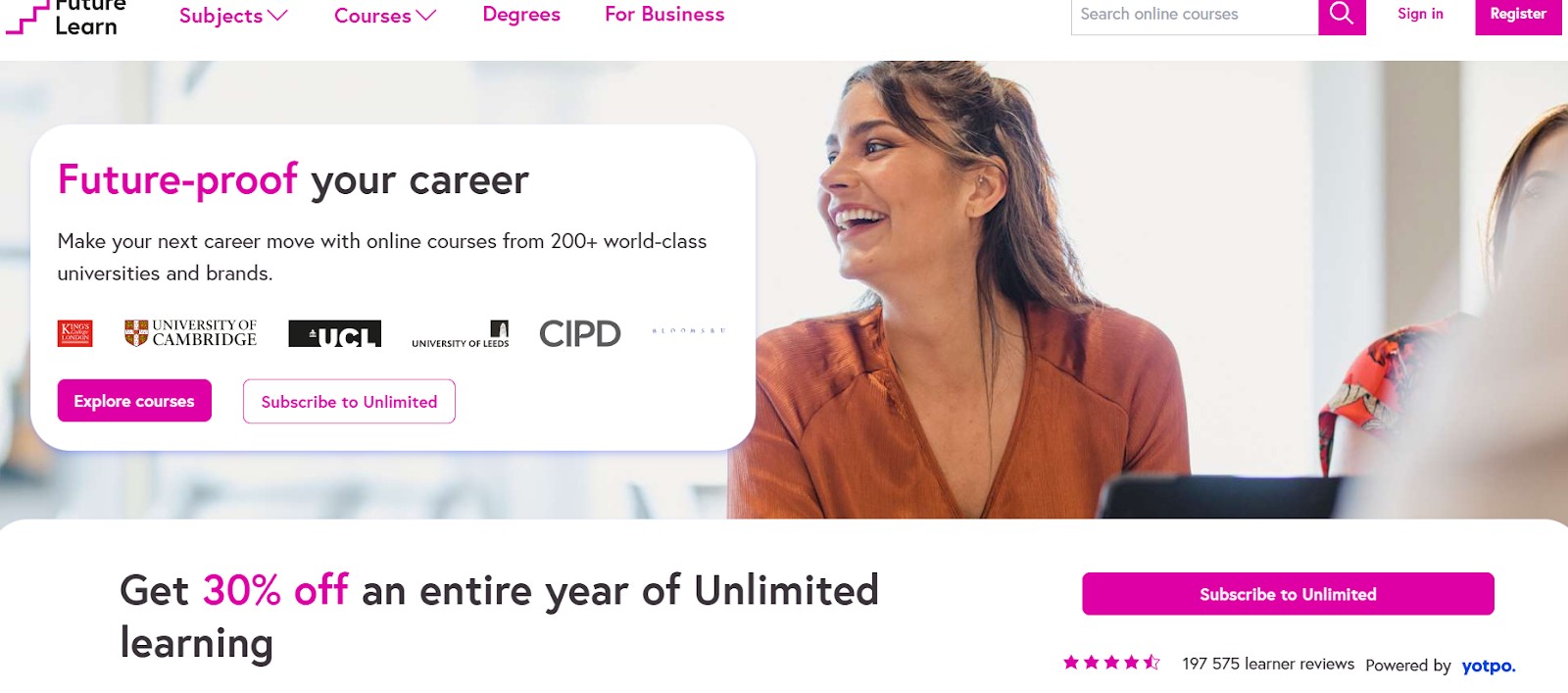
FutureLearn
Hosts finance courses developed by universities and financial institutions with a focus on real-world application.
- Pros
- Cons
Interactive format. Discussions and activities.
Free access available. Pay only for certificates.
Limited depth. Fewer advanced options.
Paid credentials. Certificates cost extra.
Types of online finance courses
Online finance courses are not all the same. They are designed for different goals, experience levels, and learning outcomes. Understanding the main types helps learners choose the right path.
1. Personal finance courses
These courses focus on everyday money management and are ideal finance courses for beginners. They are practical and designed for immediate use.
Common topics include:
Budgeting and expense control. Tracking income and spending.
Debt management. Credit cards, loans, and repayment strategies.
Saving basics. Emergency funds and goal-based saving.
Financial planning. Long-term goals and basic retirement concepts.
Many personal finance programs are free finance courses or low-cost and require no prior knowledge.
2. Investing and wealth-building courses
These courses teach how to grow money over time and manage investment risk. They are suitable for beginners moving into investing and intermediate learners.
Typical subjects include:
Stock market basics. How markets and instruments work.
ETFs and index funds. Long-term investment strategies.
Portfolio diversification. Risk spreading and allocation.
Investment planning. Long-term versus short-term approaches.
Most online investing courses are offered as finance courses with optional paid certificates.
3. Corporate finance and financial analysis courses
These programs are designed for students, professionals, and career switchers who want structured academic or professional finance education.
Key areas usually covered:
Financial statements. Reading balance sheets and income statements.
Corporate finance fundamentals. Capital budgeting and financing decisions.
Valuation methods. Company and project valuation.
Financial modeling. Cash flow and forecasting basics.
4. Behavioral finance and financial psychology
These courses focus on how emotions and behavior influence financial decisions.
Topics often include:
Spending habits and biases. Why people make poor money choices.
Investor psychology. Emotional reactions to markets.
Long-term discipline. Building sustainable financial behavior.
Behavioral finance is increasingly included in modern finance courses because decision-making matters as much as technical knowledge.
How to choose a finance course?
Choosing the right online finance course depends on your goals, experience level, and how you plan to use the knowledge. Not all courses serve the same purpose, so clarity upfront matters.
1. Define your learning goal
Start by understanding what you want to achieve. Ask yourself:
Do I want to manage money better? Budgeting, debt, and saving skills.
Do I want to invest? Long-term investing and portfolio basics.
Do I want a career skill? Corporate finance or financial analysis.
Do I need academic knowledge? University-level finance theory.
Clear goals help answer what courses you should take for finance without wasting time on irrelevant material.
2. Match the course level to your experience
Not all finance courses online are beginner-friendly. Check the level carefully:
Beginner courses. No prior finance knowledge required.
Intermediate courses. Basic finance concepts assumed.
Advanced courses. Designed for students or professionals.
This step is especially important when choosing finance courses for beginners, as advanced material can be discouraging early on.
3. Review the curriculum and structure
A quality finance course should:
cover real-world financial situations;
use updated examples relevant to 2026;
follow a structured learning path with clear outcomes.
4. Check the platform and instructor credibility
When choosing a platform for online finance learning, pay attention to the credibility of both the provider and the instructors.
Look for:
recognized education platforms or universities;
instructors with academic or professional finance experience;
positive learner feedback and transparent course outlines.
Strong credibility matters more than marketing promises and helps ensure the quality of the learning experience.
5. Compare cost and value
Many free finance courses are excellent for fundamentals. Paid courses may offer:
certificates;
deeper coverage;
structured assessments and projects.
Free courses work well for learning basics. Paid courses usually add value when you need credentials or depth.
Do free finance courses work well?
Yes, free finance courses can work very well, especially for building foundational knowledge. Many reputable platforms offer high-quality free programs that focus on budgeting, debt management, and basic financial planning.
Free courses are most effective when the goal is to understand core concepts rather than earn credentials. They allow learners to explore finance without financial risk and to build confidence before moving on to more advanced material.
Strengths of free finance courses
Free courses are useful because they:
provide access to basic financial education at no cost;
focus on practical topics like budgeting and money management;
allow flexible, self-paced learning;
help beginners test their interest before committing to paid programs.
Limitations to consider
Free courses also have limits:
advanced topics are often covered only at a high level;
certificates are usually not included;
instructor interaction and feedback may be limited.
For personal finance basics, free courses are often enough. For professional development, certifications, or deeper analysis, paid programs usually offer better long-term value.
How online finance courses help achieve financial independence
Financial independence is built through habits, planning, and informed decisions. Online finance courses support this process by teaching practical skills that can be applied consistently over time.
Well-structured finance courses help learners:
build realistic budgets and track spending;
understand and reduce high-interest debt;
create sustainable saving habits;
learn how long-term investing works;
plan financial goals with clear timelines.
Rather than focusing on quick results, most effective courses emphasize consistency and decision-making. This approach helps learners avoid common mistakes such as overspending, emotional investing, or relying on short-term tactics.
Financial independence is not about finding one perfect strategy. It comes from applying basic principles correctly over many years. Online finance education works best when learners actively use the knowledge in daily financial decisions, not when courses are treated as passive content.
As learners move from theory to practice, many look for ways to apply finance concepts in real markets. Exploring some of the best brokers with a wide range of assets can help connect online learning with real-world experience by offering access to stocks, Forex, and other instruments in one place. This step allows learners to gradually turn financial knowledge into informed, practical decisions over time.
| Trading.com USA | ZForex | Plus500 | OANDA | FOREX.com | |
|---|---|---|---|---|---|
|
Tradable assets |
69 | 80 | 2800 | 129 | 5500 |
|
Demo |
Yes | Yes | Yes | Yes | Yes |
|
Min. deposit, $ |
50 | 10 | 100 | No | 100 |
|
Max. leverage |
1:50 | 1:1000 | 1:300 | 1:200 | 1:50 |
|
Standard EUR/USD spread |
1.1 | 0.3 | 0.7 | 0.3 | 1.0 |
|
Regulation |
CFTC, NFA | No | CySEC, FCA, ASIC, FMA, FSCA, FSA Seychelles, EFSA, MAS, DFSA, SCB | FSC (BVI), ASIC, IIROC, FCA, CFTC, NFA | CIMA, FCA, FSA (Japan), NFA, IIROC, ASIC, CFTC |
|
TU overall score |
8.8 | 7.89 | 7.54 | 6.85 | 6.82 |
|
Open an account |
Go to broker Your capital is at risk. |
Go to broker Your capital is at risk.
|
Go to broker 80% of retail CFD accounts lose money. |
Go to broker Your capital is at risk. |
Study review |
Progress comes from applying finance knowledge consistently

I have taken online finance courses at different stages, from basic personal finance to more advanced market topics, and the biggest difference always came from how the knowledge was applied. Courses that pushed me to build a real budget, review spending patterns, or think through long-term financial goals had a lasting impact. Simply watching lectures never changed anything on its own.
From my experience, online finance education works best when expectations are realistic. Free courses are excellent for building habits and understanding fundamentals. Paid courses become valuable later, when structure, depth, or credentials matter. The platform itself is less important than consistency and application. Real financial progress comes from using what you learn in everyday decisions, not from collecting courses or certificates.
Conclusion
In 2026, the landscape of online finance education offers both accessibility and robust learning opportunities for individuals at every stage of their financial journey. Whether choosing a free course on foundational budgeting or investing in a comprehensive, paid program for advanced long-term planning, learners are empowered to shape their financial futures. The abundance of flexible, credible online options—such as Coursera’s investing modules or edX’s personal finance series—means anyone can find the right fit for their goals and schedule. Ultimately, the true value lies not just in the information gained but in the ability to make informed financial decisions, proving that the best investment is in your own financial literacy.
FAQs
What are the main differences between personal finance and investing courses offered online?
How should learners choose the right online finance course for their goals and experience level?
Are advanced finance topics available through free online courses?
What role does practical application play in the effectiveness of online finance courses?
Editors' Top Picks and Insights

Bitcoin price prediction based on RSI: Is BTC poised for a new rally?

Toncoin becomes Gram: Why Durov restored token's original name

Why Tether flipping Ethereum is a pivotal moment for crypto

MiCA deadline: Why crypto companies are leaving Europe

From “Holy Trinity” to WLD crash: How Arthur Hayes became a market-moving seller

The world's first trillionaire: How Musk built his fortune on electric cars, space and AI
Related Articles
Team that worked on the article
Dan Blystone began his trading career in 1998 as an arbitrage clerk on the floor of the Chicago Mercantile Exchange (CME). He later traded bond and Eurex futures at proprietary firms such as Altea Trading, gaining valuable experience in high-frequency trading and risk management.
Chinmay Soni is a financial analyst with more than 5 years of experience in working with stocks, Forex, derivatives, and other assets. As a founder of a boutique research firm and an active researcher, he covers various industries and fields, providing insights backed by statistical data.
Ethereum is a decentralized blockchain platform and cryptocurrency that was proposed by Vitalik Buterin in late 2013 and development began in early 2014. It was designed as a versatile platform for creating decentralized applications (DApps) and smart contracts.
Forex leverage is a tool enabling traders to control larger positions with a relatively small amount of capital, amplifying potential profits and losses based on the chosen leverage ratio.
Diversification is an investment strategy that involves spreading investments across different asset classes, industries, and geographic regions to reduce overall risk.
Index in trading is the measure of the performance of a group of stocks, which can include the assets and securities in it.
Forex trading, short for foreign exchange trading, is the practice of buying and selling currencies in the global foreign exchange market with the aim of profiting from fluctuations in exchange rates. Traders speculate on whether one currency will rise or fall in value relative to another currency and make trading decisions accordingly. However, beware that trading carries risks, and you can lose your whole capital.
-
 Afghanistan
-
 Albania
-
 Algeria
-
 Angola
-
 Argentina
-
 Armenia
-
 Australia
-
 Austria
-
 Azerbaijan
-
 Bahamas
-
 Bahrain
-
 Bangladesh
-
 Belarus
-
 Belgium
-
 Bolivia
-
 Botswana
-
 Brazil
-
 Brunei
-
 Bulgaria
-
 Cambodia
-
 Cameroon
-
 Canada
-
 Chile
Chile
-
 China
China
-
 Colombia
-
 Congo
Congo
-
 Costa Rica
-
 Cote d'Ivoire
-
 Croatia
-
 Cuba
Cuba
-
 Cyprus
-
 Czechia
-
 DR Congo
-
 Denmark
-
 Dominican Republic
-
 Ecuador
-
 Egypt
Egypt
-
 El Salvador
-
 Estonia
-
 Eswatini
-
 Ethiopia
-
 Finland
-
 France
-
 Georgia
-
 Germany
-
 Ghana
Ghana
-
 Greece
-
 Haiti
Haiti
-
 Hong Kong
-
 Hungary
-
 India
India
-
 Indonesia
-
 Iran, Islamic republic
-
 Iraq
Iraq
-
 Ireland
-
 Israel
-
 Italy
Italy
-
 Jamaica
-
 Japan
Japan
-
 Jordan
-
 Kazakhstan
-
 Kenya
Kenya
-
 Korea
Korea
-
 Kuwait
-
 Kyrgyzstan
-
 Laos
Laos
-
 Latvia
-
 Lebanon
-
 Lesotho
-
 Libya
Libya
-
 Lithuania
-
 Luxembourg
-
 Madagascar
-
 Malaysia
-
 Malta
Malta
-
 Mauritius
-
 Mexico
-
 Moldova
-
 Mongolia
-
 Montenegro
-
 Morocco
-
 Mozambique
-
 Myanmar
-
 Namibia
-
 Nepal
Nepal
-
 Netherlands
-
 New Zealand
-
 Nigeria
-
 North Macedonia
-
 Norway
-
 Oman
Oman
-
 Pakistan
-
 Palestine
-
 Panama
-
 Papua New Guinea
-
 Paraguay
-
 Peru
Peru
-
 Philippines
-
 Poland
-
 Portugal
-
 Puerto Rico
-
 Qatar
Qatar
-
 Reunion
-
 Romania
-
 Rwanda
-
 Saudi Arabia
-
 Serbia
-
 Singapore
-
 Slovakia
-
 Slovenia
-
 Somalia
-
 South Africa
-
 Spain
Spain
-
 Sri Lanka
-
 Sweden
-
 Switzerland
-
 Syria
Syria
-
 Taiwan
-
 Tajikistan
-
 Tanzania
-
 Thailand
-
 Trinidad and Tobago
-
 Tunisia
-
 Turkey
-
 UAE
UAE
-
 Uganda
-
 Ukraine
-
 United Kingdom
-
United States
-
 Uruguay
-
 Uzbekistan
-
 Venezuela
-
 Vietnam
-
 Yemen
Yemen
-
 Zambia
-
 Zimbabwe
- Forex
- Crypto












