
Free AI Forex Trading Software


Editorial Note: While we adhere to strict Editorial Integrity, this post may contain references to products from our partners. Here's an explanation for How We Make Money. None of the data and information on this webpage constitutes investment advice according to our Disclaimer.
Best free AI Forex trading software are:
MetaTrader 4 - Great for technical analysis, charting, and using automated trading with EAs
MetaTrader 5 - Offers advanced order management, MQL5 programming, and better backtesting
cTrader – Known for its advanced order management and lightning-fast trade execution, allowing the use of custom algorithmic bots (cBots)
QuantConnect – Provides cloud-based backtesting and algorithmic trading with support for multiple programming languages
The adoption of AI in Forex trading has grown exponentially over the past decade. This growth is driven by the need for faster data analysis, better risk management, and the ability to identify trading opportunities that might be missed by human traders. This article discusses the best free AI trading out there that can help users leverage the power of AI without any costs.
List of free AI Forex trading software
MetaTrader 4 (MT4)
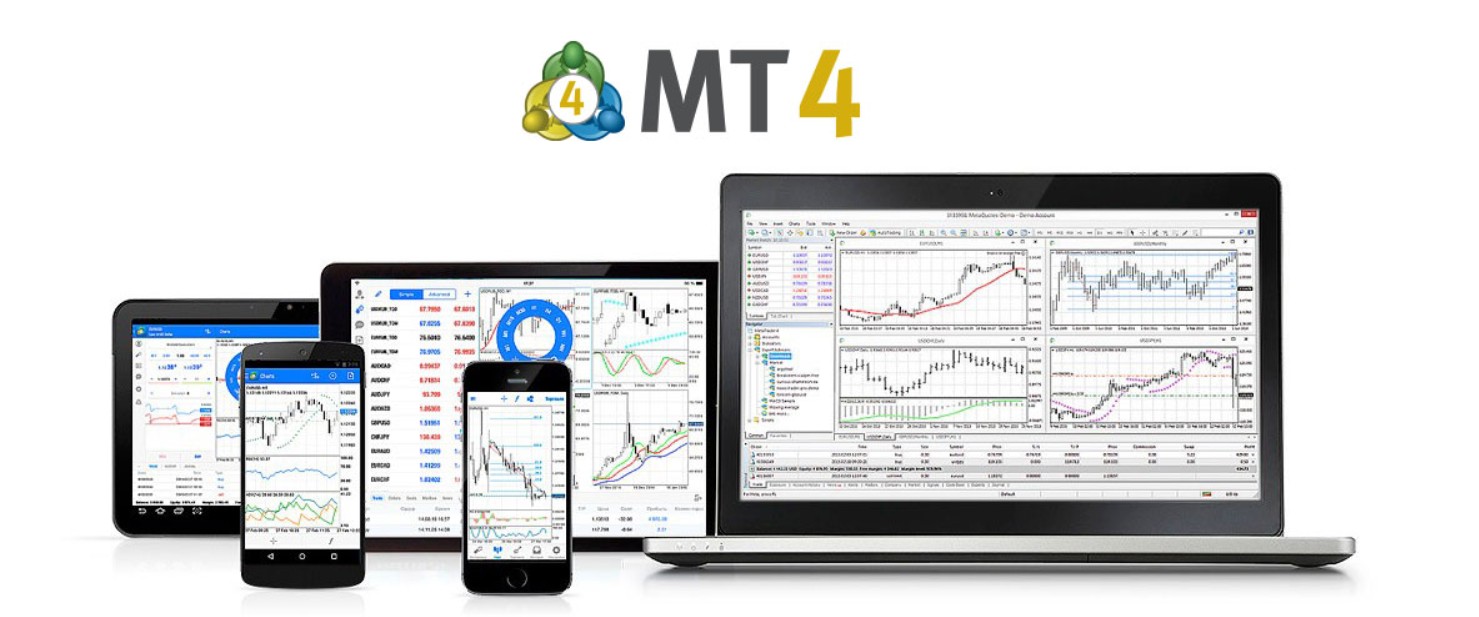
MT4 is well-known for its technical analysis and automated trading capabilities using Expert Advisors (EAs). Its AI integration is somewhat limited to the automation of trading strategies via these EAs. Users can employ custom indicators and automate decisions based on predefined criteria, but advanced AI functionalities are more limited compared to its successor, MetaTrader 5.
- Pros
- Cons
- Wide range of technical indicators.
- Strong community support.
- Compatibility with various brokers.
- Limited fundamental analysis to ols.
- Slightly outdated interface.
MetaTrader 5 (MT5)

MT5 takes AI integration further by incorporating several advanced features. The platform offers AI-based tools like Copilot, which allows users to generate MQL5 code via natural language input, making it easier for non-programmers to automate their strategies. Additionally, MT5 supports ONNX models (Open Neural Network Exchange), enabling traders to integrate AI models from various machine learning frameworks, optimizing performance in decision-making and backtesting. The visualization of machine learning models helps traders understand and trust their AI models by viewing the architecture, metrics, and how the system processes data.
- Pros
- Cons
- More timeframes and order types.
- Better analytical tools.
- Faster processing.
- Steeper learning curve for MT4 users.
- Less community content compared to MT4.
cTrader
cTrader is widely recognized for its advanced order management and execution features, offering a free trading platform that supports algorithmic trading through cBots. These cBots automate trading decisions based on predefined strategies. While basic cBots can be developed for free, advanced AI-driven bots and features may require additional purchases. The platform’s user interface is intuitive, making it accessible for both new and experienced traders.
- Pros
- Cons
- Fast trade execution.
- Free to develop custom cBots.
- Compatible with multiple brokers.
- Advanced bots often come with additional costs.
- Limited backtesting features for free users.
QuantConnect
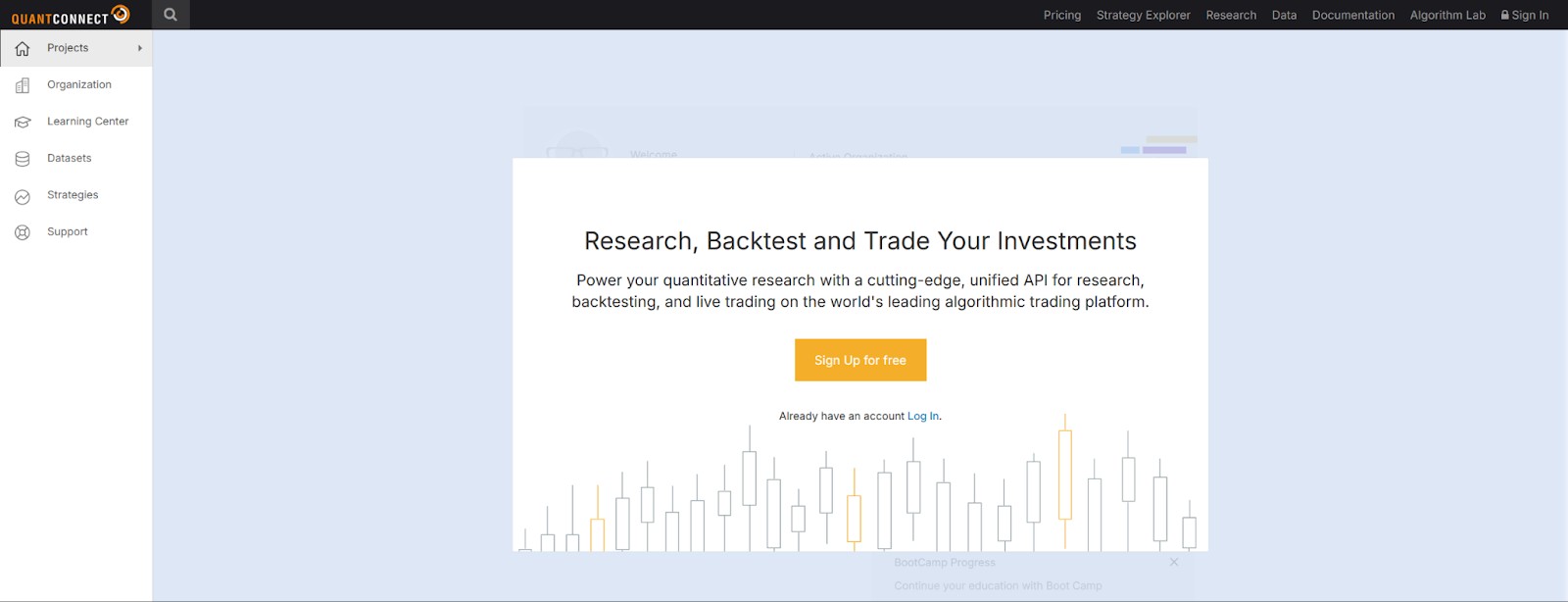
QuantConnect is a cloud-based platform that allows users to develop and backtest algorithmic trading strategies. It offers free access to a wide range of tools, including historical data and backtesting features. However, live trading and certain advanced AI functionalities are only available through paid subscriptions. The platform supports multiple programming languages, making it versatile for advanced users.
- Pros
- Cons
- Free access to backtesting tools.
- Collaborative community for strategy sharing.
- Supports multiple programming languages.
- Live trading and advanced AI features require a subscription.
- Requires coding knowledge to fully leverage its capabilities.
Each of these platforms offers unique features and advantages, catering to different types of traders, from beginners to advanced and professional users. Apart from dedicated AI Forex trading software, you can also explore Forex brokers that offer access to AI Forex trading software or similar features. We have compared the top options below:
| Demo | Min. deposit, $ | MT4 | MT5 | cTrader | Min Spread EUR/USD, pips | Max Spread EUR/USD, pips | Open an account | |
|---|---|---|---|---|---|---|---|---|
| Yes | 100 | No | No | No | 0.5 | 0.9 | Go to broker 81% of retail CFD accounts lose money. |
|
| Yes | 50 | No | Yes | No | 0.9 | No | Go to broker Your capital is at risk. |
|
| Yes | No | Yes | Yes | No | 0.1 | 0.5 | Go to broker Your capital is at risk. |
|
| Yes | 100 | Yes | Yes | No | 0.7 | 1.2 | Study review | |
| Yes | 1 | Yes | No | No | 0.6 | 1.2 | Study review |
Key factors in evaluating free AI Forex trading software
Adaptability to market volatility. Most AI tools run on preset strategies, but the Forex market doesn’t play by any fixed rules. A top-tier AI should be able to adjust on the fly when things get unpredictable, analyzing past trends and the current volatility. This way, it isn't just executing a static plan but is responsive to how the market shifts.
Customization of trading algorithms. Many free platforms limit how much you can tweak the software’s behavior. The real game-changer is having the ability to set your own rules and tailor the AI’s decisions. Look for tools where you’re not just picking from basic strategies but can personalize based on your own market insights.
Learning from losses. Wins are great, but growth comes from analyzing your losses. A standout AI tool won’t just track what went wrong—it will actively learn from mistakes. The best software adjusts its approach after failed trades so that it sharpens over time instead of just repeating the same errors.
Incorporating market sentiment. A lot of tools ignore the fact that market movements are often driven by news, social media, and global events. The best AI will consider not only technical data but also real-time market sentiment. That way, it can factor in the latest developments, whether it's political shifts or breaking news, before making a decision.
Clear reasoning for decisions. Most AI programs operate in a “black box”, meaning they make trades without explaining why. Top-tier AI should offer transparent reasoning for each trade, so you’re not just following blindly — you’re actually gaining insights into how the market works and why certain decisions are being made.
What beginners should consider
Smooth integration with manual trades. As a beginner, you'll want to play around with your own strategies while testing the AI, so make sure the platform lets you switch between AI and manual trading easily.
Customization that's beginner-friendly. Look for software that lets you slowly adjust risk settings without overloading you with advanced features right off the bat. You want to learn, not drown in data.
Trade logic explanations in real time. Some AIs explain their decisions as they make trades, which is great for learning how they think and react in different market scenarios.
Backtesting made simple. If the platform has an easy-to-use backtesting tool, it’ll let you practice strategies in a straightforward way without feeling lost.
Community insights at your fingertips. Platforms with active user forums or community feedback sections can help you learn quicker. Seeing how others are trading and adjusting strategies is priceless.
What advanced traders should consider
Custom AI model tweaks. As an experienced trader, you'll want AI software that lets you dive deep into the algorithm and customize or even build your own models to fit your strategies.
Top-tier risk management options. The best AI platforms give you tools to define risk on multiple levels, like setting detailed stop-losses and profit targets for advanced strategies.
Mix of AI and human control. You may want to tweak trades manually in real-time while letting the AI do the heavy lifting. Look for platforms that support this hybrid approach.
Handling slippage and delay. In fast markets, controlling slippage and cutting down on delays in execution can be crucial. Ensure the software has options to manage this effectively.
Running multiple strategies at once. Advanced traders need the ability to test and run several strategies at the same time, especially when managing diverse portfolios. This is key for real-world trading scenarios.
Risks and warnings
Data integrity concerns. Free AI trading software might rely on data that isn’t thoroughly checked or verified. This can lead to inaccurate predictions and, in turn, poor trading outcomes. It’s not just about making a bad trade; it’s about trusting data that might be unreliable from the start.
Hidden algorithm bias. Many free AI trading tools use generic algorithms that might not consider your specific market conditions or personal trading style. This can lead to decisions that don’t fit well with your approach, especially in unpredictable or niche markets, where a more customized strategy is crucial.
No one to blame. When using free AI trading software, you often don’t have the same support or accountability as you would with paid options. If the software makes a poor trade, you’re left without answers or a way to recover any losses. You’re basically on your own, which can be risky when the market moves quickly.
Weak security. Free AI tools might not prioritize security, leaving your personal and financial information at risk of being hacked. Worse, if someone tampered with the AI’s trading algorithms, they could make trades that aren’t in your favor, potentially leading to significant losses.
Overconfidence in AI. Free AI Forex software can sometimes make traders too comfortable, leading them to rely heavily on AI predictions without questioning them. This can weaken a trader’s ability to analyze market conditions and make their own decisions. In a fast-changing market, blindly following AI can result in big losses if the AI misses something important.
Free AI Forex trading software offer cost-effective, automated trading solutions

I have been using AI Forex trading software ever since they were a revolution, and here’s my two cents on them. Instead of just using AI for common patterns, try letting it analyze how volatile certain currency pairs are at specific times of the day or week. That way, you're focusing your energy on those crucial hours when the market is most likely to move, making your time in front of the screen more productive.
Also, don’t just follow what everyone else is doing. Start feeding the AI your own trading habits—whether it's being cautious with risk or taking profits early. Over time, the software gets better at giving signals that fit how you like to trade, almost like you're teaching it to think the way you do, just without the human error.
Summary
Free AI Forex trading software offer cost-effective, automated trading solutions that make sophisticated strategies accessible to retail traders. These platforms are user-friendly and provide opportunities for learning and efficient trading. However, traders should be cautious about the software's reliability, support, security, and the potential pitfalls of over-reliance on AI.
FAQs
Is free AI Forex trading software reliable?
Free AI Forex trading software can be reliable, but it is essential to conduct thorough testing and research.
What are the risks involved with free AI Forex trading software?
The risks include potential software bugs, lack of regular updates, security vulnerabilities, and over-reliance on automated systems without understanding the underlying trading strategies.
Can beginners use free AI Forex trading software?
Yes, free AI Forex trading software is designed to be accessible to beginners.
How do I choose the best free AI Forex trading software?
To choose the best software, consider factors like user reviews, the availability of customer support, the frequency of updates, security features, and the specific trading strategies the software employs.
Editors' Top Picks and Insights





Related Articles
Team that worked on the article
Rinat Gismatullin is an entrepreneur and a business expert with 9 years of experience in trading. He focuses on long-term investing, but also uses intraday trading.
Chinmay Soni is a financial analyst with more than 5 years of experience in working with stocks, Forex, derivatives, and other assets. As a founder of a boutique research firm and an active researcher, he covers various industries and fields, providing insights backed by statistical data.
Mirjan Hipolito is a journalist and news editor at Traders Union. She is an expert crypto writer with five years of experience in the financial markets.
Bitcoin is a decentralized digital cryptocurrency that was created in 2009 by an anonymous individual or group using the pseudonym Satoshi Nakamoto. It operates on a technology called blockchain, which is a distributed ledger that records all transactions across a network of computers.
Fundamental analysis is a method or tool that investors use that seeks to determine the intrinsic value of a security by examining economic and financial factors. It considers macroeconomic factors such as the state of the economy and industry conditions.
Yield refers to the earnings or income derived from an investment. It mirrors the returns generated by owning assets such as stocks, bonds, or other financial instruments.
Algorithmic trading is an advanced method that relies on advanced coding and formulas based on a mathematical model. However, compared to traditional trading methods, the process differs by being automated.
Risk management is a risk management model that involves controlling potential losses while maximizing profits. The main risk management tools are stop loss, take profit, calculation of position volume taking into account leverage and pip value.

-
 Afghanistan
-
 Albania
-
 Algeria
-
 Angola
-
 Argentina
-
 Armenia
-
 Australia
-
 Austria
-
 Azerbaijan
-
 Bahamas
-
 Bahrain
-
 Bangladesh
-
 Belarus
-
 Belgium
-
 Bolivia
-
 Botswana
-
 Brazil
-
 Brunei
-
 Bulgaria
-
 Cambodia
-
 Cameroon
-
 Canada
-
 Chile
Chile
-
 China
China
-
 Colombia
-
 Congo
Congo
-
 Costa Rica
-
 Cote d'Ivoire
-
 Croatia
-
 Cuba
Cuba
-
 Cyprus
-
 Czechia
-
 DR Congo
-
 Denmark
-
 Dominican Republic
-
 Ecuador
-
 Egypt
Egypt
-
 El Salvador
-
 Estonia
-
 Eswatini
-
 Ethiopia
-
 Finland
-
 France
-
 Georgia
-
 Germany
-
 Ghana
Ghana
-
 Greece
-
 Haiti
Haiti
-
 Hong Kong
-
 Hungary
-
 India
India
-
 Indonesia
-
 Iran, Islamic republic
-
 Iraq
Iraq
-
 Ireland
-
 Israel
-
 Italy
Italy
-
 Jamaica
-
 Japan
Japan
-
 Jordan
-
 Kazakhstan
-
 Kenya
Kenya
-
 Korea
Korea
-
 Kuwait
-
 Kyrgyzstan
-
 Laos
Laos
-
 Latvia
-
 Lebanon
-
 Lesotho
-
 Libya
Libya
-
 Lithuania
-
 Luxembourg
-
 Madagascar
-
 Malaysia
-
 Malta
Malta
-
 Mauritius
-
 Mexico
-
 Moldova
-
 Mongolia
-
 Montenegro
-
 Morocco
-
 Mozambique
-
 Myanmar
-
 Namibia
-
 Nepal
Nepal
-
 Netherlands
-
 New Zealand
-
 Nigeria
-
 North Macedonia
-
 Norway
-
 Oman
Oman
-
 Pakistan
-
 Palestine
-
 Panama
-
 Papua New Guinea
-
 Paraguay
-
 Peru
Peru
-
 Philippines
-
 Poland
-
 Portugal
-
 Puerto Rico
-
 Qatar
Qatar
-
 Reunion
-
 Romania
-
 Rwanda
-
 Saudi Arabia
-
 Serbia
-
 Singapore
-
 Slovakia
-
 Slovenia
-
 Somalia
-
 South Africa
-
 Spain
Spain
-
 Sri Lanka
-
 Sweden
-
 Switzerland
-
 Syria
Syria
-
 Taiwan
-
 Tajikistan
-
 Tanzania
-
 Thailand
-
 Trinidad and Tobago
-
 Tunisia
-
 Turkey
-
 UAE
UAE
-
 Uganda
-
 Ukraine
-
 United Kingdom
-
United States
-
 Uruguay
-
 Uzbekistan
-
 Venezuela
-
 Vietnam
-
 Yemen
Yemen
-
 Zambia
-
 Zimbabwe
- Forex
- Crypto












