
Best SHA256 Coins To Mine In 2026 And How it Works



Editorial Note: While we adhere to strict Editorial Integrity, this post may contain references to products from our partners. Here's an explanation for How We Make Money. None of the data and information on this webpage constitutes investment advice according to our Disclaimer.
In 2026, the most profitable SHA-256 coins to mine include Bitcoin (BTC), Bitcoin Cash (BCH), and DigiByte (DGB), each offering varying levels of network difficulty and reward structures. The SHA-256 algorithm, integral to these cryptocurrencies, ensures secure and tamper-resistant transactions by converting input data into a fixed 256-bit hash, a process vital for maintaining blockchain integrity.
The SHA256 algorithm powers cryptocurrency mining across proof-of-work networks, offering a reliable and consistent hashing structure. It works seamlessly with a wide range of ASIC mining hardware, making it a preferred choice for high-performance setups. In 2026, active SHA256 cryptocurrencies differ in network difficulty, emission schedules, and block reward systems. These variables play a crucial role in determining which SHA256 coin is most efficient to mine, depending on factors like hardware output and energy expenses. Whether mining established SHA256 coins with deep liquidity or exploring newer tokens with unique reward models, understanding these dynamics is key to building a sustainable mining strategy.
Risk warning: Cryptocurrency markets are highly volatile, with sharp price swings and regulatory uncertainties. Research indicates that 75-90% of traders face losses. Only invest discretionary funds and consult an experienced financial advisor.
What is SHA-256?
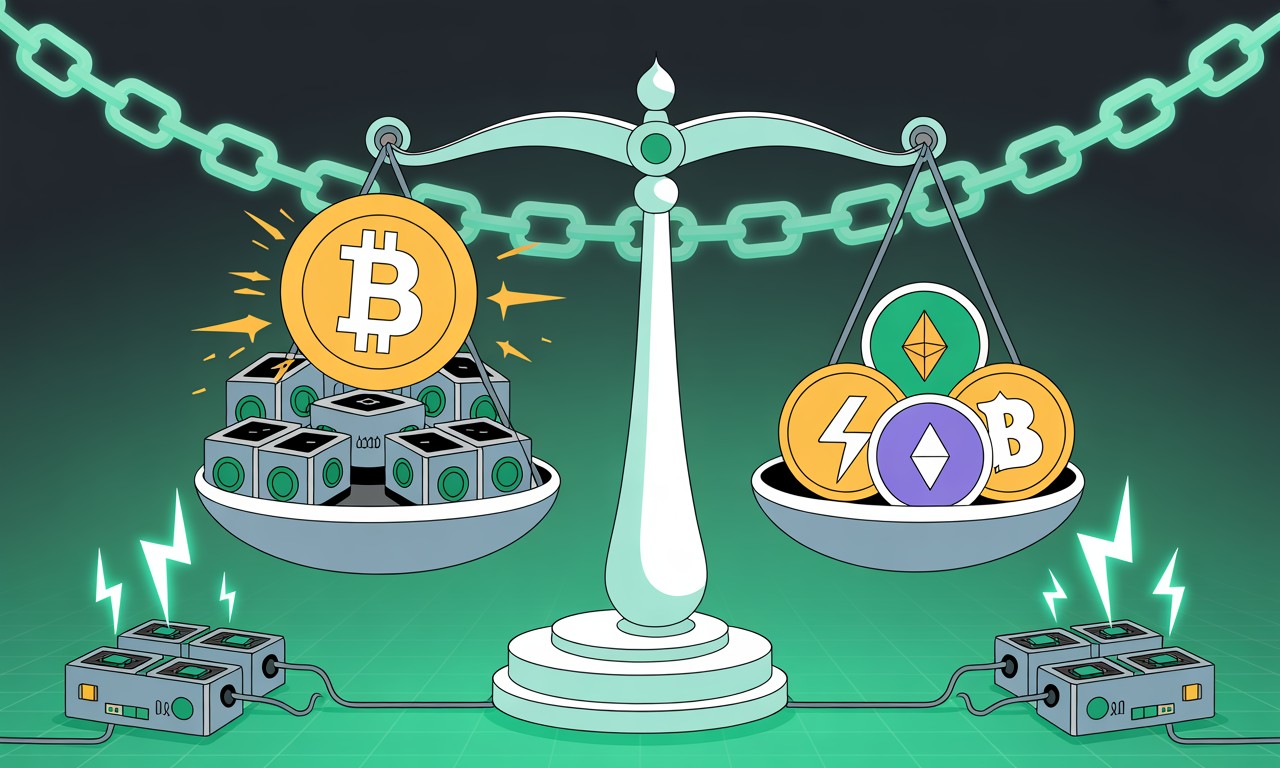
SHA-256 is a cryptographic hash function that takes input data of any length and produces a fixed-length 256-bit output. It is part of the SHA-2 family, developed by the U.S.National Security Agency and standardized by NIST in 2001. For anyone asking “what is SHA256?”, it is the foundation for data security in blockchain networks, digital signatures, and other encrypted systems.
The SHA256 algorithm plays a vital role in securing information. It converts data into an irreversible hash, meaning the output cannot be reversed to reveal the input. A key feature is that even the smallest change in the input results in a completely different output hash, a property essential for detecting tampering. This is one reason why SHA256 mining is considered trustworthy in cryptocurrency systems.
Understanding the SHA256 meaning is crucial for those involved in cryptocurrency and data integrity systems. In the context of SHA256 cryptocurrencies, this algorithm is used to validate transactions and maintain the reliability of blockchains. The process is designed to be secure against collision attacks, making it ideal for environments where data integrity is non-negotiable.
Whether you're exploring SHA256 coin options or comparing SHA256 tokens, keep in mind that the entire structure relies on this cryptographic process. It is what enables SHA256 mining to secure decentralized networks without requiring trust between users.
In summary, SHA256 is not just a technical standard. It is the backbone of SHA256 coins, the reason SHA256 cryptocurrencies remain secure, and the engine behind the proof-of-work systems that power many digital assets today.
How does SHA-256 work?
Core steps of the SHA-256 algorithm:
Input preparation
The data is padded so that its total length becomes a multiple of 512 bits. A “1” bit is added, followed by zeros, and finally a 64-bit segment that represents the original length of the message.
Initialization
The algorithm uses eight constant hash values derived from the square roots of the first eight prime numbers. These serve as the initial variables for the process.
Data processing
The input is split into 512-bit chunks. Each chunk goes through 64 rounds of operations involving bitwise shifts, modular addition, and logical functions like AND, OR, XOR.
Final hash generation
After all blocks are processed, the final 256-bit hash is created. This hash is unique to the input data and serves as its secure digital fingerprint.
Cryptocurrencies based on SHA-256
The SHA256 algorithm underpins several leading blockchain networks, forming the backbone of many established SHA256 cryptocurrencies. These networks rely on a unified cryptographic hash function to validate transactions, achieve consensus, and ensure long-term data integrity. Thanks to this standardization, they are compatible with the same ASIC-based hardware, making it easier for miners to switch between networks based on market conditions or difficulty.
These are the most established SHA256 coins:
Bitcoin (BTC). The original SHA256 coin and still the most profitable SHA256 coin to mine in 2026.
Bitcoin Cash (BCH). Offers lower mining difficulty than BTC, making it the easiest SHA256 coin to mine for many users.
Bitcoin SV (BSV). Focused on scalability and on-chain data management.
DigiByte (DGB). Known for fast block times and high security; often considered the best SHA256 coin to solo mine.
Peercoin (PPC). One of the first hybrids of proof-of-work and proof-of-stake.
Namecoin (NMC). Supports decentralized DNS services and is compatible with SHA256 solo mining.
SHA256 tokens
These lesser-known SHA256 tokens are also mineable and provide alternative economic models:
Litecoin Cash (LCC). A fork of Litecoin using SHA-256, offering faster block times and lower transaction fees.
Emercoin (EMC). A hybrid cryptocurrency combining mining with blockchain-based services like decentralized DNS.
Deutsche eMark (DEM). A German digital currency aiming to preserve national identity through blockchain technology.
Elastos (ELA). A smart web project using SHA-256 for securing its decentralized internet and digital assets ecosystem.
All of these tokens are compatible with SHA256 mining hardware and are often overlooked, yet they may present opportunities in low-difficulty conditions.
When reviewing a SHA256 coin list, miners should compare the following:
| Coin/Ticker | Network difficulty | Block time | Liquidity | Notes |
|---|---|---|---|---|
| BTC | High | 10 mins | Very High | High ASIC demand |
| BCH | Medium | 10 mins | Moderate | Lower entry barrier |
| DGB | Low–Medium | 15 secs | Moderate | Ideal for SHA256 solo mining |
| EMC/DEM | Low | Varies | Low | Speculative upside |
Platforms like WhereToMine and Minerstat help users decide what to mine SHA256, based on up-to-date metrics and miner-specific conditions.
What coins can you mine with SHA256
If you're wondering what coins can you mine with SHA256, here’s a quick view.
High-liquidity options - BTC, BCH, BSV.
Altcoin alternatives - DGB, NMC, EMC, DEM.
Experimental tokens - ELA, LCC.
Those preferring more autonomy can explore SHA256 solo mining through supported platforms offering solo mining pool SHA256 services. These setups allow miners to claim full block rewards, especially viable with coins like DGB or low-traffic SHA256 tokens.
Whether you're seeking the best SHA256 coin to mine in 2026, exploring less competitive SHA256 coins to mine, or evaluating the best SHA256 mining pool, understanding the structure and diversity of SHA256 cryptocurrencies is essential. Matching the right coin to your hardware, budget, and mining goals is the key to staying profitable in this segment of the industry.
SHA-256 cryptocurrency mining in 2026
In 2026, SHA-256 mining continues to be a viable method for generating cryptocurrency assets, especially with the use of modern ASIC hardware. Below is an overview of the top SHA-256 coins to mine in 2026, considering factors like mining difficulty, profitability, and hardware requirements.
| Cryptocurrency | Mining Difficulty | Profitability | Notes |
|---|---|---|---|
| Bitcoin (BTC) | High | High | Despite high competition, BTC remains the most profitable SHA-256 coin to mine in 2026 due to its market dominance and value. |
| BitcoinCash (BCH) | Moderate | Moderate | Offers lower mining difficulty compared to BTC, making it attractive for small to medium miners. |
| Fractal Bitcoin (FB) | Variable | Potentially High | A newer entrant with innovative features; requires significant upfront investment and research. |
Sha256 mining considerations
Easiest SHA256 coin to mine. Bitcoin Cash (BCH) is widely regarded as the easiest SHA256 coin to mine in 2026. This is largely due to its lower network difficulty and reduced hardware requirements, making it a practical option for small to mid-scale miners.
Most profitable SHA256 coin to mine. Bitcoin (BTC) remains the most profitable SHA256 coin to mine, especially for large-scale operations with industrial-level ASICs and access to low electricity rates.
Best SHA256 coin to mine 2026. For those mining in institutional or optimized setups, BTC is still considered the best SHA256 coin to mine in 2026 due to its liquidity, network dominance, and compatibility with high-efficiency ASIC rigs.
What to mine SHA256. Miners should evaluate their ASIC hardware, electricity pricing, and payout models before deciding what to mine SHA256. Real-time calculators can help match conditions with profitable coins.
What coins can you mine with SHA256. Besides BTC and BCH, other active SHA256 cryptocurrencies include Bitcoin SV (BSV), Peercoin (PPC), DigiByte (DGB), and Namecoin (NMC).
Sha256 mining pools
Joining SHA256 mining pools allows miners to combine computing power and earn more predictable rewards. The SHA256 mining pool list for 2026 includes several leading platforms known for payout reliability and network SHAre:
Foundry USA. The largest pool by hash rate in 2026, offering FPPS payouts and supporting top SHA256 coin networks.
AntPool. One of the oldest and most stable SHA256 mining pools, compatible with a wide range of SHA256 coins to mine.
F2Pool. Offers support for BTC and other cryptocurrencies, with options like FPPS and PPLNS payout models.
ViaBTC. Enables merged mining and supports over 20 coins, making it a versatile entry on the SHA256 mining pool list.
Luxor. Focused on operational transparency, Luxor includes advanced analytics and stable payout mechanisms.
Selecting the best SHA256 mining pool depends on your hardware efficiency, fee structure preference, and supported SHA256 cryptocurrencies.
Sha256 solo mining
Sha256 solo mining allows experienced miners to operate independently and retain the full block reward, including transaction fees:
Best SHA256 coin to solo mine. Bitcoin (BTC) is a primary option for solo mining with robust setups. DigiByte (DGB) is often chosen as a more accessible alternative due to its lower hash difficulty.
Solo mining pool SHA256. Several platforms offer dedicated solo mining pool SHA256 services, particularly for BTC, BCH, and DGB. These pools often feature instant payouts upon block discovery and do not require formal registration.
By aligning hardware capability, electricity rates, and payout strategy, miners can identify the best SHA256 coin to mine and maximize efficiency. Whether through pool mining or SHA256 solo mining, the 2026 landscape offers flexible paths for both beginners and professionals in the SHA256 crypto mining ecosystem.
If you are just getting started with crypto mining, you will need to create an account with a cryptocurrency exchange to convert your mined tokens into usable assets. Below is a selection of beginner-friendly crypto exchanges:
| Kraken | Coinbase | OKX | Nebeus | Crypto.com | |
|---|---|---|---|---|---|
|
Min. Deposit, $ |
10 | 10 | 10 | 5 | 1 |
|
Coins Supported |
278 | 249 | 329 | 30 | 250 |
|
Spot Taker fee, % |
0.4 | 0.5 | 0.1 | Not available | 0.5 |
|
Spot Maker Fee, % |
0.25 | 0.5 | 0.08 | Not available | 0.25 |
|
Alerts |
Yes | Yes | Yes | No | Yes |
|
Copy trading |
Yes | No | Yes | No | No |
|
TU overall score |
8.7 | 8.46 | 8.44 | 7.84 | 7.24 |
|
Open an account |
Go to broker Your capital is at risk. |
Go to broker Your capital is at risk. |
Go to broker Your capital is at risk. |
Go to broker Your capital is at risk.
|
Go to broker Your capital is at risk. |
Why trust us
15+ years of independent market analysis
140+ evaluation criteria, reviewed by 50+ experts
Data-driven reviews of 200+ platforms, updated regularly
20+ industry awards & a wide network of global media partners
Learn more about our methodology and editorial policies.


The hidden edge in SHA256 mining for first-time operators

Most beginners in SHA256 mining instinctively go for SHA256 coins like Bitcoin or Bitcoin Cash, but that’s not always the smartest move. A better way to start is by watching how hashrate behaves during specific hours or days. Some lesser-known SHA256 cryptocurrencies, such as DigiByte or Namecoin, quietly become easier to mine during low-traffic windows like weekends or late nights. This kind of nuance rarely makes it into guides about the easiest SHA256 coin to mine, but savvy miners often capitalize on these dips for better yield. Even if you're working with basic hardware, understanding what coins you can mine with SHA256 at the right moment can level the playing field.
Also, many people miss the impact firmware can have when selecting the best SHA256 coin to mine. Instead of chasing whatever looks profitable today, it is smarter to look at what your ASIC firmware handles most efficiently. Custom firmware like Braiins OS or Hiveon often works better with SHA256 tokens such as Peercoin or DigiByte, especially due to how their networks adjust mining difficulty. These performance gains usually do not show up in standard SHA256 mining calculators, but in real-world use, they can improve daily results by five to ten percent.
Conclusion
In summary, the best SHA-256 coins to mine in 2026 will be those that balance reasonable network difficulty with stability and reliable long-term potential. Bitcoin, while remaining the dominant choice due to its liquidity and security, presents ever-increasing competition that favors miners with advanced ASIC hardware. Alternatives such as Bitcoin Cash may offer more accessible entry points for miners with less powerful equipment, but long-term profitability still hinges on market dynamics and technological shifts. Ultimately, strategic miners in 2026 will succeed by staying adaptive—closely monitoring network conditions and continually upgrading their mining setups to keep pace with rapid algorithm and hardware evolution.
FAQs
What hardware is most compatible with SHA256 coin mining?
How do SHA256 coins differ in terms of network liquidity and entry barriers?
Are there benefits to mining lesser-known SHA256 tokens instead of major coins?
What role does ASIC firmware play in optimizing SHA256 coin mining?
Editors' Top Picks and Insights

FIFA World Cup on blockchain: Where football meets crypto
Aliens, Satoshi, and Bitcoin: How the extraterrestrial theory emerged

Blockchain nation in crisis: How a power struggle split Liberland
Shifting priorities: Governments back mining as businesses turn to AI
Intel's comeback: Apple, Trump and the AI bet
Bitcoin price prediction based on RSI: Is BTC poised for a new rally?
Related Articles
Team that worked on the article
Maxim Nechiporenko has been a contributor to Traders Union since 2023. He started his professional career in the media in 2006.
Dan Blystone began his trading career in 1998 as an arbitrage clerk on the floor of the Chicago Mercantile Exchange (CME). He later traded bond and Eurex futures at proprietary firms such as Altea Trading, gaining valuable experience in high-frequency trading and risk management.
Chinmay Soni is a financial analyst with more than 5 years of experience in working with stocks, Forex, derivatives, and other assets. As a founder of a boutique research firm and an active researcher, he covers various industries and fields, providing insights backed by statistical data.
Bitcoin is a decentralized digital cryptocurrency that was created in 2009 by an anonymous individual or group using the pseudonym Satoshi Nakamoto. It operates on a technology called blockchain, which is a distributed ledger that records all transactions across a network of computers.
Cryptocurrency is a type of digital or virtual currency that relies on cryptography for security. Unlike traditional currencies issued by governments (fiat currencies), cryptocurrencies operate on decentralized networks, typically based on blockchain technology.
Xetra is a German Stock Exchange trading system that the Frankfurt Stock Exchange operates. Deutsche Börse is the parent company of the Frankfurt Stock Exchange.
Index in trading is the measure of the performance of a group of stocks, which can include the assets and securities in it.
Risk management is a risk management model that involves controlling potential losses while maximizing profits. The main risk management tools are stop loss, take profit, calculation of position volume taking into account leverage and pip value.

-
 Afghanistan
-
 Albania
-
 Algeria
-
 Angola
-
 Argentina
-
 Armenia
-
 Australia
-
 Austria
-
 Azerbaijan
-
 Bahamas
-
 Bahrain
-
 Bangladesh
-
 Belarus
-
 Belgium
-
 Bolivia
-
 Botswana
-
 Brazil
-
 Brunei
-
 Bulgaria
-
 Cambodia
-
 Cameroon
-
 Canada
-
 Chile
Chile
-
 China
China
-
 Colombia
-
 Congo
Congo
-
 Costa Rica
-
 Cote d'Ivoire
-
 Croatia
-
 Cuba
Cuba
-
 Cyprus
-
 Czechia
-
 DR Congo
-
 Denmark
-
 Dominican Republic
-
 Ecuador
-
 Egypt
Egypt
-
 El Salvador
-
 Estonia
-
 Eswatini
-
 Ethiopia
-
 Finland
-
 France
-
 Georgia
-
 Germany
-
 Ghana
Ghana
-
 Greece
-
 Haiti
Haiti
-
 Hong Kong
-
 Hungary
-
 India
India
-
 Indonesia
-
 Iran, Islamic republic
-
 Iraq
Iraq
-
 Ireland
-
 Israel
-
 Italy
Italy
-
 Jamaica
-
 Japan
Japan
-
 Jordan
-
 Kazakhstan
-
 Kenya
Kenya
-
 Korea
Korea
-
 Kuwait
-
 Kyrgyzstan
-
 Laos
Laos
-
 Latvia
-
 Lebanon
-
 Lesotho
-
 Libya
Libya
-
 Lithuania
-
 Luxembourg
-
 Madagascar
-
 Malaysia
-
 Malta
Malta
-
 Mauritius
-
 Mexico
-
 Moldova
-
 Mongolia
-
 Montenegro
-
 Morocco
-
 Mozambique
-
 Myanmar
-
 Namibia
-
 Nepal
Nepal
-
 Netherlands
-
 New Zealand
-
 Nigeria
-
 North Macedonia
-
 Norway
-
 Oman
Oman
-
 Pakistan
-
 Palestine
-
 Panama
-
 Papua New Guinea
-
 Paraguay
-
 Peru
Peru
-
 Philippines
-
 Poland
-
 Portugal
-
 Puerto Rico
-
 Qatar
Qatar
-
 Reunion
-
 Romania
-
 Rwanda
-
 Saudi Arabia
-
 Serbia
-
 Singapore
-
 Slovakia
-
 Slovenia
-
 Somalia
-
 South Africa
-
 Spain
Spain
-
 Sri Lanka
-
 Sweden
-
 Switzerland
-
 Syria
Syria
-
 Taiwan
-
 Tajikistan
-
 Tanzania
-
 Thailand
-
 Trinidad and Tobago
-
 Tunisia
-
 Turkey
-
 UAE
UAE
-
 Uganda
-
 Ukraine
-
 United Kingdom
-
United States
-
 Uruguay
-
 Uzbekistan
-
 Venezuela
-
 Vietnam
-
 Yemen
Yemen
-
 Zambia
-
 Zimbabwe
- Forex
- Crypto












