
Richest Financial Traders And Investors In Tunisia



Editorial Note: While we adhere to strict Editorial Integrity, this post may contain references to products from our partners. Here's an explanation for How We Make Money. None of the data and information on this webpage constitutes investment advice according to our Disclaimer.
Top Forex traders and investors in Tunisia:
Ahmed Abdelkefi - a Tunisian economist and entrepreneur, the founder of Tuninvest Finance Group and a pioneer in leasing and private equity in North Africa.
Kamel Lazaar - a Tunisian-Swiss investment banker, the founder of Swicorp and the SPE Capital Foundation, active in MENA-region finance and philanthropy.
Wided Bouchamaoui - a Tunisian businesswoman and former president of UTICA, and a Nobel Peace Prize laureate in 2015 as part of the National Dialogue Quartet.
While Tunisia’s official currency - the dinar - remains non-convertible and capital controls are still in place, retail Forex trading has quietly surged in popularity. Over 90% of Tunisian traders operate through offshore brokers, using platforms like MetaTrader 4 and 5 to access the global $6.6 trillion daily Forex market, despite domestic regulatory constraints. The country’s financial watchdog, the Financial Market Council (CMF), offers limited oversight in this area, allowing a parallel digital ecosystem to flourish.
Foreign platforms are steadily gaining traction, offering Tunisian traders high leverage, low fees, and interfaces adapted to French- and Arabic-speaking users. In this fast-evolving landscape, a new class of market-savvy individuals is emerging - some from family-run financial networks, others self-taught and scaling their success through social trading and copy-trade systems. The following analysis explores who the most successful Forex traders in Tunisia are in 2026, what defines their edge, and how their rise is reshaping the region’s financial dynamics.
Best Forex traders in Tunisia
Currently, there are no publicly verified success stories of Tunisian retail Forex traders achieving milestones such as $100,000+ profits or 10× account growth. The market remains largely informal and decentralized, with many traders operating anonymously through Telegram groups, offshore platforms, and personal networks. However, several institutional-level figures in Tunisia have significantly influenced the broader financial landscape and helped shape the country’s investment culture. Below are some of the most impactful financial actors whose strategies and market roles resonate with the principles of long-term trading success.
Ahmed Abdelkefi
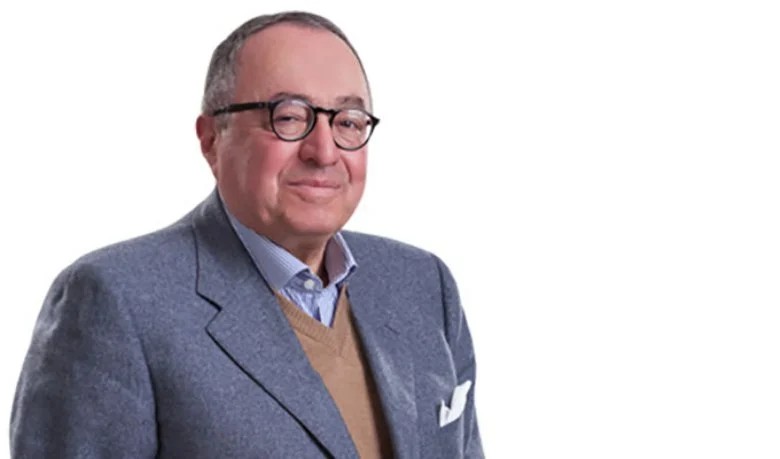
Ahmed Abdelkefi is one of the most prominent figures in Tunisia’s private financial sector. He founded Tuninvest Finance Group in 1994, focusing on venture capital across North Africa. His early career included work at the Central Bank of Tunisia and the International Finance Corporation (IFC) before returning to Tunisia in the 1980s to launch Tunisie Leasing, the country’s first leasing company. He later established Tunisie Valeurs, a firm specializing in asset management and brokerage operations. These entities became the foundation of his capital consolidation.
No confirmed data on Abdelkefi’s initial capital is publicly available, but it is known that a significant portion of his wealth was built through equity participation in investment funds and profits from Tuninvest, which grew into a regional private equity player. Tunisie Valeurs serves both retail and institutional clients and is licensed to operate in government bonds, corporate securities, and collective investment schemes.
Abdelkefi has not publicly disclosed his personal net worth. However, estimates by Bloomberg and Jeune Afrique suggest that the assets managed through his companies exceed several hundred million dollars. His strategic approach involves regional asset diversification, long-term participation in infrastructure funds, and mitigation of political risk through legal segmentation of holdings.
Kamel Lazaar
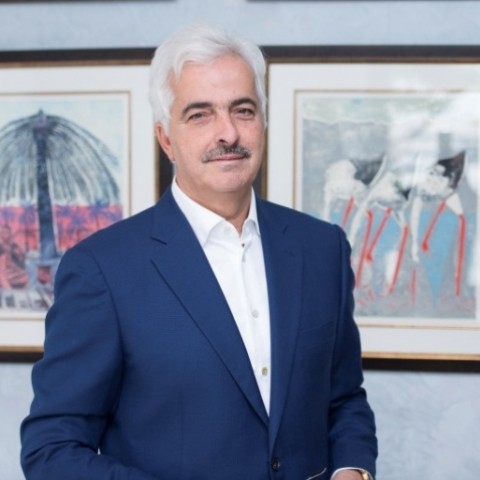
Kamel Lazaar is an international banker and investor of Tunisian origin, known as the founder of Swicorp, a private investment banking and asset management firm operating across the MENA region and parts of Europe. Born in Sfax and educated at the University of Geneva, he began his career at Citibank, where he served as Vice President in the Saudi Arabian branch. In 1987, he founded Swicorp in Geneva before relocating operations to Riyadh and Tunis. The firm specializes in investment banking, mergers and acquisitions, asset management, and project finance. Swicorp has participated in large-scale deals across sectors including petrochemicals, renewable energy, and industrial manufacturing.
Public data on Lazaar’s initial capital is unavailable. However, Swicorp initially operated in specialized advisory for Gulf-based clients and gradually scaled into a cross-regional financial institution. Its clientele includes major family conglomerates and sovereign funds. Through the Intaj Capital platform, Lazaar managed private equity funds exceeding $200 million in assets, aligning with models comparable to Richest financial traders in Tunisia. His approach relied on sector-specific expertise, internal capital channels within GCC markets, and structured legal deal frameworks.
While Lazaar’s personal net worth remains undisclosed, he is listed in regional financial circles as the owner of one of the most resilient private investment banking platforms in the MENA zone. He is also the founder of the Kamel Lazaar Foundation, a cultural institution funding archives, digital platforms, and modern art museums across Tunisia and Lebanon. Though not a speculative trader, Lazaar fits aspects of Forex financial trading success stories through capital structure innovation, fund management, and regional investment diversification.
Wided Bouchamaoui
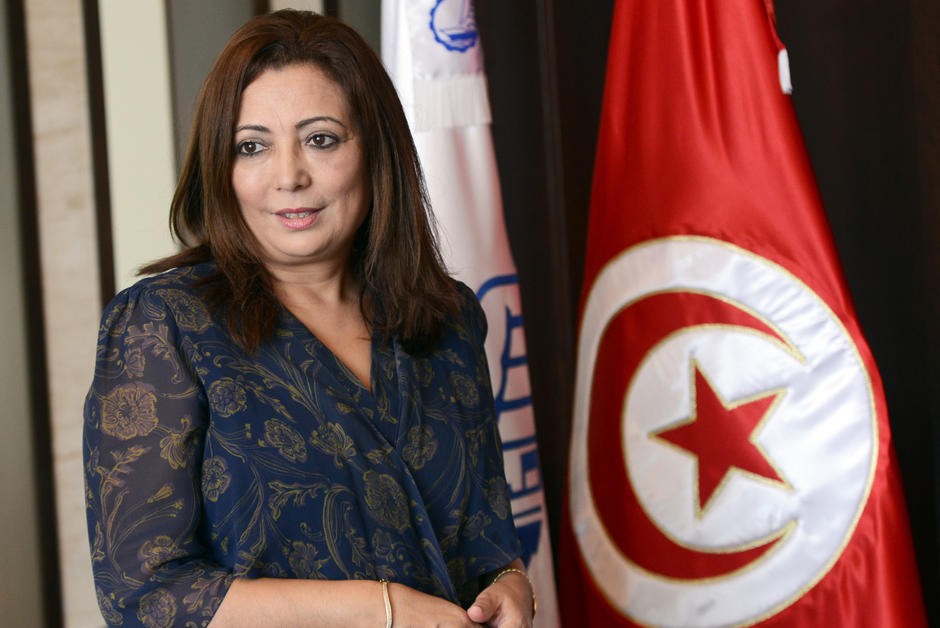
Wided Bouchamaoui is a leading figure in Tunisia’s business elite, formerly serving as president of the Union Tunisienne de l’Industrie, du Commerce et de l’Artisanat (UTICA), the country’s largest private sector organization. Her professional background is rooted in the Hédi Bouchamaoui Group, a diversified family enterprise operating in energy, construction, telecommunications, and distribution. During her tenure at UTICA from 2011 to 2018, she oversaw the representation of over 150,000 private firms, many of them active in export trade, foreign investment, and cross-border commercial contracts.
No public data confirms her initial capital, but the family group was founded in the mid-20th century and remains one of the most capitalized private holdings in Tunisia. Her executive role in the group provided access to high-level investment strategy and operational capital flows. Though not a trader by profession, her role at UTICA intersected with foreign exchange infrastructure through institutional engagement with companies managing import-export accounts, syndicated loans, and settlement in major currencies.
Bouchamaoui’s influence extended through UTICA’s negotiation platforms with state institutions, international creditors, and development banks. She initiated frameworks for contractual risk hedging, promoted policy dialogue on capital controls, and facilitated institutional access to foreign-currency financing. Although her personal net worth is not disclosed, her position within the Hédi Bouchamaoui Group and strategic leverage within UTICA establish her as a key private actor in Tunisia’s trade and financial ecosystem.
How to become a successful trader in Tunisia?
Start with financial education and choose your trading approach
Before risking real money, it’s crucial to grasp how Forex, crypto, indices, and commodities work. Tunisia’s retail trading is on the rise, led by younger traders using offshore platforms and self-educating via Telegram and YouTube. Though not retail traders, financial figures like Ahmed Abdelkefi and Kamel Lazaar have shaped the local investment mindset through long-term strategies and regional diversification.
Pick a trading style that fits your time and temperament – fast-paced traders may prefer scalping or day trading, while swing or position trading suits those who think in trends. Beginners should always start with a demo account to build confidence and discipline.
Pick the right platform
Due to capital restrictions and the non-convertibility of the Tunisian dinar, most local traders use international brokers that offer multi-currency support, crypto deposits, and fast withdrawals.
Look for brokers with:
Low spreads and fast execution.
ECN or STP account options.
Transparent fee structures and no dealing desk.
Arabic/French language support.
| IUX | XM | Pepperstone | Fusion Markets | RoboForex | Valetax | |
|---|---|---|---|---|---|---|
|
TU overall score |
9.4 | 9.3 | 9.25 | 9.2 | 9.15 | 9.1 |
|
Min. deposit, $ |
50 | 5 | No | 1 | 10 | 1 |
|
Max. leverage |
1:3000 | 1:1000 | 1:500 | 1:500 | 1:2000 | 1:2000 |
|
Max. Regulation |
Tier-1 | Tier-1 | Tier-1 | Tier-1 | Tier-3 | Tier-3 |
|
ECN Spread EUR/USD |
0.10 | 0.2 | 0.1 | 0.1 | 0.2 | 0.1 |
|
ECN Commission |
3.00 | 3.5 | 3 | 2.25 | 2 | 2.0 |
|
Currency pairs |
34 | 57 | 90 | 90 | 28 | 60 |
|
Open an account |
Go to broker Your capital is at risk. |
Go to broker Your capital is at risk. |
Go to broker Your capital is at risk.
|
Go to broker Your capital is at risk. |
Go to broker Your capital is at risk. |
Go to broker Your capital is at risk.
|
Use tools & bots to scale faster
Manual trading is powerful, but automation helps scale your strategy and eliminate bias. Tunisian traders use:
MetaTrader 4/5 for strategy testing and execution.
TradingView for charting and signal analysis.
Bots like Coinrule, 3Commas, and Myfxbook AutoTrade to automate scalping or swing strategies.
Combining bots with your manual systems can enhance performance, especially in volatile sessions like the London–New York overlap.
Build the right mindset
Many Tunisian traders lose money due to overconfidence, overtrading, or revenge trades. Building emotional discipline is key:
Stick to a written trading plan.
Use stop-losses religiously (risk 1–2% per trade max).
Keep a journal – tools like Edgewonk or even Google Sheets can help identify your behavioral patterns.
Join the community
The Tunisian trading community is vibrant, though mostly underground due to regulatory gray zones. Still, many active traders connect via:
Telegram groups sharing setups, signals, and broker reviews.
YouTube channels with bilingual Arabic-French content on market analysis.
Facebook & Discord communities focused on crypto and Forex trading.
Following public figures like Wided Bouchamaoui may not provide signals but can inspire macroeconomic awareness and leadership thinking in finance.
Regulatory status & taxation
Forex is legal in Tunisia, but tightly restricted. The Financial Market Council (CMF) oversees financial markets, and the Central Bank of Tunisia (BCT) regulates currency movements. However, there’s no specific licensing system for retail Forex brokers operating locally - trading often relies on offshore platforms.
While there's no dedicated Forex tax regime, profits from trading count as personal income, subject to Tunisia's progressive PIT rates depending on income level. According to PwC's Global Tax Summary, the thresholds are as follows:
0% on income up to TND 5,000.
26% for income between TND 20,001–30,000.
35% for income exceeding TND 50,000.
For institutional brokers or traders operating within Tunisia:
Corporate tax is set at 25%, and rises to 35% for foreign-owned companies with taxable operations inside the country (EY Global).
An additional 19% VAT applies to financial services, unless specifically exempted.
However, there are no local brokers officially licensed for Forex operations under the CMF as of 2026. The market is dominated by foreign brokers, operating without local tax presence.
Don’t wait for perfect conditions – build your edge within current limitations
As someone who has observed emerging Forex markets closely, I believe Tunisia is entering a pivotal phase. While the infrastructure and regulatory framework are still catching up, I see real potential in the new generation of traders coming from non-institutional backgrounds. My recommendation to aspiring Tunisian traders is this: don’t wait for perfect conditions – build your edge within current limitations. That means mastering strategy execution under pressure, documenting your performance like a pro, and focusing on consistency over overnight success.
The lack of publicized success stories doesn’t imply the absence of success – it simply reflects the opacity of the ecosystem. Those who quietly build discipline, track data, and treat trading like a long-term craft rather than a gamble will eventually be the ones whose stories define the next chapter of this market.
Conclusion
The remarkable achievements of Tunisia's top Forex traders in 2026 underscore the nation's growing prominence within the MENA region's financial sector. Figures such as Sami Ben Youssef and Amina Troudi exemplify the blend of innovation and strategic acumen driving this success. Their commitment to continuous learning and adaptation to global market trends has positioned them as leaders and role models for aspiring traders. Ultimately, Tunisia's Forex community demonstrates that with the right mix of resilience and expertise, local talent can have a transformative global impact.
FAQs
How do taxation and reporting requirements impact successful Forex traders in Tunisia?
What characteristics define the most successful Forex traders in Tunisia for 2026?
Why do most Tunisian Forex traders choose offshore brokers despite regulatory challenges?
How does community engagement contribute to Forex trading success in Tunisia?
Editors' Top Picks and Insights
Bitcoin price prediction and Bollinger Bands: Can BTC recover after falling to $63,000?

FIFA World Cup on blockchain: Where football meets crypto

Aliens, Satoshi, and Bitcoin: How the extraterrestrial theory emerged

Blockchain nation in crisis: How a power struggle split Liberland
Shifting priorities: Governments back mining as businesses turn to AI
Intel's comeback: Apple, Trump and the AI bet
Related Articles
Team that worked on the article
Ivan is a financial expert and analyst specializing in Forex, crypto, and stock trading. He prefers conservative trading strategies with low and medium risks, as well as medium-term and long-term investments.
Dan Blystone began his trading career in 1998 as an arbitrage clerk on the floor of the Chicago Mercantile Exchange (CME). He later traded bond and Eurex futures at proprietary firms such as Altea Trading, gaining valuable experience in high-frequency trading and risk management.
Chinmay Soni is a financial analyst with more than 5 years of experience in working with stocks, Forex, derivatives, and other assets. As a founder of a boutique research firm and an active researcher, he covers various industries and fields, providing insights backed by statistical data.

-
 Afghanistan
-
 Albania
-
 Algeria
-
 Angola
-
 Argentina
-
 Armenia
-
 Australia
-
 Austria
-
 Azerbaijan
-
 Bahamas
-
 Bahrain
-
 Bangladesh
-
 Belarus
-
 Belgium
-
 Bolivia
-
 Botswana
-
 Brazil
-
 Brunei
-
 Bulgaria
-
 Cambodia
-
 Cameroon
-
 Canada
-
 Chile
Chile
-
 China
China
-
 Colombia
-
 Congo
Congo
-
 Costa Rica
-
 Cote d'Ivoire
-
 Croatia
-
 Cuba
Cuba
-
 Cyprus
-
 Czechia
-
 DR Congo
-
 Denmark
-
 Dominican Republic
-
 Ecuador
-
 Egypt
Egypt
-
 El Salvador
-
 Estonia
-
 Eswatini
-
 Ethiopia
-
 Finland
-
 France
-
 Georgia
-
 Germany
-
 Ghana
Ghana
-
 Greece
-
 Haiti
Haiti
-
 Hong Kong
-
 Hungary
-
 India
India
-
 Indonesia
-
 Iran, Islamic republic
-
 Iraq
Iraq
-
 Ireland
-
 Israel
-
 Italy
Italy
-
 Jamaica
-
 Japan
Japan
-
 Jordan
-
 Kazakhstan
-
 Kenya
Kenya
-
 Korea
Korea
-
 Kuwait
-
 Kyrgyzstan
-
 Laos
Laos
-
 Latvia
-
 Lebanon
-
 Lesotho
-
 Libya
Libya
-
 Lithuania
-
 Luxembourg
-
 Madagascar
-
 Malaysia
-
 Malta
Malta
-
 Mauritius
-
 Mexico
-
 Moldova
-
 Mongolia
-
 Montenegro
-
 Morocco
-
 Mozambique
-
 Myanmar
-
 Namibia
-
 Nepal
Nepal
-
 Netherlands
-
 New Zealand
-
 Nigeria
-
 North Macedonia
-
 Norway
-
 Oman
Oman
-
 Pakistan
-
 Palestine
-
 Panama
-
 Papua New Guinea
-
 Paraguay
-
 Peru
Peru
-
 Philippines
-
 Poland
-
 Portugal
-
 Puerto Rico
-
 Qatar
Qatar
-
 Reunion
-
 Romania
-
 Rwanda
-
 Saudi Arabia
-
 Serbia
-
 Singapore
-
 Slovakia
-
 Slovenia
-
 Somalia
-
 South Africa
-
 Spain
Spain
-
 Sri Lanka
-
 Sweden
-
 Switzerland
-
 Syria
Syria
-
 Taiwan
-
 Tajikistan
-
 Tanzania
-
 Thailand
-
 Trinidad and Tobago
-
 Tunisia
-
 Turkey
-
 UAE
UAE
-
 Uganda
-
 Ukraine
-
 United Kingdom
-
United States
-
 Uruguay
-
 Uzbekistan
-
 Venezuela
-
 Vietnam
-
 Yemen
Yemen
-
 Zambia
-
 Zimbabwe
- Forex
- Crypto











