Raamdeo Agrawal Trading Strategy And Investing Philosophy


Editorial Note: While we adhere to strict Editorial Integrity, this post may contain references to products from our partners. Here's an explanation for How We Make Money. None of the data and information on this webpage constitutes investment advice according to our Disclaimer.
Raamdeo Agrawal is a renowned Indian value investor and co-founder of Motilal Oswal Financial Services. As of 2025, his net worth is approximately ₹2,650 crore. His strategy is based on the QGLP framework – Quality, Growth, Longevity, and Price – focusing on high-ROE businesses with strong fundamentals. His portfolio includes major holdings in financials (30%), auto components (12%), and IT (10%).
This article explores Agrawal’s background, portfolio structure in 2026, investment strategy, and why he is widely regarded as one of India’s most successful and influential value investors.
Who is Raamdeo Agrawal?
Raamdeo Agrawal is a respected Indian investor and chartered accountant, known for co-founding Motilal Oswal in 1987. As the Raamdeo Agrawal Motilal Oswal founder, he helped pioneer research-based equity investing in India, emphasizing long-term wealth generation backed by strong fundamentals.
He is also the driving force behind Motilal Oswal’s Wealth Creation Studies, a series of empirical research reports that analyze India’s top wealth-generating companies over five-year periods. He also shares his knowledge through social networks - LinkedIn, 24vids.
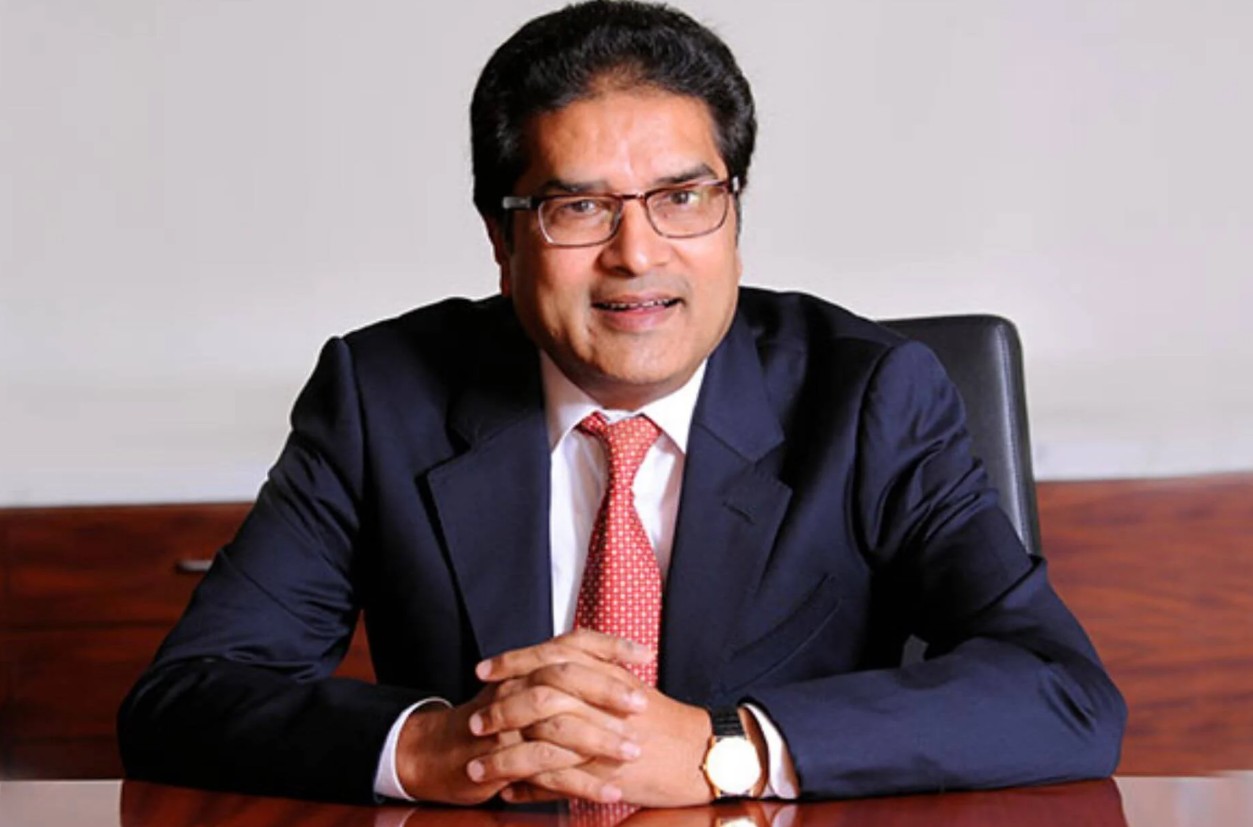
Raamdeo Agrawal investment strategy
At the core of the Raamdeo Agrawal investment strategy lies the QGLP framework, a structured and replicable model used to evaluate potential stock investments. QGLP stands for Quality, Growth, Longevity, and Price – four pillars that together reflect Agrawal’s commitment to disciplined, fundamentals-based investing. This approach was first publicly articulated in Motilal Oswal’s 13th Wealth Creation Study (2008), and it continues to guide his investment decisions to this day.
Quality
This pillar focuses on the governance and operational integrity of a company.
Agrawal looks for businesses that exhibit:
Strong Return on Equity (ROE). Ideally above 20%, indicating capital efficiency.
Clean accounting practices and low debt. Avoiding aggressive or opaque financial structures.
Competent and ethical management. Founders or promoters with a track record of execution and shareholder alignment.
Agrawal has consistently favored HDFC Bank, citing its best-in-class governance, consistent ROE above 18%, and transparent disclosures.
Growth
Growth refers to consistent and scalable earnings expansion over a 5–10 year horizon.
Key metrics used include:
Earnings Per Share (EPS) CAGR.
Top-line and bottom-line alignment.
Market leadership in an expanding industry.
A company should demonstrate the ability to reinvest retained earnings into core operations and generate high incremental returns.
Asian Paints is a recurring feature in Agrawal’s studies – with its 15–20% earnings CAGR over a decade and dominant position in India’s paints market.
Longevity
Longevity emphasizes sustainability and resilience of business models through economic cycles.
Agrawal seeks companies with:
Enduring competitive advantages (moats).
Brand equity and high customer retention.
Adaptability to regulatory and technological change.
He often examines the duration of profitability and industry entry barriers as indicators of longevity.
Nestlé India fits this profile – with a legacy brand portfolio, pricing power, and defensive business traits that have persisted over decades.
Price
Even the best companies can be poor investments if bought at inflated valuations.
This pillar ensures investors don’t overpay for growth. Agrawal evaluates:
Price-to-Earnings (P/E) and Price-to-Book (P/B) ratios in context of growth.
Valuation vs. long-term normalized earnings.
Margin of safety in entry price.
“Valuation is what you pay, value is what you get,” he often reiterates, echoing Benjamin Graham.
Agrawal avoided Zomato and Paytm during their IPOs, citing unclear profitability and steep pricing despite high growth potential.
Why QGLP works in India
Agrawal adapted global value investing frameworks, such as Buffett’s principles and Graham’s margin of safety, to India’s unique market structure:
High family ownership makes governance evaluation critical.
Regulatory volatility necessitates business adaptability.
Young demographics and consumption-led growth require scalable business models.
The QGLP model, therefore, balances risk and reward, growth and discipline, helping investors navigate India's emerging and sometimes volatile market environment with a structured lens.
Portfolio overview: Raamdeo Agrawal portfolio 2026
As of Q1 2025, the Raamdeo Agrawal portfolio 2025 – managed through Motilal Oswal AMC – oversees ₹30,000+ crore in equity assets. His portfolio has exposure across blue-chip, mid-cap, and small-cap stocks.
| Sector | Allocation (%) | Key Holdings |
|---|---|---|
| Financial Services | 30% | ICICI Bank, HDFC Bank, Kotak Mahindra |
| Auto & Auto Ancillaries | 12% | Maruti Suzuki, Uno Minda, Sona BLW |
| IT & Tech | 10% | Infosys, TCS |
| Capital Goods | 9% | Bharat Electronics, ABB India |
| Healthcare | 7% | Dr. Reddy’s, IPCA Labs |
| Infrastructure & Cement | 6% | Ultratech Cement, PNC Infratech |
| Chemicals & Specialty | 6% | SRF, Aarti Industries |
| Consumer Discretionary | 5% | Titan, Trent |
| Others | 15% | Diversified mid- and small-cap holdings |
This diversified allocation reflects his bullish outlook on India’s economic growth and earnings potential, especially in manufacturing, capex, and consumer sectors.
Net worth and financial position
As of early 2025, Raamdeo Agrawal net worth is estimated at ₹2,650 crore (~$320 million USD).
A major portion of this wealth comes from his equity stake (approx. 15%) in Motilal Oswal Financial Services and compounded returns from long-term stock investments.
This valuation has grown substantially in recent years, driven by the rally in Indian equities, which saw the BSE Sensex climb from ~40,000 in 2020 to over 74,000 in 2025.
The 2024 edition of the Motilal Oswal Wealth Creation Study provides key data points:
Top 3 Wealth Creators (2018–2023). Tata Elxsi, Bajaj Finance, Trent.
Fastest Wealth Creator. Fine Organic Industries.
Top Gainers by Profit CAGR. Median earnings CAGR across the top 100 wealth creators stood at 32% .
The report highlights the role of innovation, ROE expansion, and reinvestment in generating shareholder value – all critical to Agrawal’s QGLP evaluation process.
Practical advice for traders
Raamdeo Agrawal advises traders and new investors to focus on:
Reading financials and annual reports regularly.
Understanding the economic moat of each business.
Avoiding speculative fads and “hot stocks”.
Using frameworks like QGLP to evaluate opportunities.
He suggests that retail traders should think like investors, not speculators, and always prioritize long-term wealth creation over short-term profits. Applying these principles is just the beginning. To truly set yourself up for long-term trading success, you need the right tools – starting with a reliable broker. The quality of your brokerage partner can directly impact your performance, costs, and overall experience. Below, you’ll find our curated list of top-rated brokers, selected based on strict criteria and in-depth analysis.
| Demo | Min. deposit, $ | Max. leverage | Min Spread EUR/USD, pips | Max Spread EUR/USD, pips | Negative balance protection | Investor protection | Max. Regulation Level | Open an account | |
|---|---|---|---|---|---|---|---|---|---|
| Yes | 50 | 1:50 | 0.9 | No | Yes | No | Tier-1 | Go to broker Your capital is at risk. |
|
| Yes | 100 | 1:300 | 0.5 | 0.9 | Yes | €20,000 £85,000 SGD 75,000 | Tier-1 | Go to broker 81% of retail CFD accounts lose money. |
|
| Yes | No | 1:200 | 0.1 | 0.5 | Yes | £85,000 SGD 75,000 $500,000 | Tier-1 | Go to broker Your capital is at risk. |
|
| Yes | 100 | 1:50 | 0.7 | 1.2 | Yes | £85,000 | Tier-1 | Study review | |
| Yes | 1 | 1:200 | 0.6 | 1.2 | Yes | £85,000 €100,000 SGD 75,000 | Tier-1 | Study review |
Focus on the why behind the what

While Raamdeo Agrawal’s long-standing focus on fundamentals may lack the flash of short-term momentum plays, traders would be wise not to dismiss the depth of his QGLP approach. In a market where mid-cap and small-cap stocks can swing wildly on sentiment, Agrawal’s filters – quality, growth, longevity, and price – offer a grounded strategy for identifying real value. For short-term traders, his holdings in sectors like auto ancillaries and capital goods can serve as tactical entries during earnings season or capex announcements.
But for sustainable wealth creation, Agrawal’s conviction in compounding businesses like HDFC Bank, Maruti, and Titan shows where patience pays. Traders aiming to bridge short-term gains with long-term positioning should track his portfolio moves but act with discretion – copying his picks without understanding the underlying thesis is a recipe for trouble. Focus on the why behind the what, and you’ll convert signals into strategy. As market cycles shift, the traders who thrive are those who align timing with timeless principles.
Conclusion
Raamdeo Agrawal stands as a testament to the power of patient, research-driven investing in emerging markets. His QGLP framework, empirical studies, and proven portfolio strategies offer a robust guide for both new and experienced market participants.
With a clear focus on fundamentals, ethical investing, and scalable business models, Agrawal continues to shape the way investors approach Indian equities in 2026 and beyond.
FAQs
What is QGLP in Raamdeo Agrawal’s strategy?
QGLP stands for Quality, Growth, Longevity, and Price – a 4-point model used to evaluate stocks.
What sectors dominate Raamdeo Agrawal’s portfolio in 2026?
Financials (30%), auto (12%), IT (10%), capital goods (9%), and healthcare (7%).
What is Raamdeo Agrawal’s net worth in 2026?
Approximately ₹2,650 crore (~$320 million), largely from equity holdings and long-term investments.
Why is he known as the best smallcap investor in India?
He has successfully identified several small-cap companies early, many of which have delivered multibagger returns.
Where can I read more from Raamdeo Agrawal?
Visit the Motilal Oswal official website to access his Wealth Creation Studies and interviews.
Editors' Top Picks and Insights





Related Articles
Team that worked on the article
Parshwa is a content expert and finance professional possessing deep knowledge of stock and options trading, technical and fundamental analysis, and equity research. As a Chartered Accountant Finalist, Parshwa also has expertise in Forex, crypto trading, and personal taxation.
Andreas Kristo Saragih is a seasoned equity research analyst with over a decade of experience across both buy-side and sell-side roles, focused on the Indonesian capital market. He has extensive sector coverage, including banking, consumer goods, retail, real estate, healthcare, transportation, poultry, cement, pharmaceuticals, construction, and infrastructure.
Chinmay Soni is a financial analyst with more than 5 years of experience in working with stocks, Forex, derivatives, and other assets. As a founder of a boutique research firm and an active researcher, he covers various industries and fields, providing insights backed by statistical data.
CFD is a contract between an investor/trader and seller that demonstrates that the trader will need to pay the price difference between the current value of the asset and its value at the time of contract to the seller.
Index in trading is the measure of the performance of a group of stocks, which can include the assets and securities in it.
Options trading is a financial derivative strategy that involves the buying and selling of options contracts, which give traders the right (but not the obligation) to buy or sell an underlying asset at a specified price, known as the strike price, before or on a predetermined expiration date. There are two main types of options: call options, which allow the holder to buy the underlying asset, and put options, which allow the holder to sell the underlying asset.
Volatility refers to the degree of variation or fluctuation in the price or value of a financial asset, such as stocks, bonds, or cryptocurrencies, over a period of time. Higher volatility indicates that an asset's price is experiencing more significant and rapid price swings, while lower volatility suggests relatively stable and gradual price movements.
Crypto trading involves the buying and selling of cryptocurrencies, such as Bitcoin, Ethereum, or other digital assets, with the aim of making a profit from price fluctuations.

-
 Afghanistan
-
 Albania
-
 Algeria
-
 Angola
-
 Argentina
-
 Armenia
-
 Australia
-
 Austria
-
 Azerbaijan
-
 Bahamas
-
 Bahrain
-
 Bangladesh
-
 Belarus
-
 Belgium
-
 Bolivia
-
 Botswana
-
 Brazil
-
 Brunei
-
 Bulgaria
-
 Cambodia
-
 Cameroon
-
 Canada
-
 Chile
Chile
-
 China
China
-
 Colombia
-
 Congo
Congo
-
 Costa Rica
-
 Cote d'Ivoire
-
 Croatia
-
 Cuba
Cuba
-
 Cyprus
-
 Czechia
-
 DR Congo
-
 Denmark
-
 Dominican Republic
-
 Ecuador
-
 Egypt
Egypt
-
 El Salvador
-
 Estonia
-
 Eswatini
-
 Ethiopia
-
 Finland
-
 France
-
 Georgia
-
 Germany
-
 Ghana
Ghana
-
 Greece
-
 Haiti
Haiti
-
 Hong Kong
-
 Hungary
-
 India
India
-
 Indonesia
-
 Iran, Islamic republic
-
 Iraq
Iraq
-
 Ireland
-
 Israel
-
 Italy
Italy
-
 Jamaica
-
 Japan
Japan
-
 Jordan
-
 Kazakhstan
-
 Kenya
Kenya
-
 Korea
Korea
-
 Kuwait
-
 Kyrgyzstan
-
 Laos
Laos
-
 Latvia
-
 Lebanon
-
 Lesotho
-
 Libya
Libya
-
 Lithuania
-
 Luxembourg
-
 Madagascar
-
 Malaysia
-
 Malta
Malta
-
 Mauritius
-
 Mexico
-
 Moldova
-
 Mongolia
-
 Montenegro
-
 Morocco
-
 Mozambique
-
 Myanmar
-
 Namibia
-
 Nepal
Nepal
-
 Netherlands
-
 New Zealand
-
 Nigeria
-
 North Macedonia
-
 Norway
-
 Oman
Oman
-
 Pakistan
-
 Palestine
-
 Panama
-
 Papua New Guinea
-
 Paraguay
-
 Peru
Peru
-
 Philippines
-
 Poland
-
 Portugal
-
 Puerto Rico
-
 Qatar
Qatar
-
 Reunion
-
 Romania
-
 Rwanda
-
 Saudi Arabia
-
 Serbia
-
 Singapore
-
 Slovakia
-
 Slovenia
-
 Somalia
-
 South Africa
-
 Spain
Spain
-
 Sri Lanka
-
 Sweden
-
 Switzerland
-
 Syria
Syria
-
 Taiwan
-
 Tajikistan
-
 Tanzania
-
 Thailand
-
 Trinidad and Tobago
-
 Tunisia
-
 Turkey
-
 UAE
UAE
-
 Uganda
-
 Ukraine
-
 United Kingdom
-
United States
-
 Uruguay
-
 Uzbekistan
-
 Venezuela
-
 Vietnam
-
 Yemen
Yemen
-
 Zambia
-
 Zimbabwe
- Forex
- Crypto