
Top Powerful Trading Desktop PC For Technical Analysis 2026



Editorial Note: While we adhere to strict Editorial Integrity, this post may contain references to products from our partners. Here's an explanation for How We Make Money. None of the data and information on this webpage constitutes investment advice according to our Disclaimer.
Best and most powerful trading desktop PC for technical analysis:
Corsair Vengeance i7500. Features Intel Core i7, RTX 4070 Ti, with 32GB of RAM and 1TB of storage.
Alienware Aurora R16. Packed with an Intel Core i9, RTX 4080, 16GB RAM, and 1TB storage.
HP Omen 45L. Comes with an Intel Core i7, RTX 4070 Ti, 16GB RAM, and a 512GB SSD.
Lenovo Legion Tower 7i Gen 8. Features an Intel Core i9, RTX 4070 Ti, 32GB RAM, and 1TB of storage.
MSI Aegis RS2. Comes with an Intel Core i7, RTX 4070 Ti, 16GB RAM, and a 1TB SSD.
Skytech King 95. Equipped with Ryzen 7 9800X3D, RTX 4070 Ti, 64GB RAM, and 1TB SSD.
Today, hundreds of people work remotely, trading stocks to support their families. On paper, trading may appear easy and uncomplicated, but when you attempt to put all those techniques and concepts to use, things get complicated quickly. Technological mishaps and failures shouldn't get in the way because you have patterns to follow and money to earn. Although a laptop or mobile might suffice, a strong desktop computer is a must-have for active trading.
Desktop computers offer the advantage of having screens that are often larger, giving you a better image. Apart from that, desktops are often more durable than laptops. However, the high cost of excellent computers makes it difficult for most individuals to afford them.
The good news is that a vast variety of PC models are available, so you can choose one that fits your budget. Naturally, it shouldn't be too expensive, but it should not be very cheap.
Best trading computers
Corsair Vengeance i7500

The Corsair Vengeance i7500 is a robust desktop that combines top-tier performance with sleek aesthetics, making it an excellent choice for traders. Its spacious design allows for excellent cooling, ensuring reliability during long trading sessions. Powered by Intel’s 13th Gen Core i7 processor and NVIDIA GeForce RTX 4070 Ti GPU, this computer can handle complex trading platforms and multiple monitors with ease.
With 32GB of DDR5 RAM and a 1TB NVMe SSD, the Vengeance i7500 offers ample speed and storage for running trading software and storing essential data. It is priced around $2,450, fitting well within the budget for high-performance trading desktops.
- Pros
- Cons
Exceptional cooling system for extended use.
Cutting-edge Intel and NVIDIA components.
Ample RAM and storage.
Bulky design may not suit compact workspaces.
Alienware Aurora R16
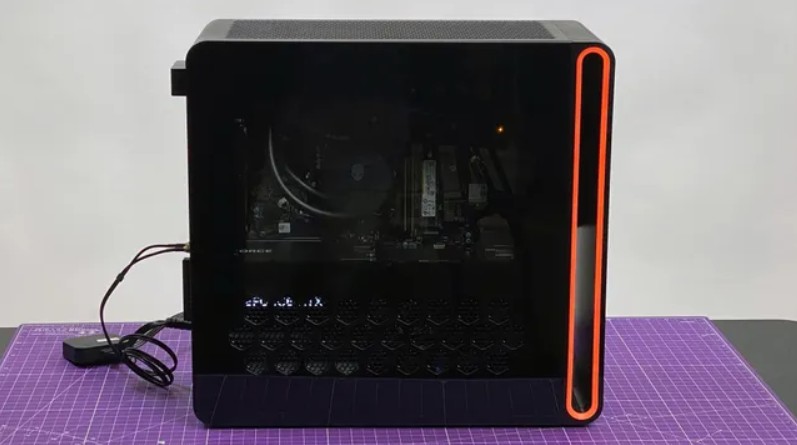
The Alienware Aurora R16 stands out with its futuristic design and high-end performance capabilities. Its Intel Core i9-13900KF processor and NVIDIA GeForce RTX 4080 graphics card ensure seamless multitasking, making it perfect for traders who need to run multiple charts and analysis tools.
Equipped with 16GB DDR5 RAM and a 1TB SSD, the Aurora R16 delivers quick load times and ample storage for trading data. Its near-silent operation and customizable RGB lighting add to the appeal. Priced at approximately $2,499, it’s a premium choice for professional traders.
- Pros
- Cons
Stylish, futuristic design.
Excellent processing power for multitasking.
Near-silent operation.
Expensive compared to similar specs.
HP Omen 45L
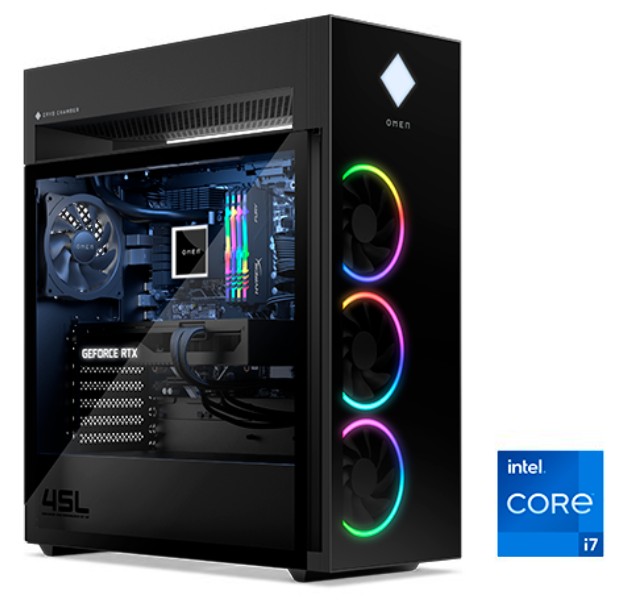
The HP Omen 45L is a versatile trading desktop known for its powerful specs and efficient cooling system. It features an Intel Core i7-13700KF processor and NVIDIA GeForce RTX 4070 Ti graphics, ensuring fast and reliable performance for technical analysis and trading software.
This model comes with 16GB of RAM and a 512GB SSD, providing sufficient speed and storage for most trading tasks. Its sleek design and RGB lighting make it a great addition to any workspace. Retailing at $2,399, it offers an excellent balance of performance and price.
- Pros
- Cons
Powerful processor and GPU.
Efficient cooling for long trading sessions.
Sleek, gamer-friendly design.
Limited storage compared to competitors.
Lenovo Legion Tower 7i Gen 8
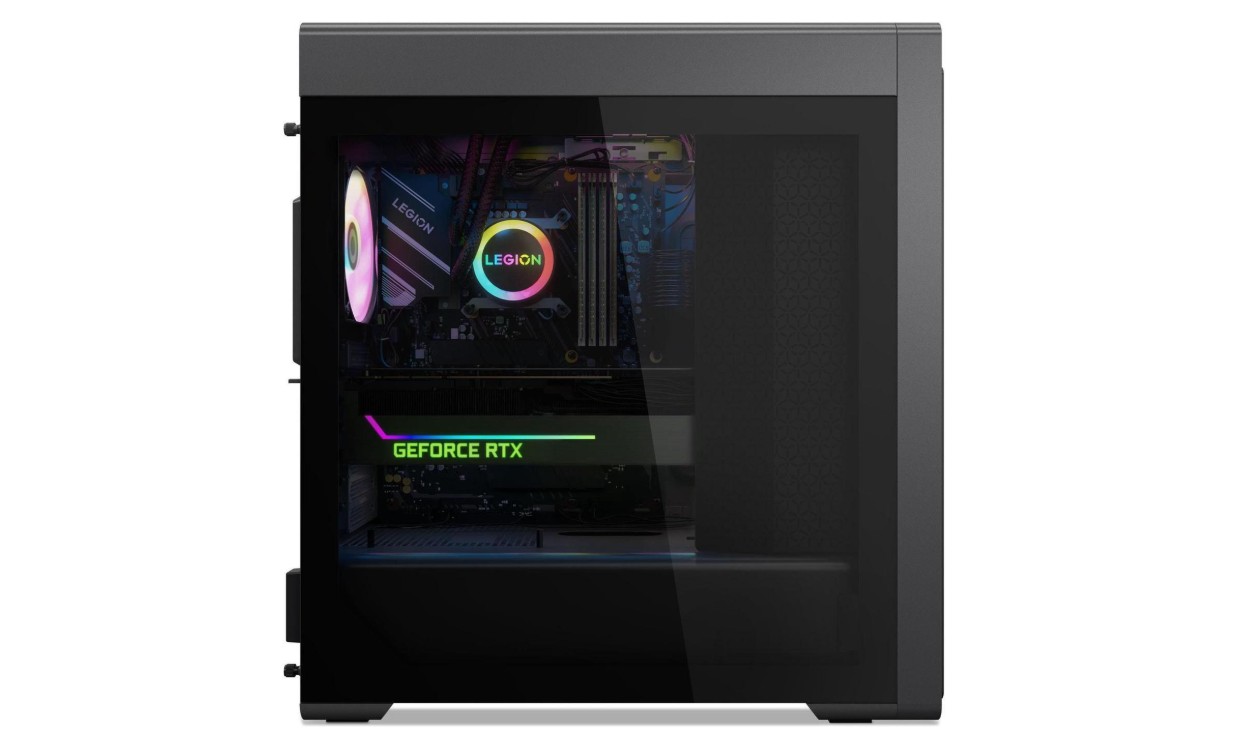
The Lenovo Legion Tower 7i Gen 8 is a powerhouse built for performance. Its Intel Core i9-13900KF processor and NVIDIARTX 4070 TiGPU make it ideal for handling high-frequency trading and intensive technical analysis.
With 32GB DDR5 RAM and a 1TB SSD, this desktop ensures quick execution and smooth performance across multiple applications. Priced at $2,495, the Legion Tower 7i offers excellent value for professional traders.
- Pros
- Cons
Top-tier processor and GPU.
High RAM capacity for multitasking.
Roomy storage for data and software.
Bulky design.
MSI Aegis RS2
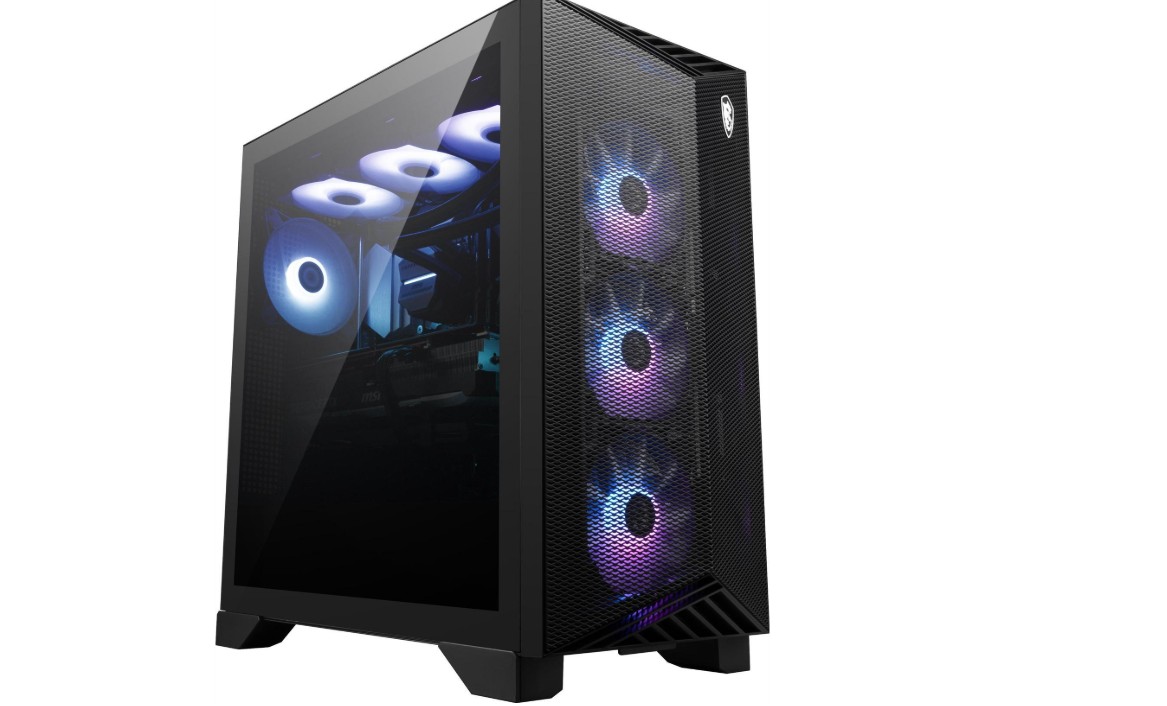
The MSI Aegis RS2 is a standout trading desktop designed for efficiency and performance. Featuring an Intel Core i7-13700KF processor and NVIDIA GeForce RTX 4070 Ti GPU, it delivers fast and reliable operation, perfect for running demanding trading platforms.
With 16GB DDR5 RAM and a 1TB SSD, the Aegis RS2 ensures smooth multitasking and quick data retrieval. Its sleek, compact design makes it suitable for both home and office setups. Retailing at $2,350, it’s a strong contender for traders seeking high-end specs.
- Pros
- Cons
Compact and stylish design.
Excellent processing power.
Affordable compared to competitors.
Limited expandability.
Skytech King 95 Gaming PC
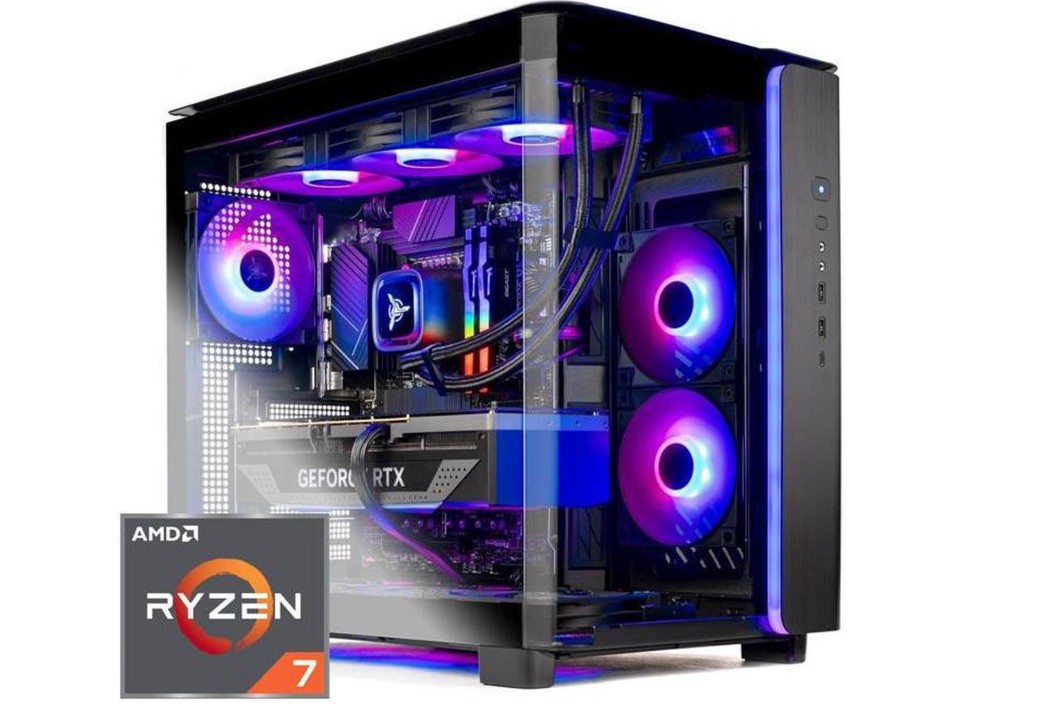
The Skytech King 95 is a high-performance desktop offering incredible power at a reasonable price. Powered by AMD Ryzen 7 9800X3D and NVIDIA GeForce RTX 4070 Ti GPU, it excels in multitasking and intensive trading operations.
With 64GB DDR5 RAM and a 1TB SSD, this machine is built to handle the most demanding trading environments. Priced at $2,499, it offers premium performance for serious traders.
- Pros
- Cons
Exceptional RAM capacity.
Fast and efficient operation.
Stylish design.
Higher price point for similar specs.
Thermaltake LCGS Frostbite i4690

The Thermaltake LCGS Frostbite i4690 is a robust desktop computer designed to handle demanding applications, making it suitable for high-frequency trading and technical analysis. It features an Intel Core i9-13900KF processor, 32GB of DDR5 RGB memory, and an NVIDIA GeForce RTX 4090 graphics card, ensuring seamless multitasking and efficient data processing. Additionally, it includes a 1TB NVMe Gen4 M.2 SSD for fast storage access and WiFi connectivity.
- Pros
- Cons
High-end processor and GPU for superior performance.
Ample RAM and fast storage for efficient multitasking.
Advanced cooling system to maintain optimal temperatures.
Premium price point.
Large form factor may require ample desk space.
What should I look for in a computer used for day trading?
The finest computers for trading must be purchased if you don't want to gamble with your trading career. But it's important to carefully evaluate a computer's characteristics before purchasing. Let's look at some specifications of practical trading computers.
Processor and RAM. Choose at least an Intel i5 or i7 processor with 4–6 cores for smooth performance. Aim for 16GB or more of RAM to efficiently run trading platforms and multiple programs simultaneously.
Graphics card (GPU). Use dedicated graphics cards, such as NVIDIA or AMD, for multi-monitor setups. Budget-friendly options like Nvidia Quadro K1200 or EVGA GeForce GT 740 provide sufficient performance.
CPU speed. A minimum processing speed of 2.8 GHz ensures quick data processing and seamless multitasking for trading applications.
Storage (SSD). Opt for SSD storage for faster data retrieval, ensuring smooth operation of trading software and reducing system lag.
Monitors. Use high-resolution (1920p or higher) screens, with 4K displays recommended for detailed graphs and charts. Start with one monitor and expand as needed for better multitasking.
Operating system. Windows is the preferred OS for compatibility with most trading platforms. Mac users may need Boot Camp to install Windows for trading purposes.
Reliability and cooling. Invest in a computer with efficient cooling systems to prevent overheating and ensure consistent performance. Reliability is critical to avoid disruptions during trading sessions.
For effective trading, apart from having the best computer, you must also have an account with a broker that supports high-end technical analysis tools. We have prepared a list of the best brokers and presented them in the table below. You can compare them and make a choice for yourself:
| zForex | Plus500 | OANDA | Trading.com USA | FOREX.com | |
|---|---|---|---|---|---|
|
Min. deposit, $ |
10 | 100 | No | 50 | 100 |
|
Max. leverage |
1:1000 | 1:300 | 1:200 | 1:50 | 1:50 |
|
Deposit fee, % |
No | No | No | No | No |
|
Withdrawal fee, $ |
No | No | 0-15 | No | No |
|
TradingView |
No | Yes | Yes | Yes | Yes |
|
MT5 |
Yes | No | Yes | Yes | Yes |
|
Autochartist |
No | No | Yes | No | Yes |
|
Open an account |
Go to broker Your capital is at risk.
|
Go to broker 80% of retail CFD accounts lose money. |
Go to broker Your capital is at risk. |
Go to broker Your capital is at risk. |
Study review |
Choosing the right trading desktop for performance, RAM, storage, and cooling in technical analysis

When picking the right trading desktop for technical analysis, it’s not just about having the fastest processor. You’ll need a system that can juggle several tasks at once — like analyzing multiple charts, running your trading platforms, and tracking live data.
For this, you’ll want a processor that can handle all the multitasking, such as an Intel Core i7 or i9, paired with a powerful graphics card like the RTX 4070 Ti. Also, don’t underestimate the value of cooling; if you plan to trade for long hours, having a system that stays cool will keep everything running smoothly without overheating.
Don’t forget to check how much RAM and storage you’re getting. For smooth performance, 16GB of RAM is the bare minimum, but if you’re planning on running heavy software or multiple trading applications at once, consider going up to 32GB or more.
A fast SSD ensures quick loading times, but the real key is ensuring the system can handle large amounts of data without slowing down. Look for a desktop that balances all of these factors — processing power, memory, storage, and cooling — so you can focus on your trades without worrying about your system.
Conclusion
In summary, the best trading computers under $2,500 prove that top-tier performance doesn’t have to break the bank. Powerful machines like the Falcon Trading Systems F-1 and Dell XPS Tower deliver reliable speed and multi-screen capabilities that empower traders to act decisively in fast-moving markets. These options demonstrate that careful selection within a smart budget can unlock the hardware edge every trader needs. Ultimately, choosing the right trading computer is not just about specs—it's about investing in your peace of mind and trading success.
FAQs
How important is processor choice for trading computers under $2,500?
What monitor specifications are ideal for trading desktops in this price category?
Are there differences in storage types and capacities that traders should consider?
How does workstation size and design affect usability in trading setups?
Editors' Top Picks and Insights

Tokenized stocks in the spotlight: How do they work and are they worth trading?

Do politicians make the best stock traders?

Crypto test drive: How automakers are exploring digital assets

Lindsey Graham death: U.S. senator’s crypto legacy

Tether under pressure: USDT in Europe, audit questions, and the fight for trust

Lean Ethereum: Why Buterin wants to rebuild the network
Related Articles
Team that worked on the article
Mikhail Vnuchkov joined Traders Union as an author in 2020. He began his professional career as a journalist-observer at a small online financial publication, where he covered global economic events and discussed their impact on the segment of financial investment, including investor income.
Dan Blystone began his trading career in 1998 as an arbitrage clerk on the floor of the Chicago Mercantile Exchange (CME). He later traded bond and Eurex futures at proprietary firms such as Altea Trading, gaining valuable experience in high-frequency trading and risk management.
Chinmay Soni is a financial analyst with more than 5 years of experience in working with stocks, Forex, derivatives, and other assets. As a founder of a boutique research firm and an active researcher, he covers various industries and fields, providing insights backed by statistical data.
Copy trading is an investing tactic where traders replicate the trading strategies of more experienced traders, automatically mirroring their trades in their own accounts to potentially achieve similar results.
CFD is a contract between an investor/trader and seller that demonstrates that the trader will need to pay the price difference between the current value of the asset and its value at the time of contract to the seller.
Forex leverage is a tool enabling traders to control larger positions with a relatively small amount of capital, amplifying potential profits and losses based on the chosen leverage ratio.
Bitcoin is a decentralized digital cryptocurrency that was created in 2009 by an anonymous individual or group using the pseudonym Satoshi Nakamoto. It operates on a technology called blockchain, which is a distributed ledger that records all transactions across a network of computers.
Ethereum is a decentralized blockchain platform and cryptocurrency that was proposed by Vitalik Buterin in late 2013 and development began in early 2014. It was designed as a versatile platform for creating decentralized applications (DApps) and smart contracts.

-
 Afghanistan
-
 Albania
-
 Algeria
-
 Angola
-
 Argentina
-
 Armenia
-
 Australia
-
 Austria
-
 Azerbaijan
-
 Bahamas
-
 Bahrain
-
 Bangladesh
-
 Belarus
-
 Belgium
-
 Bolivia
-
 Botswana
-
 Brazil
-
 Brunei
-
 Bulgaria
-
 Cambodia
-
 Cameroon
-
 Canada
-
 Chile
Chile
-
 China
China
-
 Colombia
-
 Congo
Congo
-
 Costa Rica
-
 Cote d'Ivoire
-
 Croatia
-
 Cuba
Cuba
-
 Cyprus
-
 Czechia
-
 DR Congo
-
 Denmark
-
 Dominican Republic
-
 Ecuador
-
 Egypt
Egypt
-
 El Salvador
-
 Estonia
-
 Eswatini
-
 Ethiopia
-
 Finland
-
 France
-
 Georgia
-
 Germany
-
 Ghana
Ghana
-
 Greece
-
 Haiti
Haiti
-
 Hong Kong
-
 Hungary
-
 India
India
-
 Indonesia
-
 Iran, Islamic republic
-
 Iraq
Iraq
-
 Ireland
-
 Israel
-
 Italy
Italy
-
 Jamaica
-
 Japan
Japan
-
 Jordan
-
 Kazakhstan
-
 Kenya
Kenya
-
 Korea
Korea
-
 Kuwait
-
 Kyrgyzstan
-
 Laos
Laos
-
 Latvia
-
 Lebanon
-
 Lesotho
-
 Libya
Libya
-
 Lithuania
-
 Luxembourg
-
 Madagascar
-
 Malaysia
-
 Malta
Malta
-
 Mauritius
-
 Mexico
-
 Moldova
-
 Mongolia
-
 Montenegro
-
 Morocco
-
 Mozambique
-
 Myanmar
-
 Namibia
-
 Nepal
Nepal
-
 Netherlands
-
 New Zealand
-
 Nigeria
-
 North Macedonia
-
 Norway
-
 Oman
Oman
-
 Pakistan
-
 Palestine
-
 Panama
-
 Papua New Guinea
-
 Paraguay
-
 Peru
Peru
-
 Philippines
-
 Poland
-
 Portugal
-
 Puerto Rico
-
 Qatar
Qatar
-
 Reunion
-
 Romania
-
 Rwanda
-
 Saudi Arabia
-
 Serbia
-
 Singapore
-
 Slovakia
-
 Slovenia
-
 Somalia
-
 South Africa
-
 Spain
Spain
-
 Sri Lanka
-
 Sweden
-
 Switzerland
-
 Syria
Syria
-
 Taiwan
-
 Tajikistan
-
 Tanzania
-
 Thailand
-
 Trinidad and Tobago
-
 Tunisia
-
 Turkey
-
 UAE
UAE
-
 Uganda
-
 Ukraine
-
 United Kingdom
-
United States
-
 Uruguay
-
 Uzbekistan
-
 Venezuela
-
 Vietnam
-
 Yemen
Yemen
-
 Zambia
-
 Zimbabwe
- Forex
- Crypto











