

Samsung and SK Hynix plan massive AI chip investment in South Korea

Samsung and SK Hynix are moving to anchor the next phase of the artificial intelligence boom in South Korea, leading a vast investment drive in memory chips, data centers, and robotics. The plan is meant to defend the country’s dominance in advanced memory at a time when the U.S., China, and Japan are pouring state support into domestic semiconductor production.
Highlights
- Samsung and SK Group plan four major chip plants.
- South Korea wants to double DRAM capacity in five years.
- Investment could reach about $1.3 trillion over 10 years.
- Shares of Samsung and SK Hynix fell despite the plan.
A national bet on memory chips
According to Bloomberg, Samsung Group and SK Group plan to build two chipmaking plants each, with a combined investment expected to reach 800 trillion won, according to South Korea’s industry minister. The broader national goal is to double DRAM production capacity within five years, reflecting the central role of memory chips in AI servers and data-center expansion.
The Korea Economic Daily reported that Samsung and SK Hynix could announce as much as 2,000 trillion won, or about $1.3 trillion, in new investments over 10 years. The spending would include memory-chip production, advanced packaging, data centers, and robotics, with part of the investment directed outside Seoul to support regional growth.
Samsung and SK Hynix are the world’s two largest memory makers and have become key beneficiaries of the AI infrastructure race. Their high-bandwidth memory chips are critical for advanced AI processors, making South Korea one of the most important suppliers in the global technology supply chain.
Plants, packaging, and regional expansion
The investment plan is expected to include four to five semiconductor plants in the Gwangju area in southwestern South Korea. Samsung also plans to build chip-packaging facilities in South Chungcheong province, while SK Hynix is expected to expand NAND operations in North Chungcheong province.
President Lee Jae Myung’s office has framed the initiative as part of “Three Mega Projects for the Big Stride Forward.” The government wants to use strategic investment to ease economic concentration around Seoul and create high-paying jobs in regional areas.
The scale of the plan puts South Korea alongside other governments treating semiconductors as a national-security priority. The U.S. has committed tens of billions of dollars through the CHIPS and Science Act, China is preparing a five-year chip investment blueprint, and Japan has expanded subsidies to rebuild its semiconductor sector.
Shares fall despite long-term AI demand
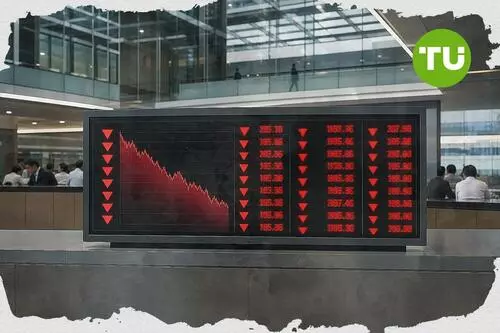
The announcement came as investors remained cautious about chip valuations. Samsung Electronics shares fell 4.86% to 323,000 won, while SK Hynix dropped 1.68% to 2,628,000 won, according to market data updated Monday morning. The declines extended recent weakness in both stocks, showing that even strong AI demand has not erased concerns about profit sustainability, rising competition, and the cost of large-scale capacity expansion.
AI turns chip capacity into state strategy
The plan shows how AI has shifted semiconductor manufacturing from a corporate growth story into an industrial-policy contest. Memory chips are now a core input for AI infrastructure, and South Korea is trying to ensure that Samsung and SK Hynix remain central suppliers as global demand grows.
The investment also carries risk. Building new plants at this scale could strengthen South Korea’s supply chain, but it also increases exposure to future oversupply if AI demand slows or rivals add capacity faster than expected. For now, Seoul is choosing expansion because losing leadership in memory would be more costly than the investment itself.
We also reported HSBC backs higher SK Hynix valuation ahead of U.S. listing.





Latest SK Hynix News





-
 Afghanistan
-
 Albania
-
 Algeria
-
 Angola
-
 Argentina
-
 Armenia
-
 Australia
-
 Austria
-
 Azerbaijan
-
 Bahamas
-
 Bahrain
-
 Bangladesh
-
 Belarus
-
 Belgium
-
 Bolivia
-
 Botswana
-
 Brazil
-
 Brunei
-
 Bulgaria
-
 Cambodia
-
 Cameroon
-
 Canada
-
 Chile
Chile
-
 China
China
-
 Colombia
-
 Congo
Congo
-
 Costa Rica
-
 Cote d'Ivoire
-
 Croatia
-
 Cuba
Cuba
-
 Cyprus
-
 Czechia
-
 DR Congo
-
 Denmark
-
 Dominican Republic
-
 Ecuador
-
 Egypt
Egypt
-
 El Salvador
-
 Estonia
-
 Eswatini
-
 Ethiopia
-
 Finland
-
 France
-
 Georgia
-
 Germany
-
 Ghana
Ghana
-
 Greece
-
 Haiti
Haiti
-
 Hong Kong
-
 Hungary
-
 India
India
-
 Indonesia
-
 Iran, Islamic republic
-
 Iraq
Iraq
-
 Ireland
-
 Israel
-
 Italy
Italy
-
 Jamaica
-
 Japan
Japan
-
 Jordan
-
 Kazakhstan
-
 Kenya
Kenya
-
 Korea
Korea
-
 Kuwait
-
 Kyrgyzstan
-
 Laos
Laos
-
 Latvia
-
 Lebanon
-
 Lesotho
-
 Libya
Libya
-
 Lithuania
-
 Luxembourg
-
 Madagascar
-
 Malaysia
-
 Malta
Malta
-
 Mauritius
-
 Mexico
-
 Moldova
-
 Mongolia
-
 Montenegro
-
 Morocco
-
 Mozambique
-
 Myanmar
-
 Namibia
-
 Nepal
Nepal
-
 Netherlands
-
 New Zealand
-
 Nigeria
-
 North Macedonia
-
 Norway
-
 Oman
Oman
-
 Pakistan
-
 Palestine
-
 Panama
-
 Papua New Guinea
-
 Paraguay
-
 Peru
Peru
-
 Philippines
-
 Poland
-
 Portugal
-
 Puerto Rico
-
 Qatar
Qatar
-
 Reunion
-
 Romania
-
 Rwanda
-
 Saudi Arabia
-
 Serbia
-
 Singapore
-
 Slovakia
-
 Slovenia
-
 Somalia
-
 South Africa
-
 Spain
Spain
-
 Sri Lanka
-
 Sweden
-
 Switzerland
-
 Syria
Syria
-
 Taiwan
-
 Tajikistan
-
 Tanzania
-
 Thailand
-
 Trinidad and Tobago
-
 Tunisia
-
 Turkey
-
 UAE
UAE
-
 Uganda
-
 Ukraine
-
 United Kingdom
-
United States
-
 Uruguay
-
 Uzbekistan
-
 Venezuela
-
 Vietnam
-
 Yemen
Yemen
-
 Zambia
-
 Zimbabwe
- Forex
- Crypto












