


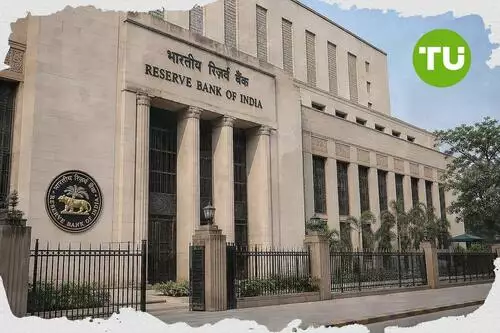
The Reserve Bank of India has appointed Ravi Shankar as Executive Director effective from July 1, 2026. This appointment marks a change in the leadership of the bank's Department of Statistics and Information Management, as he was serving as Advisor-in-Charge of the same department prior to his promotion.
Highlights
- RBI has appointed Ravi Shankar as Executive Director effective July 1, 2026, who will lead the Department of Statistics and Information Management.
- Ravi Shankar has over three decades of experience within the RBI and has contributed to several key departments and policy committees.
- This appointment is considered significant for strengthening RBI's data management, analytical capabilities, and policy-making process.
This article was translated from the original. Read the original version by our correspondent here.
Appointment and New Responsibilities
According to a press release from the RBI, Ravi Shankar will now take charge of the Department of Statistics and Information Management as Executive Director. This appointment is effective from July 1, 2026, and comes after his long tenure within the central bank.Before his promotion, he was Advisor-in-Charge in the Department of Statistics and Information Management at the bank. During his career at the central bank, he has worked in areas such as corporate and banking statistics, government securities market and settlement systems, debt management, and surveys.
The RBI stated that Ravi Shankar has over three decades of experience at the central bank. He has also been a member of several committees and working groups related to macroeconomic statistics and policy issues.
Impact on Central Bank's Statistical Functions
This appointment comes at a time when data management, statistical analysis, and policy assessment are becoming increasingly important for central banks. The Department of Statistics and Information Management provides a crucial foundation for RBI's internal analytical capacity and policy decision-making process.Ravi Shankar's academic and professional profile includes a Master's in Statistics from Banaras Hindu University, a diploma in Development Policy and Planning from the Institute of Economic Growth, Delhi, and the CAIIB qualification from the Indian Institute of Banking and Finance. This background makes him well-suited to play a role at the intersection of data, policy, and banking systems.
Our previous report discussed the findings of RBI's June Financial Stability Report, which warned of concentration risks in the market and new vulnerabilities to financial stability arising from AI-driven investment enthusiasm. The article also highlighted RBI's focus on domestic risk indicators such as the rapid growth of NBFIs, pressure on funding costs, foreign portfolio outflows, and the sharp rise in gold loans.






Latest Reserve Bank of India News



-
 Afghanistan
-
 Albania
-
 Algeria
-
 Angola
-
 Argentina
-
 Armenia
-
 Australia
-
 Austria
-
 Azerbaijan
-
 Bahamas
-
 Bahrain
-
 Bangladesh
-
 Belarus
-
 Belgium
-
 Bolivia
-
 Botswana
-
 Brazil
-
 Brunei
-
 Bulgaria
-
 Cambodia
-
 Cameroon
-
 Canada
-
 Chile
-
 China
-
 Colombia
-
 Congo
-
 Costa Rica
-
 Cote d'Ivoire
-
 Croatia
-
 Cuba
-
 Cyprus
-
 Czechia
-
 DR Congo
-
 Denmark
-
 Dominican Republic
-
 Ecuador
-
 Egypt
-
 El Salvador
-
 Estonia
-
 Eswatini
-
 Ethiopia
-
 Finland
-
 France
-
 Georgia
-
 Germany
-
 Ghana
-
 Greece
-
 Haiti
-
 Hong Kong
-
 Hungary
-
 India
-
 Indonesia
-
 Iran, Islamic republic
-
 Iraq
-
 Ireland
-
 Israel
-
 Italy
-
 Jamaica
-
 Japan
-
 Jordan
-
 Kazakhstan
-
 Kenya
-
 Korea
-
 Kuwait
-
 Kyrgyzstan
-
 Laos
-
 Latvia
-
 Lebanon
-
 Lesotho
-
 Libya
-
 Lithuania
-
 Luxembourg
-
 Madagascar
-
 Malaysia
-
 Malta
-
 Mauritius
-
 Mexico
-
 Moldova
-
 Mongolia
-
 Montenegro
-
 Morocco
-
 Mozambique
-
 Myanmar
-
 Namibia
-
 Nepal
-
 Netherlands
-
 New Zealand
-
 Nigeria
-
 North Macedonia
-
 Norway
-
 Oman
-
 Pakistan
-
 Palestine
-
 Panama
-
 Papua New Guinea
-
 Paraguay
-
 Peru
-
 Philippines
-
 Poland
-
 Portugal
-
 Puerto Rico
-
 Qatar
-
 Reunion
-
 Romania
-
 Rwanda
-
 Saudi Arabia
-
 Serbia
-
 Singapore
-
 Slovakia
-
 Slovenia
-
 Somalia
-
 South Africa
-
 Spain
-
 Sri Lanka
-
 Sweden
-
 Switzerland
-
 Syria
-
 Taiwan
-
 Tajikistan
-
 Tanzania
-
 Thailand
-
 Trinidad and Tobago
-
 Tunisia
-
 Turkey
-
 UAE
-
 Uganda
-
 Ukraine
-
 United Kingdom
-
United States
-
 Uruguay
-
 Uzbekistan
-
 Venezuela
-
 Vietnam
-
 Yemen
-
 Zambia
-
 Zimbabwe
- Forex
- Crypto












