
Societe Generale-FORGE completes EURCV stablecoin deployment across four blockchains
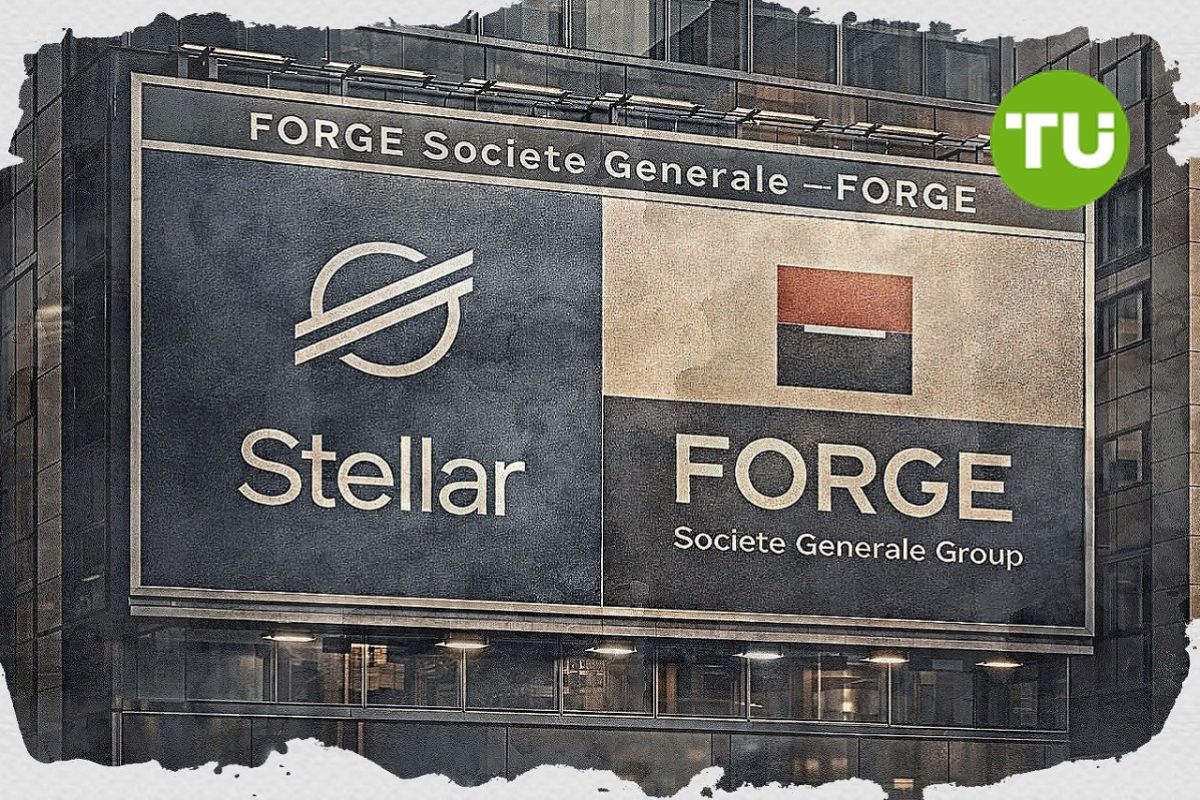
Societe Generale-FORGE, the digital asset arm of the French banking group, has completed the multi-chain deployment of its EURCV stablecoin. Stellar has become the latest blockchain supporting the MiCA-compliant stablecoin.
Highlights
- Societe Generale-FORGE expands MiCA-compliant EURCV stablecoin to Stellar
- Bank-issued stablecoin now operates across four major blockchains
- Multi-chain strategy aims to boost DeFi and tokenized asset adoption
Another network for DeFi and RWA payments
Stellar has historically positioned itself as a network for cross-border transfers and financial services, making it potentially attractive for banking projects related to digital currencies and tokenized financial instruments.
SG-FORGE said Stellar offers high transaction throughput, low network fees, and built-in support for tokenized assets. On this network, EURCV will allow users to trade digital assets on decentralized exchanges.
In addition, the deployment of EURCV on Stellar is expected to expand the stablecoin’s use in DeFi applications and tokenized real-world asset (RWA) services.
According to the French banking group, the current rollout marks the final blockchain deployment for EURCV. As reported by Cointelegraph, the EUR CoinVertible (EURCV) stablecoin first launched on Ethereum in April 2023. It was later deployed on Solana and XRP Ledger, and now on Stellar.
The stablecoin is fully backed by reserves consisting of bank deposits and high-quality liquid assets on a one-to-one basis. Its current market capitalization stands at about $452 million, according to data from DefiLlama.
In January, the stablecoin developed by SG-FORGE was also used by the global banking network SWIFT in a pilot project demonstrating the exchange and settlement of tokenized bonds using both fiat and digital currencies.
Although interest in euro-denominated stablecoins is growing, the European Union still significantly trails the United States in the adoption of this type of digital asset. According to current data, the two leading dollar stablecoins — Tether’s USDT and Circle’s USDC — together control more than 85% of the global stablecoin market.
Unlike the U.S., Europe has taken a more restrictive regulatory approach. In June 2024, the European Union introduced the MiCA regulation, which requires companies operating in the European Economic Area to obtain an electronic money license in at least one EU member state.
As a result, several exchanges — including Coinbase, OKX, Bitstamp, Uphold, and Binance — decided to stop or limit support for stablecoins that have not received approval under the regulation. Tether also discontinued the issuance of its euro-pegged stablecoin EURT.
New opportunities for bank-issued stablecoins
Analysts note that launching bank-issued stablecoins across multiple blockchains is becoming a new strategy among major financial institutions. This approach allows banks not only to expand their potential user base but also to reduce technological risks associated with relying on a single network.
For banks, it also provides a way to integrate simultaneously into several ecosystems — from DeFi applications to real-world asset tokenization platforms and cross-border payment systems.
At the same time, the development of euro-denominated stablecoins is taking place amid strong competition from dollar-based digital assets. The global stablecoin market remains dominated by tokens pegged to the U.S. dollar, which are widely used in crypto trading, DeFi, and international payments. As a result, euro-denominated tokens still represent only a small share of the market despite the large economic scale of the eurozone.
However, the emergence of regulated bank-issued stablecoins could gradually change this dynamic. Unlike crypto-native companies, traditional financial institutions have access to existing banking infrastructure, institutional clients, and major capital markets. This could facilitate the integration of digital currencies into traditional financial operations, ranging from securities settlement to corporate payments and liquidity management.
As we wrote, SWIFT completes cokenized asset interoperability pilot with major banks


Latest Société Générale News







-
 Afghanistan
-
 Albania
-
 Algeria
-
 Angola
-
 Argentina
-
 Armenia
-
 Australia
-
 Austria
-
 Azerbaijan
-
 Bahamas
-
 Bahrain
-
 Bangladesh
-
 Belarus
-
 Belgium
-
 Bolivia
-
 Botswana
-
 Brazil
-
 Brunei
-
 Bulgaria
-
 Cambodia
-
 Cameroon
-
 Canada
-
 Chile
Chile
-
 China
China
-
 Colombia
-
 Congo
Congo
-
 Costa Rica
-
 Cote d'Ivoire
-
 Croatia
-
 Cuba
Cuba
-
 Cyprus
-
 Czechia
-
 DR Congo
-
 Denmark
-
 Dominican Republic
-
 Ecuador
-
 Egypt
Egypt
-
 El Salvador
-
 Estonia
-
 Eswatini
-
 Ethiopia
-
 Finland
-
 France
-
 Georgia
-
 Germany
-
 Ghana
Ghana
-
 Greece
-
 Haiti
Haiti
-
 Hong Kong
-
 Hungary
-
 India
India
-
 Indonesia
-
 Iran, Islamic republic
-
 Iraq
Iraq
-
 Ireland
-
 Israel
-
 Italy
Italy
-
 Jamaica
-
 Japan
Japan
-
 Jordan
-
 Kazakhstan
-
 Kenya
Kenya
-
 Korea
Korea
-
 Kuwait
-
 Kyrgyzstan
-
 Laos
Laos
-
 Latvia
-
 Lebanon
-
 Lesotho
-
 Libya
Libya
-
 Lithuania
-
 Luxembourg
-
 Madagascar
-
 Malaysia
-
 Malta
Malta
-
 Mauritius
-
 Mexico
-
 Moldova
-
 Mongolia
-
 Montenegro
-
 Morocco
-
 Mozambique
-
 Myanmar
-
 Namibia
-
 Nepal
Nepal
-
 Netherlands
-
 New Zealand
-
 Nigeria
-
 North Macedonia
-
 Norway
-
 Oman
Oman
-
 Pakistan
-
 Palestine
-
 Panama
-
 Papua New Guinea
-
 Paraguay
-
 Peru
Peru
-
 Philippines
-
 Poland
-
 Portugal
-
 Puerto Rico
-
 Qatar
Qatar
-
 Reunion
-
 Romania
-
 Rwanda
-
 Saudi Arabia
-
 Serbia
-
 Singapore
-
 Slovakia
-
 Slovenia
-
 Somalia
-
 South Africa
-
 Spain
Spain
-
 Sri Lanka
-
 Sweden
-
 Switzerland
-
 Syria
Syria
-
 Taiwan
-
 Tajikistan
-
 Tanzania
-
 Thailand
-
 Trinidad and Tobago
-
 Tunisia
-
 Turkey
-
 UAE
UAE
-
 Uganda
-
 Ukraine
-
 United Kingdom
-
United States
-
 Uruguay
-
 Uzbekistan
-
 Venezuela
-
 Vietnam
-
 Yemen
Yemen
-
 Zambia
-
 Zimbabwe
- Forex
- Crypto












