
Big tech and Bitcoin mining fuel nuclear power renaissance
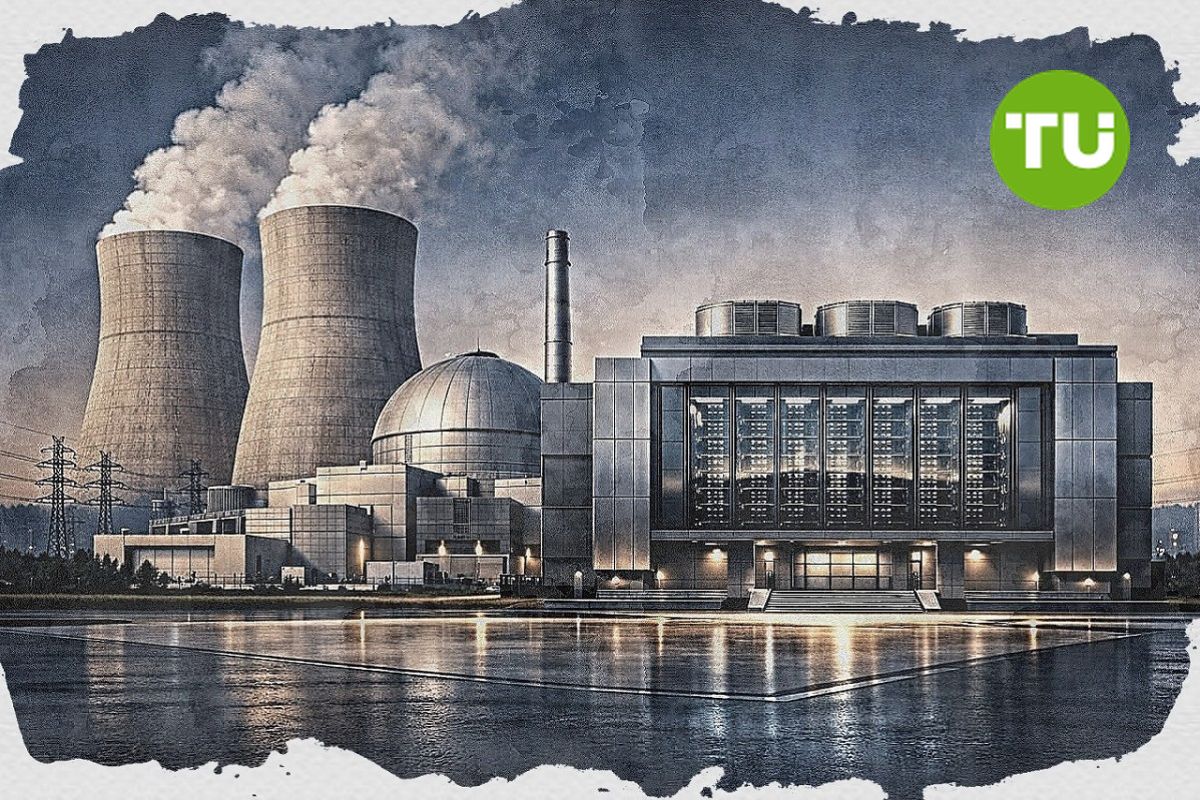
Growing demand for data center services driven by artificial intelligence is contributing to a renaissance of nuclear power in the United States. Bitcoin miners were among the first to realize that nuclear plants could become critically important for the next generation of high-performance computing.
Highlights
- AI-driven data center growth is reviving interest in nuclear power.
- Several “Magnificent Seven” tech giants are backing nuclear energy projects.
- Nearly 10% of Bitcoin mining is now powered by nuclear energy.
The AI era is powering nuclear energy
Nuclear power in the United States has once again come into focus. According to TheEnergyMag, instead of relying exclusively on renewable energy sources to offset emissions, major technology companies are now supporting entire nuclear power plants to secure round-the-clock, carbon-free electricity supply.
If we look at the so-called “Magnificent Seven,” it turns out that four to five of these companies have long-term contracts for electricity generated by nuclear power plants or are investing in venture projects focused on nuclear fusion—often both.
Microsoft has signed a 20-year agreement to purchase electricity from a reactor at the Three Mile Island Nuclear Generating Station once it restarts in 2028, in order to power its data centers. The company is also backing the fusion project Helion Energy, which plans to build a fusion power plant around 2028.
Alphabet has signed an agreement with small modular reactor developer Kairos Power to deploy a fleet of SMR reactors with a combined capacity of about 500 MW starting in 2030. The company is also working with Elementl to prepare sites for new nuclear power plants.
SMR technology has also attracted Amazon, whose AWS division is investing in a consortium with Energy Northwest to build reactors with a combined capacity of 320 MW. Amazon is purchasing data centers near nuclear power plants and discussing plans to build new reactors.
Meta Platforms is engaged in long-term nuclear power purchase agreements with Constellation Energy, effectively supporting the continued operation of nuclear energy in the United States.
Meanwhile, Nvidia’s venture arm, NVentures, has invested in the nuclear startup TerraPower, founded by Bill Gates.
10% of Bitcoin is mined using atomic power
Bitcoin miners were among the first to recognize that nuclear energy could become a key electricity supplier for high-performance computing data centers.
For example, in 2021 the company TeraWulf created a joint venture with Pennsylvania-based Talen Energy to develop the Nautilus Cryptomine facility next to the Susquehanna nuclear power plant. The mining operation was designed to receive electricity directly from the nuclear plant.
According to the Cambridge Centre for Alternative Finance at the University of Cambridge, which studies digital asset markets, the role of nuclear energy in Bitcoin mining is increasing.
Data from the center shows that nuclear power accounted for about 4% of Bitcoin mining in 2021, rising to nearly 9% in 2022. Today it is approaching 10%, while renewable energy sources overall—including nuclear, hydro, and wind—account for about 52.4% of electricity consumption in Bitcoin mining.
A major development for the data center and mining industries could be the deployment of small modular reactors (SMRs). Being more compact and safer than traditional reactors, SMRs could be deployed directly alongside data centers to provide the electricity they require.
In the future, data centers themselves may become one of the key drivers of a new wave of nuclear capacity construction in the United States. According to several energy analysts, electricity consumption by data centers in the country could double by the end of the decade as artificial intelligence, cloud computing, and the crypto industry continue to expand. This creates demand for stable baseload power that is difficult to provide solely through solar and wind energy.
Against this backdrop, nuclear energy is increasingly viewed not only as a decarbonization tool but also as strategic infrastructure for the digital economy. If small modular reactor projects are implemented on schedule, they could become a standard energy solution for large data centers, forming a new model in which computing capacity and energy generation are built as a single integrated ecosystem.
As we wrote, AI power problem: How Big Tech reshapes U.S. energy system










-
 Afghanistan
-
 Albania
-
 Algeria
-
 Angola
-
 Argentina
-
 Armenia
-
 Australia
-
 Austria
-
 Azerbaijan
-
 Bahamas
-
 Bahrain
-
 Bangladesh
-
 Belarus
-
 Belgium
-
 Bolivia
-
 Botswana
-
 Brazil
-
 Brunei
-
 Bulgaria
-
 Cambodia
-
 Cameroon
-
 Canada
-
 Chile
Chile
-
 China
China
-
 Colombia
-
 Congo
Congo
-
 Costa Rica
-
 Cote d'Ivoire
-
 Croatia
-
 Cuba
Cuba
-
 Cyprus
-
 Czechia
-
 DR Congo
-
 Denmark
-
 Dominican Republic
-
 Ecuador
-
 Egypt
Egypt
-
 El Salvador
-
 Estonia
-
 Eswatini
-
 Ethiopia
-
 Finland
-
 France
-
 Georgia
-
 Germany
-
 Ghana
Ghana
-
 Greece
-
 Haiti
Haiti
-
 Hong Kong
-
 Hungary
-
 India
India
-
 Indonesia
-
 Iran, Islamic republic
-
 Iraq
Iraq
-
 Ireland
-
 Israel
-
 Italy
Italy
-
 Jamaica
-
 Japan
Japan
-
 Jordan
-
 Kazakhstan
-
 Kenya
Kenya
-
 Korea
Korea
-
 Kuwait
-
 Kyrgyzstan
-
 Laos
Laos
-
 Latvia
-
 Lebanon
-
 Lesotho
-
 Libya
Libya
-
 Lithuania
-
 Luxembourg
-
 Madagascar
-
 Malaysia
-
 Malta
Malta
-
 Mauritius
-
 Mexico
-
 Moldova
-
 Mongolia
-
 Montenegro
-
 Morocco
-
 Mozambique
-
 Myanmar
-
 Namibia
-
 Nepal
Nepal
-
 Netherlands
-
 New Zealand
-
 Nigeria
-
 North Macedonia
-
 Norway
-
 Oman
Oman
-
 Pakistan
-
 Palestine
-
 Panama
-
 Papua New Guinea
-
 Paraguay
-
 Peru
Peru
-
 Philippines
-
 Poland
-
 Portugal
-
 Puerto Rico
-
 Qatar
Qatar
-
 Reunion
-
 Romania
-
 Rwanda
-
 Saudi Arabia
-
 Serbia
-
 Singapore
-
 Slovakia
-
 Slovenia
-
 Somalia
-
 South Africa
-
 Spain
Spain
-
 Sri Lanka
-
 Sweden
-
 Switzerland
-
 Syria
Syria
-
 Taiwan
-
 Tajikistan
-
 Tanzania
-
 Thailand
-
 Trinidad and Tobago
-
 Tunisia
-
 Turkey
-
 UAE
UAE
-
 Uganda
-
 Ukraine
-
 United Kingdom
-
United States
-
 Uruguay
-
 Uzbekistan
-
 Venezuela
-
 Vietnam
-
 Yemen
Yemen
-
 Zambia
-
 Zimbabwe
- Forex
- Crypto











