The tweet was deleted by the author.
But we saved everything 🙂.
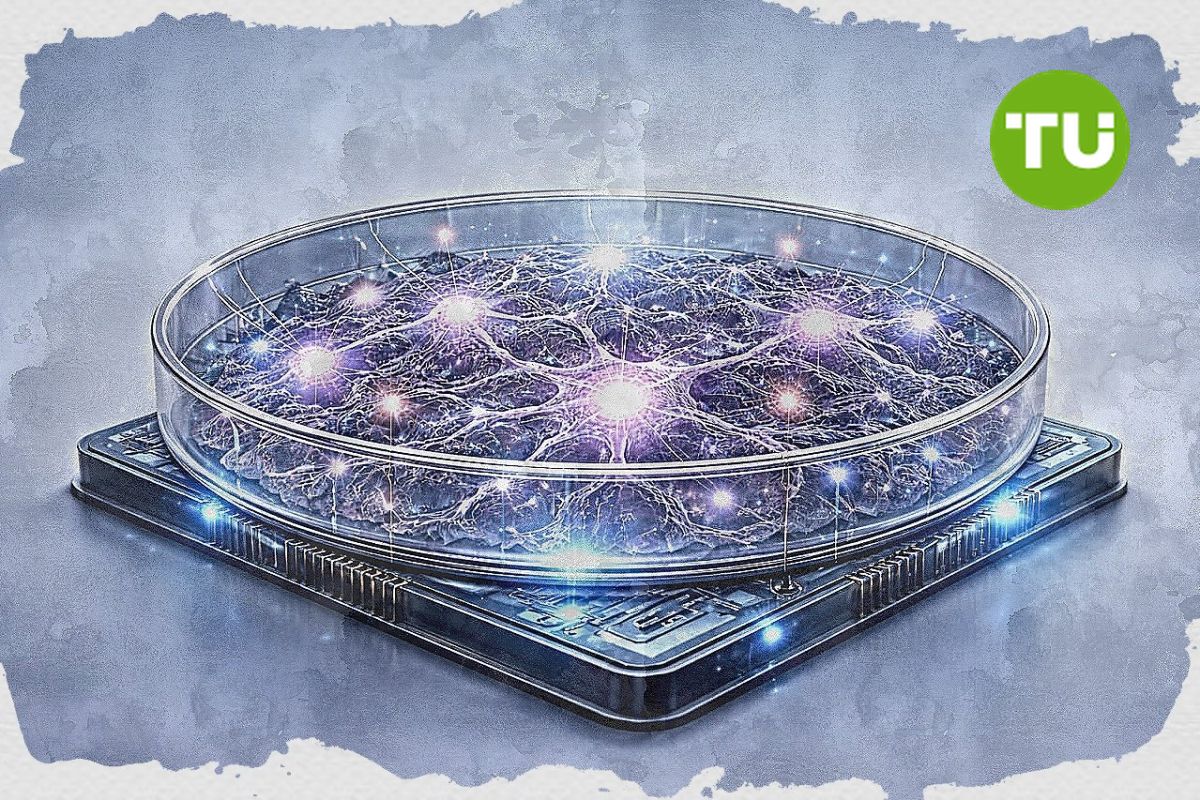
While technology giants continue building increasingly powerful data centers for artificial intelligence, some researchers are searching for a completely different computing architecture. Australian startup Cortical Labs has introduced a system in which computations are performed not by silicon chips but by human brain cells grown in a laboratory. This experiment may mark the beginning of the era of biological computers, where the boundary between biology and technology gradually becomes blurred.
Such developments may seem like a scientific experiment, but interest in them is growing precisely because of the limitations of traditional computing architecture. Modern GPU clusters consume hundreds of watts per chip and require massive data centers, while biological neural systems may be capable of solving learning and adaptation tasks with significantly lower energy consumption. If these technologies continue to develop, this could represent not just another startup but an attempt to rethink the very principles behind how computing systems operate.
The key feature of such systems is the ability of neurons to learn and adapt. Unlike classical processors that strictly execute programmed instructions, living neural networks can change their behavior depending on incoming signals. Experiments with these systems have already shown that biological neural cultures are capable of basic learning. For example, in the DishBrain system, cultured neurons learned to interact with a simulation of the game Pong, adapting their activity to what was happening on the screen—the results of this experiment were published in the journal Neuron. In later demonstrations, researchers also showed that neural cultures could respond to elements of gameplay in Doom, forming simple models of learning and adaptive behavior.
In practice, this represents a hybrid system where biology works together with programmable electronics. Silicon chips provide the interface and signal processing, while neural cells perform part of the computational work using their learning mechanisms. This approach could connect two worlds—artificial intelligence and neurobiology—creating a new type of computing that currently exists somewhere between a laboratory experiment and a future technological platform.
At the same time, the energy burden is also growing. Modern data centers already consume about 1%-1.5% of the world’s electricity, and cooling them requires significant amounts of water.
A single high-performance GPU can consume between 400 W and 700 W, and large clusters contain thousands of such chips. As a result, AI infrastructure is becoming one of the most energy-intensive segments of the digital economy.
This is why researchers have recently started seeking alternative computing architectures. Biological systems could potentially be far more efficient. For example, a single CL1 module from Cortical Labs consumes around 30 W, an order of magnitude less than modern graphics processors. Although these technologies are still at an early stage, their emergence shows that the industry is beginning to search for solutions to the energy crisis in computing that accompanies the rapid growth of artificial intelligence.
Another important application involves disease modeling and drug development. Neural cultures can be grown from human cells and used as models for studying neurodegenerative diseases such as Alzheimer’s or Parkinson’s. In these systems, researchers can observe how neural activity changes under the influence of different substances and test potential treatments faster and more accurately than in traditional laboratory models.
Finally, such systems may also play a role in the future development of artificial intelligence. Living neural networks naturally possess the ability to learn and adapt, which makes them a potential platform for experimenting with new learning algorithms. Unlike conventional neural networks that require enormous computing resources for training, biological systems can demonstrate adaptive behavior through interactions between cells. For this reason, biological computing could prove particularly promising in areas where learning, self-organization, and adaptation to new data are essential.
One of the key questions concerns where the boundary lies between biological material and a system capable of demonstrating signs of sensitivity or complex behavior. Today’s neural cultures are relatively simple structures consisting of tens or hundreds of thousands of cells, and they do not possess consciousness. Nevertheless, researchers acknowledge that as the technology develops, new challenges may arise—from biosafety standards to rules governing the use of human cells and limitations on creating more complex neural systems.
This is why experts increasingly argue that the legal and ethical framework for the future biological computing industry should be discussed in advance. If such technologies eventually move beyond laboratories and become part of computing infrastructure, they will likely require separate regulation—much as happened with genetic research and artificial intelligence. The sooner this conversation begins, the greater the chance that the development of this new technological field will proceed not only rapidly but also responsibly.

 Afghanistan
 Albania
 Algeria
 Angola
 Argentina
 Armenia
 Australia
 Austria
 Azerbaijan
 Bahamas
 Bahrain
 Bangladesh
 Belarus
 Belgium
 Bolivia
 Botswana
 Brazil
 Brunei
 Bulgaria
 Cambodia
 Cameroon
 Canada
 Chile
Chile
 China
China
 Colombia
 Congo
Congo
 Costa Rica
 Cote d'Ivoire
 Croatia
 Cuba
Cuba
 Cyprus
 Czechia
 DR Congo
 Denmark
 Dominican Republic
 Ecuador
 Egypt
Egypt
 El Salvador
 Estonia
 Eswatini
 Ethiopia
 Finland
 France
 Georgia
 Germany
 Ghana
Ghana
 Greece
 Haiti
Haiti
 Hong Kong
 Hungary
 India
India
 Indonesia
 Iran, Islamic republic
 Iraq
Iraq
 Ireland
 Israel
 Italy
Italy
 Jamaica
 Japan
Japan
 Jordan
 Kazakhstan
 Kenya
Kenya
 Korea
Korea
 Kuwait
 Kyrgyzstan
 Laos
Laos
 Latvia
 Lebanon
 Lesotho
 Libya
Libya
 Lithuania
 Luxembourg
 Madagascar
 Malaysia
 Malta
Malta
 Mauritius
 Mexico
 Moldova
 Mongolia
 Montenegro
 Morocco
 Mozambique
 Myanmar
 Namibia
 Nepal
Nepal
 Netherlands
 New Zealand
 Nigeria
 North Macedonia
 Norway
 Oman
Oman
 Pakistan
 Palestine
 Panama
 Papua New Guinea
 Paraguay
 Peru
Peru
 Philippines
 Poland
 Portugal
 Puerto Rico
 Qatar
Qatar
 Reunion
 Romania
 Rwanda
 Saudi Arabia
 Serbia
 Singapore
 Slovakia
 Slovenia
 Somalia
 South Africa
 Spain
Spain
 Sri Lanka
 Sweden
 Switzerland
 Syria
Syria
 Taiwan
 Tajikistan
 Tanzania
 Thailand
 Trinidad and Tobago
 Tunisia
 Turkey
 UAE
UAE
 Uganda
 Ukraine
 United Kingdom
United States
United Kingdom
United States
 Uruguay
 Uzbekistan
 Venezuela
 Vietnam
 Yemen
Yemen
 Zambia
 Zimbabwe