
The tweet was deleted by the author.
But we saved everything 🙂.
At its second roundtable titled “Between a Block and a Hard Place: Tailoring Regulation for Crypto Trading,” acting SEC Chair Mark Uyeda proposed a temporary, conditional exemptive relief framework for digital asset trading.
- Acting SEC Chair Mark Uyeda proposed a temporary, conditional exemptive relief framework to ease crypto trading while a long-term regulation is developed.
- The initiative was discussed at the SEC crypto task force roundtable with key participation from major industry players such as NYSE, Uniswap Labs, FalconX, and Coinbase.
- This shift marks a departure from the enforcement-heavy stance of former SEC Chair Gary Gensler and aligns with expectations of a more crypto-friendly regime under incoming Chair Paul Atkins.
- Concerns remain over multi-functional roles of crypto platforms, with calls to exclude peer-to-peer transactions from SEC oversight and resolve jurisdictional battles with the CFTC.
The idea is to allow registrants and nonregistrants greater flexibility while the agency crafts a long-term regulatory solution. Participants included executives from the New York Stock Exchange, Uniswap Labs, FalconX, Coinbase, and investor groups. “While the Commission works to develop a long-term solution, a time-limited measure could foster innovation in blockchain technology in the near term,” Uyeda stated. This marks a clear departure from the more cautious, enforcement-heavy stance adopted under former SEC Chair Gary Gensler, who treated most cryptocurrencies as securities and pursued aggressive legal actions against major crypto players.
The roundtable, facilitated by the SEC’s crypto task force—a unit established under Republican Commissioner Hester Peirce soon after President Trump took office—demonstrated growing support within the agency for a friendlier regulatory regime. Newly confirmed SEC Chair Paul Atkins is expected to prioritize developing clear digital asset regulations. However, concerns persist among some commissioners. Democrat Caroline Crenshaw warned that crypto platforms performing multiple roles (broker, clearing house, custodian) present risks that have already led to significant market disruptions.
Panelist Katherine Minarik of Uniswap Labs argued that peer-to-peer transactions, where users retain custody of their assets, should fall outside SEC jurisdiction. Meanwhile, jurisdictional disputes between the SEC and the Commodity Futures Trading Commission continue to fuel debates over oversight responsibility, with voices like Urvin Finance co-founder Dave Lauer cautioning that regulatory infighting has directly harmed investors.
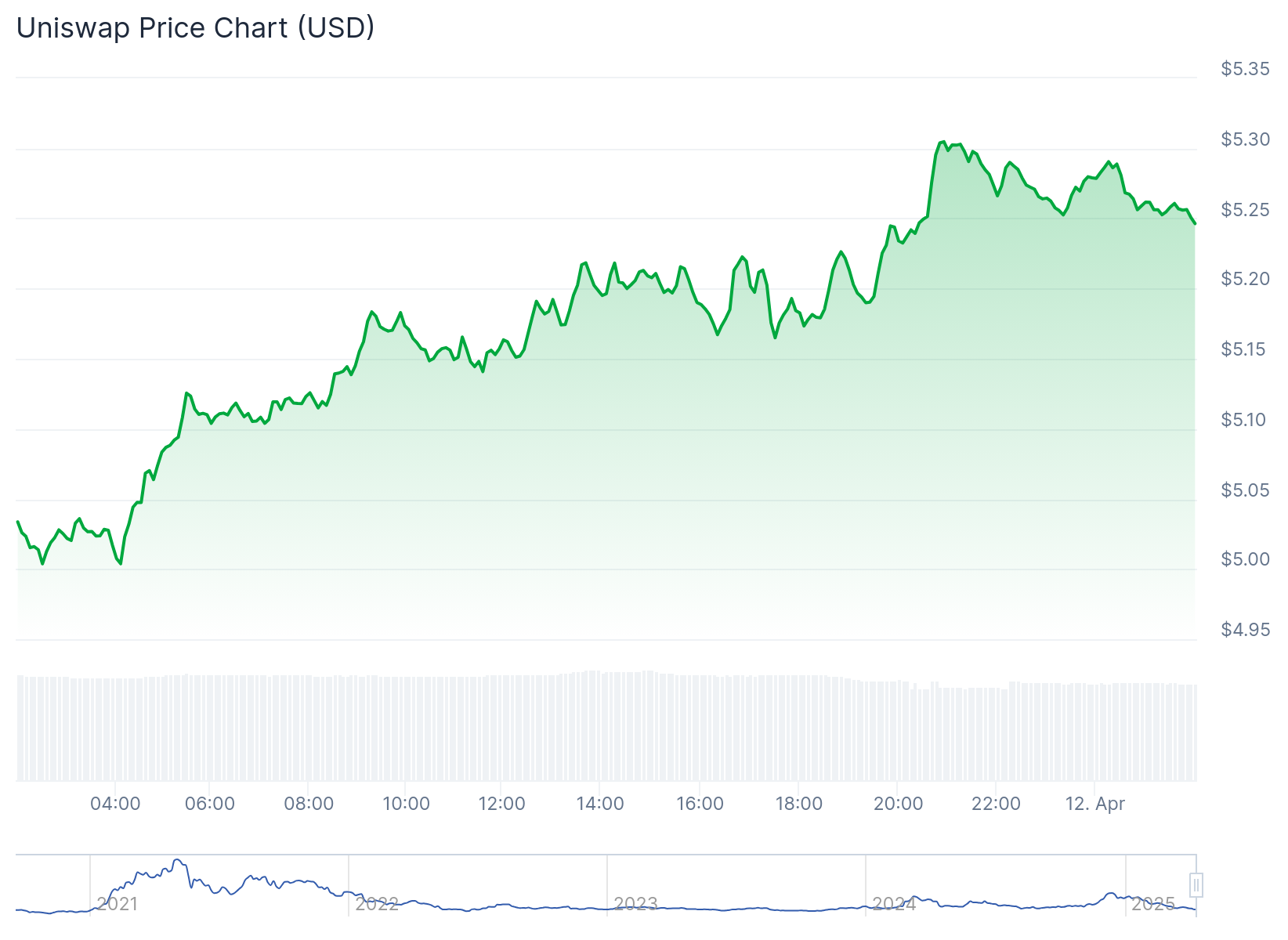
UNI price. Source: CoinGecko.
Looking ahead, market watchers will be keen to see whether this temporary relief framework can pave the way for a stable and innovation-friendly long-term regulatory approach.
Read also: Senate Democrats criticize DOJ for disbanding crypto crime team amid Trump ties

 Afghanistan
 Albania
 Algeria
 Angola
 Argentina
 Armenia
 Australia
 Austria
 Azerbaijan
 Bahamas
 Bahrain
 Bangladesh
 Belarus
 Belgium
 Bolivia
 Botswana
 Brazil
 Brunei
 Bulgaria
 Cambodia
 Cameroon
 Canada
 Chile
Chile
 China
China
 Colombia
 Congo
Congo
 Costa Rica
 Cote d'Ivoire
 Croatia
 Cuba
Cuba
 Cyprus
 Czechia
 DR Congo
 Denmark
 Dominican Republic
 Ecuador
 Egypt
Egypt
 El Salvador
 Estonia
 Eswatini
 Ethiopia
 Finland
 France
 Georgia
 Germany
 Ghana
Ghana
 Greece
 Haiti
Haiti
 Hong Kong
 Hungary
 India
India
 Indonesia
 Iran, Islamic republic
 Iraq
Iraq
 Ireland
 Israel
 Italy
Italy
 Jamaica
 Japan
Japan
 Jordan
 Kazakhstan
 Kenya
Kenya
 Korea
Korea
 Kuwait
 Kyrgyzstan
 Laos
Laos
 Latvia
 Lebanon
 Lesotho
 Libya
Libya
 Lithuania
 Luxembourg
 Madagascar
 Malaysia
 Malta
Malta
 Mauritius
 Mexico
 Moldova
 Mongolia
 Montenegro
 Morocco
 Mozambique
 Myanmar
 Namibia
 Nepal
Nepal
 Netherlands
 New Zealand
 Nigeria
 North Macedonia
 Norway
 Oman
Oman
 Pakistan
 Palestine
 Panama
 Papua New Guinea
 Paraguay
 Peru
Peru
 Philippines
 Poland
 Portugal
 Puerto Rico
 Qatar
Qatar
 Reunion
 Romania
 Rwanda
 Saudi Arabia
 Serbia
 Singapore
 Slovakia
 Slovenia
 Somalia
 South Africa
 Spain
Spain
 Sri Lanka
 Sweden
 Switzerland
 Syria
Syria
 Taiwan
 Tajikistan
 Tanzania
 Thailand
 Trinidad and Tobago
 Tunisia
 Turkey
 UAE
UAE
 Uganda
 Ukraine
 United Kingdom
United States
United Kingdom
United States
 Uruguay
 Uzbekistan
 Venezuela
 Vietnam
 Yemen
Yemen
 Zambia
 Zimbabwe