The tweet was deleted by the author.
But we saved everything 🙂.


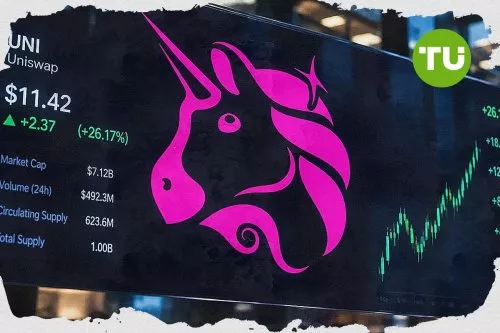
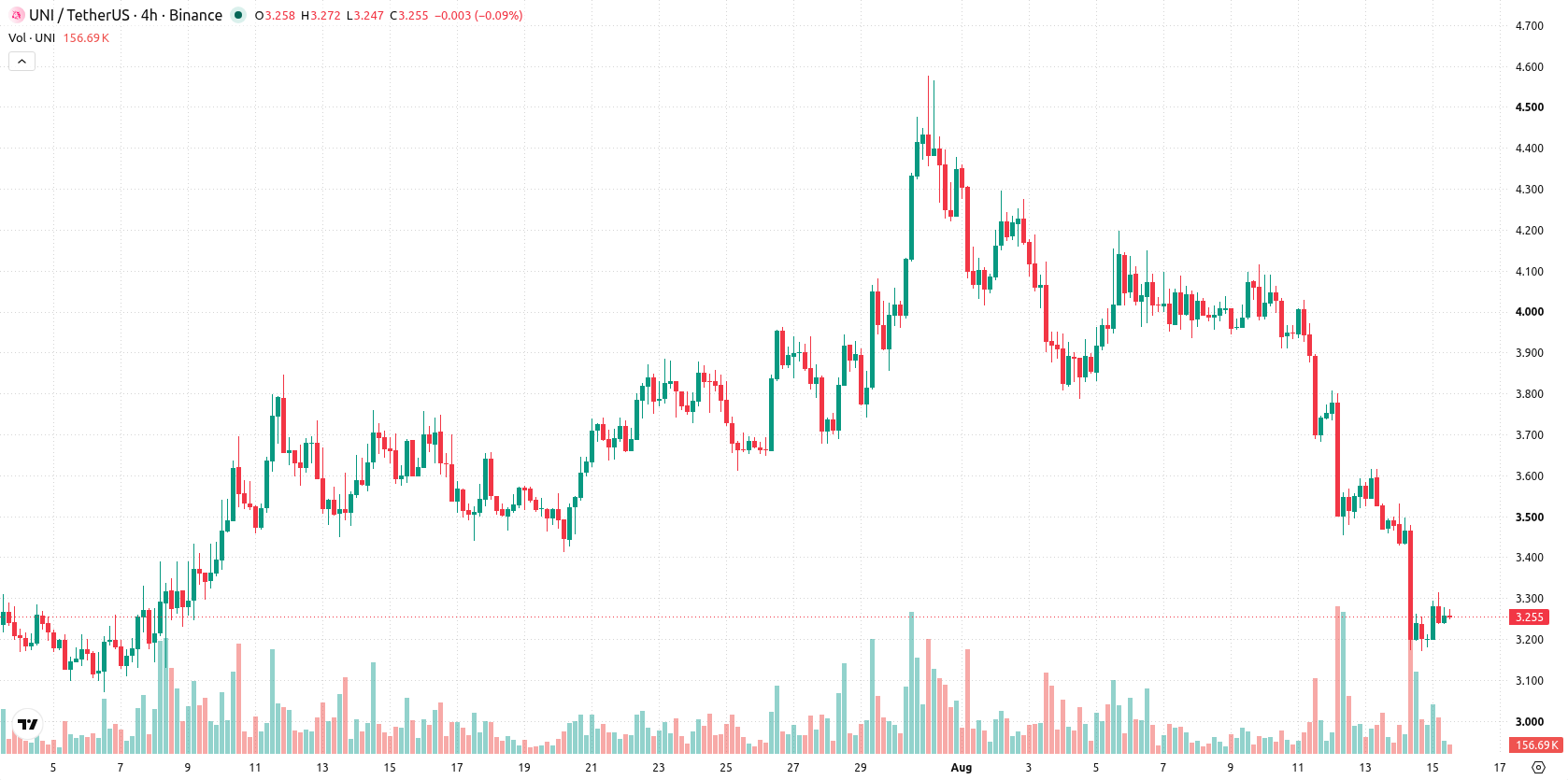
Uniswap (UNI) trades at $3.255, rising 0.46% from the previous close and showing a moderate intraday recovery after opening nearly flat. The token remains near the middle of today's range, with subdued volatility and a neutral momentum backdrop, while underlying downside pressures persist due to weak technical positioning. Technical indicators show continued selling pressure, and mild upside attempts appear unconfirmed by momentum. The recent uptick follows oversold conditions rather than any clear fundamental shift, with no direct influence from macro or regulatory news.
 7.02
8.5900
7.02
8.5900
Hayden Adams joked that Uniswap's routing changes to comply with EU regulations will watermark trades but claimed, with irony, that this has no practical impact on execution quality. This statement is relevant for market sentiment, as it addresses regulatory adaptation and operational continuity. However, despite this lighthearted positive signal about Uniswap’s flexibility, the market is reacting more to ongoing technical weakness and UNI's inability to rebound meaningfully after sharp declines. Recent Uniswap protocol data highlights strong trading activity and fee generation, with token buybacks and burns accelerated by recent developments such as the July 27 fee switch and Robinhood Chain integrations.
View post on X Loading...
UNI remains below the MA-20 ($3.9145), MA-50 ($3.5924), and MA-200 ($3.4539), underscoring sustained downside pressure across all major timeframes. The nearest support is at $3.18 and resistance at $3.63, with Ichimoku Kijun at $3.8740 marking a dynamic cap. Momentum is neutral, but oscillators are oversold, indicating limited conviction behind the latest recovery. The five-day forecast sees UNI oscillating between $3.18 and $3.63, and the lack of price confirmation for Adams’s positive regulatory comments adds caution to the short-term outlook.
Earlier, analysts noted that Uniswap remained under sustained bearish pressure despite increased token burns and major integrations. This article adds a new dimension by examining how recent developments could signal a shift in the prevailing scenario, with traders advised to monitor for signs of trend reversal or further downside risk.


 Afghanistan
 Albania
 Algeria
 Angola
 Argentina
 Armenia
 Australia
 Austria
 Azerbaijan
 Bahamas
 Bahrain
 Bangladesh
 Belarus
 Belgium
 Bolivia
 Botswana
 Brazil
 Brunei
 Bulgaria
 Cambodia
 Cameroon
 Canada
 Chile
Chile
 China
China
 Colombia
 Congo
Congo
 Costa Rica
 Cote d'Ivoire
 Croatia
 Cuba
Cuba
 Cyprus
 Czechia
 DR Congo
 Denmark
 Dominican Republic
 Ecuador
 Egypt
Egypt
 El Salvador
 Estonia
 Eswatini
 Ethiopia
 Finland
 France
 Georgia
 Germany
 Ghana
Ghana
 Greece
 Haiti
Haiti
 Hong Kong
 Hungary
 India
India
 Indonesia
 Iran, Islamic republic
 Iraq
Iraq
 Ireland
 Israel
 Italy
Italy
 Jamaica
 Japan
Japan
 Jordan
 Kazakhstan
 Kenya
Kenya
 Korea
Korea
 Kuwait
 Kyrgyzstan
 Laos
Laos
 Latvia
 Lebanon
 Lesotho
 Libya
Libya
 Lithuania
 Luxembourg
 Madagascar
 Malaysia
 Malta
Malta
 Mauritius
 Mexico
 Moldova
 Mongolia
 Montenegro
 Morocco
 Mozambique
 Myanmar
 Namibia
 Nepal
Nepal
 Netherlands
 New Zealand
 Nigeria
 North Macedonia
 Norway
 Oman
Oman
 Pakistan
 Palestine
 Panama
 Papua New Guinea
 Paraguay
 Peru
Peru
 Philippines
 Poland
 Portugal
 Puerto Rico
 Qatar
Qatar
 Reunion
 Romania
 Rwanda
 Saudi Arabia
 Serbia
 Singapore
 Slovakia
 Slovenia
 Somalia
 South Africa
 Spain
Spain
 Sri Lanka
 Sweden
 Switzerland
 Syria
Syria
 Taiwan
 Tajikistan
 Tanzania
 Thailand
 Trinidad and Tobago
 Tunisia
 Turkey
 UAE
UAE
 Uganda
 Ukraine
 United Kingdom
United States
United Kingdom
United States
 Uruguay
 Uzbekistan
 Venezuela
 Vietnam
 Yemen
Yemen
 Zambia
 Zimbabwe