

Beyond trading: How Solana is powering payments

Solana’s role in crypto extends beyond trading. Its speed and low transaction costs have made the network suitable for payments across digital services, giving traders another set of signals to consider when assessing its adoption and activity.
For investors, Solana is often viewed through market metrics such as SOL’s price, trading volume, and liquidity, alongside activity in DeFi, NFTs, and other blockchain applications.
These indicators offer one perspective on the ecosystem. Examining how the network is used outside trading can provide additional context on user activity and the types of services developing around Solana.
Why Solana works well for payments
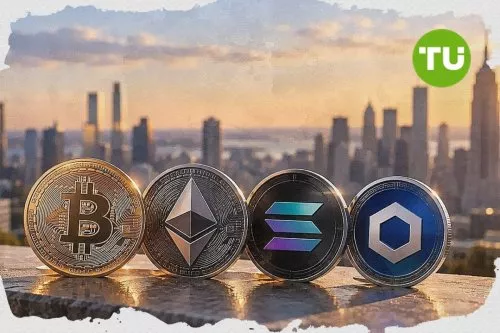
Blockchain payments often involve a trade-off between speed, cost, and convenience. Bitcoin has established itself as the best-known cryptocurrency, but transactions on its main network can take longer and become more expensive during periods of heavy activity. Ethereum offers a broad ecosystem, although network fees can also rise significantly.
Solana was designed differently. Its architecture allows transactions to be processed quickly while keeping network fees low. For someone transferring relatively small amounts, that difference can be meaningful.
This is particularly relevant for services where users make frequent deposits, withdrawals, or wallet-to-wallet transfers. Paying several dollars in fees on a modest transaction can make a payment method impractical. When transaction costs are only a small fraction of the amount being transferred, crypto becomes easier to use for everyday digital activity.
Real-world usage matters to traders
Investors typically assess blockchain networks using metrics such as trading volume, market capitalization, liquidity, and historical price performance. Network activity can provide additional context by showing how a blockchain is used for transactions and applications.
On Solana, this activity spans decentralized exchanges, digital collectibles, gaming, payment services, and online entertainment. These use cases involve different transaction patterns and provide examples of how the network operates outside conventional token trading.
Online gambling is one area where payment infrastructure plays a direct role in the user experience, as platforms process deposits and withdrawals between users and their services. Examples of platforms that support SOL can be found in this list of Solana-friendly casinos, illustrating one way the network has been integrated into consumer-facing payment flows.
Such integrations are part of a broader range of payment-related use cases that can be examined alongside traditional market metrics when assessing activity across the Solana ecosystem.
Transaction costs can influence user behavior
Transaction fees have a greater impact on smaller transfers because they account for a larger share of the amount being sent. For example, a $5 fee on a $50 transaction adds a 10% cost, while fees of a few cents or less have a much smaller effect on the total.
Lower fees can therefore reduce the cost barrier to frequent transfers, including payments, deposits, withdrawals, and interactions with blockchain applications. This is particularly relevant for services that rely on repeated or relatively small transactions.
For traders, fee levels and transaction activity can provide additional context on how a network is being used. However, costs are only one factor affecting adoption, alongside network reliability, liquidity, application development, and user experience.
Transaction speed affects payment experience
Transaction speed determines how quickly a blockchain payment can be confirmed. While confirmation time may be less important for transfers to long-term storage, it becomes more relevant for payments, deposits, withdrawals, and other transactions where users expect a timely result.
Faster settlement can shorten the interval between sending funds and receiving confirmation. For businesses and digital platforms, this can also affect how quickly deposits, withdrawals, and other payment-related transactions are processed.
This makes transaction speed particularly relevant for applications that handle frequent transfers. High-throughput networks such as Solana are designed to process large numbers of transactions, making settlement performance one factor to consider when assessing their use for payments.
What traders should watch
A rise in transaction activity does not necessarily indicate sustained adoption. Transaction counts can be influenced by speculative trading, automated bots, token launches, incentive programs, and short-term market trends.
To assess Solana’s network activity in broader context, traders can consider several indicators:
- Usage: active addresses and transaction volumes;
- Asset activity: stablecoin transfers and decentralized exchange usage;
- Ecosystem development: application development, network reliability, and the range of businesses accepting SOL.
The diversity of activity is also relevant. Usage spread across multiple independent use cases provides a different picture from activity driven primarily by a single trend.
Network activity should also be considered separately from SOL’s price performance. Greater usage does not necessarily result in a higher token price, which is also influenced by liquidity, macroeconomic conditions, regulation, competition, investor sentiment, and broader crypto market cycles.
From network performance to practical use
Solana combines relatively low transaction costs with fast settlement, but these characteristics alone do not determine how widely a network will be used. Their relevance also depends on whether they support sustained activity across payments, applications, and other digital services.
For traders, this activity provides additional context alongside price, liquidity, and trading volume. Transfers involving wallets, payment services, merchants, and consumer applications can help show how the network is being used outside exchange-based trading.
The longer-term picture therefore depends not only on transaction performance, but also on whether practical use cases generate consistent network activity over time.









-
 Afghanistan
-
 Albania
-
 Algeria
-
 Angola
-
 Argentina
-
 Armenia
-
 Australia
-
 Austria
-
 Azerbaijan
-
 Bahamas
-
 Bahrain
-
 Bangladesh
-
 Belarus
-
 Belgium
-
 Bolivia
-
 Botswana
-
 Brazil
-
 Brunei
-
 Bulgaria
-
 Cambodia
-
 Cameroon
-
 Canada
-
 Chile
Chile
-
 China
China
-
 Colombia
-
 Congo
Congo
-
 Costa Rica
-
 Cote d'Ivoire
-
 Croatia
-
 Cuba
Cuba
-
 Cyprus
-
 Czechia
-
 DR Congo
-
 Denmark
-
 Dominican Republic
-
 Ecuador
-
 Egypt
Egypt
-
 El Salvador
-
 Estonia
-
 Eswatini
-
 Ethiopia
-
 Finland
-
 France
-
 Georgia
-
 Germany
-
 Ghana
Ghana
-
 Greece
-
 Haiti
Haiti
-
 Hong Kong
-
 Hungary
-
 India
India
-
 Indonesia
-
 Iran, Islamic republic
-
 Iraq
Iraq
-
 Ireland
-
 Israel
-
 Italy
Italy
-
 Jamaica
-
 Japan
Japan
-
 Jordan
-
 Kazakhstan
-
 Kenya
Kenya
-
 Korea
Korea
-
 Kuwait
-
 Kyrgyzstan
-
 Laos
Laos
-
 Latvia
-
 Lebanon
-
 Lesotho
-
 Libya
Libya
-
 Lithuania
-
 Luxembourg
-
 Madagascar
-
 Malaysia
-
 Malta
Malta
-
 Mauritius
-
 Mexico
-
 Moldova
-
 Mongolia
-
 Montenegro
-
 Morocco
-
 Mozambique
-
 Myanmar
-
 Namibia
-
 Nepal
Nepal
-
 Netherlands
-
 New Zealand
-
 Nigeria
-
 North Macedonia
-
 Norway
-
 Oman
Oman
-
 Pakistan
-
 Palestine
-
 Panama
-
 Papua New Guinea
-
 Paraguay
-
 Peru
Peru
-
 Philippines
-
 Poland
-
 Portugal
-
 Puerto Rico
-
 Qatar
Qatar
-
 Reunion
-
 Romania
-
 Rwanda
-
 Saudi Arabia
-
 Serbia
-
 Singapore
-
 Slovakia
-
 Slovenia
-
 Somalia
-
 South Africa
-
 Spain
Spain
-
 Sri Lanka
-
 Sweden
-
 Switzerland
-
 Syria
Syria
-
 Taiwan
-
 Tajikistan
-
 Tanzania
-
 Thailand
-
 Trinidad and Tobago
-
 Tunisia
-
 Turkey
-
 UAE
UAE
-
 Uganda
-
 Ukraine
-
 United Kingdom
-
United States
-
 Uruguay
-
 Uzbekistan
-
 Venezuela
-
 Vietnam
-
 Yemen
Yemen
-
 Zambia
-
 Zimbabwe
- Forex
- Crypto












