

Mastercard expands stablecoin payment infrastructure for banks and fintechs

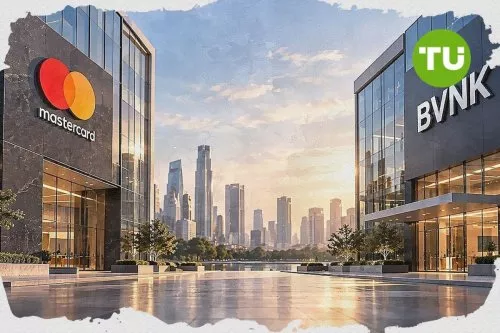
As stablecoin use in corporate payments grows, Mastercard is widening its push into digital asset infrastructure with a platform that links token balances to banking and card services. The rollout lets businesses offer stablecoin payments, conversions and card spending without building their own backend systems.
Highlights
- Mastercard launched the Global Money Platform, enabling businesses to hold, convert, and use stablecoins across banking rails and merchant networks.
- Integration with BVNK and Mastercard Move allows routing of stablecoin payments to over 17 billion destinations, with partners including Nuvei and Marqeta.
- Mastercard's expansion into stablecoin infrastructure intensifies competition with Visa as stablecoin transaction activity grows despite flat supply of USDt and USDC.
Platform links stablecoins to banking rails
As reported by Cointelegraph, citing Mastercard, the new Global Money Platform lets businesses hold and convert fiat currencies and stablecoins, issue stablecoin-linked cards and send payments from stablecoin balances into recipients’ local bank accounts.The service is Mastercard’s first major integration with BVNK since the payments company acquired the stablecoin infrastructure provider in August. It connects to Mastercard Move, the group’s money transfer network, which can route payments to more than 17 billion destinations, including bank accounts and cards.
Mastercard also says the platform connects stablecoin balances to its merchant network, allowing customers to spend those funds using payment cards. Nuvei, Marqeta and several other fintech companies are among the first integration partners.
Competition rises as stablecoin activity grows
The launch broadens Mastercard’s role from payment processing into infrastructure for financial companies that want to offer stablecoin services under their own brands. That positions the company more directly against Visa, which launched a platform in July for financial institutions to hold, mint and transfer stablecoins.The expansion comes as transaction activity in stablecoins increases, even though the circulating supplies of major tokens such as USDt and USDC have remained relatively flat this year, according to research from Standard Chartered. The move suggests large payment networks are preparing for wider use of stablecoins in mainstream financial services and cross-border payments.
SEON’s expansion in the Philippines highlighted how fast-growing digital payments and remittances are driving stronger demand for fraud prevention and compliance-focused risk tools. We previously reported that, through its partnership with Exist Software Labs, SEON is aiming to move beyond fintech clients and deepen ties with traditional banks, remittance providers, and commerce players as regulation tightens and fraud controls become more critical.





Latest Mastercard News




-
 Afghanistan
-
 Albania
-
 Algeria
-
 Angola
-
 Argentina
-
 Armenia
-
 Australia
-
 Austria
-
 Azerbaijan
-
 Bahamas
-
 Bahrain
-
 Bangladesh
-
 Belarus
-
 Belgium
-
 Bolivia
-
 Botswana
-
 Brazil
-
 Brunei
-
 Bulgaria
-
 Cambodia
-
 Cameroon
-
 Canada
-
 Chile
Chile
-
 China
China
-
 Colombia
-
 Congo
Congo
-
 Costa Rica
-
 Cote d'Ivoire
-
 Croatia
-
 Cuba
Cuba
-
 Cyprus
-
 Czechia
-
 DR Congo
-
 Denmark
-
 Dominican Republic
-
 Ecuador
-
 Egypt
Egypt
-
 El Salvador
-
 Estonia
-
 Eswatini
-
 Ethiopia
-
 Finland
-
 France
-
 Georgia
-
 Germany
-
 Ghana
Ghana
-
 Greece
-
 Haiti
Haiti
-
 Hong Kong
-
 Hungary
-
 India
India
-
 Indonesia
-
 Iran, Islamic republic
-
 Iraq
Iraq
-
 Ireland
-
 Israel
-
 Italy
Italy
-
 Jamaica
-
 Japan
Japan
-
 Jordan
-
 Kazakhstan
-
 Kenya
Kenya
-
 Korea
Korea
-
 Kuwait
-
 Kyrgyzstan
-
 Laos
Laos
-
 Latvia
-
 Lebanon
-
 Lesotho
-
 Libya
Libya
-
 Lithuania
-
 Luxembourg
-
 Madagascar
-
 Malaysia
-
 Malta
Malta
-
 Mauritius
-
 Mexico
-
 Moldova
-
 Mongolia
-
 Montenegro
-
 Morocco
-
 Mozambique
-
 Myanmar
-
 Namibia
-
 Nepal
Nepal
-
 Netherlands
-
 New Zealand
-
 Nigeria
-
 North Macedonia
-
 Norway
-
 Oman
Oman
-
 Pakistan
-
 Palestine
-
 Panama
-
 Papua New Guinea
-
 Paraguay
-
 Peru
Peru
-
 Philippines
-
 Poland
-
 Portugal
-
 Puerto Rico
-
 Qatar
Qatar
-
 Reunion
-
 Romania
-
 Rwanda
-
 Saudi Arabia
-
 Serbia
-
 Singapore
-
 Slovakia
-
 Slovenia
-
 Somalia
-
 South Africa
-
 Spain
Spain
-
 Sri Lanka
-
 Sweden
-
 Switzerland
-
 Syria
Syria
-
 Taiwan
-
 Tajikistan
-
 Tanzania
-
 Thailand
-
 Trinidad and Tobago
-
 Tunisia
-
 Turkey
-
 UAE
UAE
-
 Uganda
-
 Ukraine
-
 United Kingdom
-
United States
-
 Uruguay
-
 Uzbekistan
-
 Venezuela
-
 Vietnam
-
 Yemen
Yemen
-
 Zambia
-
 Zimbabwe
- Forex
- Crypto












