

Crypto self-custody tools face usability, security trade-offs for wider adoption

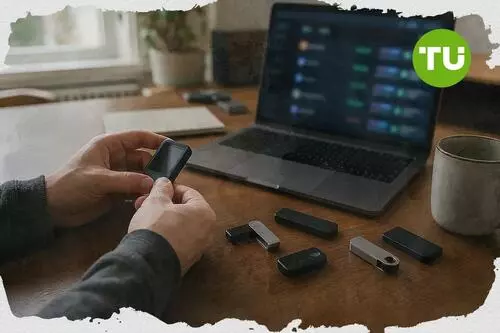
As crypto wallet providers weigh how to bring more users into self-custody, executives remain split on whether the model was ever built for beginners. The debate is gaining urgency as recent hardware wallet incidents highlight risks in products long promoted as among the safest ways to hold digital assets.
Highlights
- Crypto executives debate whether self-custody tools should prioritize usability for mainstream adoption or uphold current technical complexity for asset security.
- Recent security breaches—Ledger hardware implants stealing recovery phrases and a Coldcard firmware bug compromising private keys—have exposed confidence gaps in offline wallet solutions.
- Alternatives like multisignature and seedless wallets increase complexity or introduce new risks, with solutions such as Tangem's three-device backup model still posing total loss if all devices are lost.
Industry debate over design and adoption
As reported by Cointelegraph, crypto executives are divided on whether self-custody should be simplified for mainstream users or whether its technical demands are inherent to controlling digital assets.Safe Labs CEO Rahul Rumalla says users should not need to become security experts to hold their own assets, arguing that easier self-custody could be important for Bitcoin adoption. Michael Tanguma, CEO of Bitcoin custody provider Onramp, takes the opposite view, saying self-custody was never designed with newcomers in mind and comparing it to personal computers in the 1970s, when technical skill was required to use them.
Rumalla rejects that framing, saying self-custody was always intended for broad use because direct control of assets is central to crypto. He also says self-custody does not require users to do everything on their own, pointing to different models that can distribute risk while preserving user control.
Security models expose different weaknesses
Recent incidents involving Ledger and Coldcard have sharpened scrutiny of hardware wallet security. Implants in some Ledger devices stole recovery phrases, while a firmware bug in Coldcard allowed attackers to recreate private keys and steal funds, undermining confidence in tools often recommended for offline storage.Multisignature wallets offer one alternative by requiring multiple keys to approve transactions, but executives say the model can be hard for beginners to manage. Justin Hutzler, chief technology officer of Synergy Network, says multisig can add complexity around signer coordination, key backups, recovery procedures and transaction approvals, while Rumalla warns that multiple signers can still approve a malicious transfer if they are misled by the same compromised interface.
Seedless wallets remove the need to manage a recovery phrase, but introduce other risks tied to physical device storage and transaction verification. Tangem says its approach stores a private key on one card with backups on as many as two additional devices, and confirms that losing every device would permanently block access to funds, while Foundation CEO Zach Herbert says wallets without a built-in screen leave users dependent on smartphones to verify transaction details, creating another possible attack point.
CTOS Digital Bhd’s cybersecurity incident and its market fallout were previously covered by our publication, as the company warned of service disruptions that could pressure revenue, costs, and customer confidence. We noted estimates that the breach could cut net profit by RM12 million and revenue by RM16 million if some services stayed unavailable into the third week of October, with further downside risk for each additional week of disruption.










-
 Afghanistan
-
 Albania
-
 Algeria
-
 Angola
-
 Argentina
-
 Armenia
-
 Australia
-
 Austria
-
 Azerbaijan
-
 Bahamas
-
 Bahrain
-
 Bangladesh
-
 Belarus
-
 Belgium
-
 Bolivia
-
 Botswana
-
 Brazil
-
 Brunei
-
 Bulgaria
-
 Cambodia
-
 Cameroon
-
 Canada
-
 Chile
-
 China
-
 Colombia
-
 Congo
-
 Costa Rica
-
 Cote d'Ivoire
-
 Croatia
-
 Cuba
-
 Cyprus
-
 Czechia
-
 DR Congo
-
 Denmark
-
 Dominican Republic
-
 Ecuador
-
 Egypt
-
 El Salvador
-
 Estonia
-
 Eswatini
-
 Ethiopia
-
 Finland
-
 France
-
 Georgia
-
 Germany
-
 Ghana
-
 Greece
-
 Haiti
-
 Hong Kong
-
 Hungary
-
 India
-
 Indonesia
-
 Iran, Islamic republic
-
 Iraq
-
 Ireland
-
 Israel
-
 Italy
-
 Jamaica
-
 Japan
-
 Jordan
-
 Kazakhstan
-
 Kenya
-
 Korea
-
 Kuwait
-
 Kyrgyzstan
-
 Laos
-
 Latvia
-
 Lebanon
-
 Lesotho
-
 Libya
-
 Lithuania
-
 Luxembourg
-
 Madagascar
-
 Malaysia
-
 Malta
-
 Mauritius
-
 Mexico
-
 Moldova
-
 Mongolia
-
 Montenegro
-
 Morocco
-
 Mozambique
-
 Myanmar
-
 Namibia
-
 Nepal
-
 Netherlands
-
 New Zealand
-
 Nigeria
-
 North Macedonia
-
 Norway
-
 Oman
-
 Pakistan
-
 Palestine
-
 Panama
-
 Papua New Guinea
-
 Paraguay
-
 Peru
-
 Philippines
-
 Poland
-
 Portugal
-
 Puerto Rico
-
 Qatar
-
 Reunion
-
 Romania
-
 Rwanda
-
 Saudi Arabia
-
 Serbia
-
 Singapore
-
 Slovakia
-
 Slovenia
-
 Somalia
-
 South Africa
-
 Spain
-
 Sri Lanka
-
 Sweden
-
 Switzerland
-
 Syria
-
 Taiwan
-
 Tajikistan
-
 Tanzania
-
 Thailand
-
 Trinidad and Tobago
-
 Tunisia
-
 Turkey
-
 UAE
-
 Uganda
-
 Ukraine
-
 United Kingdom
-
United States
-
 Uruguay
-
 Uzbekistan
-
 Venezuela
-
 Vietnam
-
 Yemen
-
 Zambia
-
 Zimbabwe
- Forex
- Crypto












