

Eurostat housing data show affordability pressures across Europe

Housing affordability and access remain a major policy issue across the European Union as households continue to devote a significant share of income to housing. In 2025, that burden averages 19% of disposable income across the EU, with wide differences between member states from 11% in Cyprus to 35% in Greece.
Highlights
- Eurostat's 'Housing in Europe - 2026 edition' shows 68% of Europeans own their homes, with ownership rates ranging from 47% in Germany to 94% in Slovakia.
- The data highlights persistent disparities in housing affordability and ownership across EU countries, intensifying policy focus on housing costs and access.
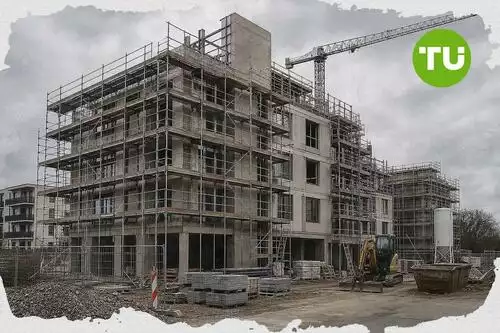
- The publication links affordability pressures to construction sector trends by presenting investment and building permit data, informing supply-side outlooks across Europe.
Eurostat data outline housing costs and ownership trends
As reported by Eurostat, its interactive publication "Housing in Europe - 2026 edition" brings together comparable data on housing costs, home ownership, housing quality, house prices and construction activity across the bloc.The figures show that more than two-thirds of Europeans, or 68%, own their homes, but ownership levels differ sharply by country. Rates range from 47% in Germany to 94% in Slovakia, underlining how national housing markets continue to vary widely across Europe.
The publication also examines how people live and the characteristics of their homes, while presenting broader indicators on affordability. Its format uses interactive visuals to compare countries alongside short summaries of the main findings.
Housing trends shape policy and construction outlook
The dataset reinforces why housing remains high on the EU agenda, with affordability and access to adequate housing becoming a growing concern for policymakers and households. Differences in housing cost burdens and ownership patterns point to uneven pressures across national markets.Beyond household finances, the publication includes an overview of the construction sector through data on investment and building permits. That adds a supply-side perspective to the affordability debate, linking household conditions with the pace of residential development across Europe.
Earlier, we discussed Eurostat’s macroeconomic scoreboard used to flag EU-wide risks and trigger in-depth reviews for several countries.






Latest Housing Market News



-
 Afghanistan
-
 Albania
-
 Algeria
-
 Angola
-
 Argentina
-
 Armenia
-
 Australia
-
 Austria
-
 Azerbaijan
-
 Bahamas
-
 Bahrain
-
 Bangladesh
-
 Belarus
-
 Belgium
-
 Bolivia
-
 Botswana
-
 Brazil
-
 Brunei
-
 Bulgaria
-
 Cambodia
-
 Cameroon
-
 Canada
-
 Chile
-
 China
-
 Colombia
-
 Congo
-
 Costa Rica
-
 Cote d'Ivoire
-
 Croatia
-
 Cuba
-
 Cyprus
-
 Czechia
-
 DR Congo
-
 Denmark
-
 Dominican Republic
-
 Ecuador
-
 Egypt
-
 El Salvador
-
 Estonia
-
 Eswatini
-
 Ethiopia
-
 Finland
-
 France
-
 Georgia
-
 Germany
-
 Ghana
-
 Greece
-
 Haiti
-
 Hong Kong
-
 Hungary
-
 India
-
 Indonesia
-
 Iran, Islamic republic
-
 Iraq
-
 Ireland
-
 Israel
-
 Italy
-
 Jamaica
-
 Japan
-
 Jordan
-
 Kazakhstan
-
 Kenya
-
 Korea
-
 Kuwait
-
 Kyrgyzstan
-
 Laos
-
 Latvia
-
 Lebanon
-
 Lesotho
-
 Libya
-
 Lithuania
-
 Luxembourg
-
 Madagascar
-
 Malaysia
-
 Malta
-
 Mauritius
-
 Mexico
-
 Moldova
-
 Mongolia
-
 Montenegro
-
 Morocco
-
 Mozambique
-
 Myanmar
-
 Namibia
-
 Nepal
-
 Netherlands
-
 New Zealand
-
 Nigeria
-
 North Macedonia
-
 Norway
-
 Oman
-
 Pakistan
-
 Palestine
-
 Panama
-
 Papua New Guinea
-
 Paraguay
-
 Peru
-
 Philippines
-
 Poland
-
 Portugal
-
 Puerto Rico
-
 Qatar
-
 Reunion
-
 Romania
-
 Rwanda
-
 Saudi Arabia
-
 Serbia
-
 Singapore
-
 Slovakia
-
 Slovenia
-
 Somalia
-
 South Africa
-
 Spain
-
 Sri Lanka
-
 Sweden
-
 Switzerland
-
 Syria
-
 Taiwan
-
 Tajikistan
-
 Tanzania
-
 Thailand
-
 Trinidad and Tobago
-
 Tunisia
-
 Turkey
-
 UAE
-
 Uganda
-
 Ukraine
-
 United Kingdom
-
United States
-
 Uruguay
-
 Uzbekistan
-
 Venezuela
-
 Vietnam
-
 Yemen
-
 Zambia
-
 Zimbabwe
- Forex
- Crypto












