The tweet was deleted by the author.
But we saved everything 🙂.
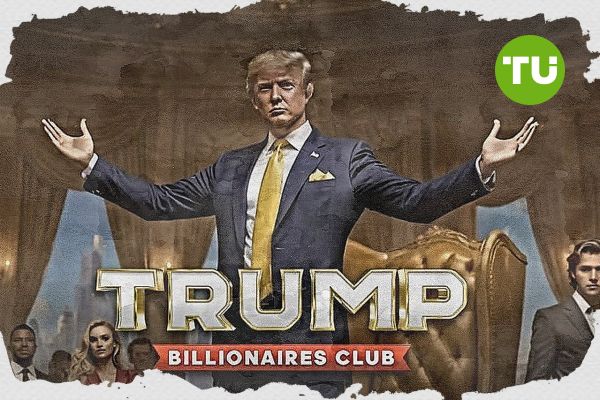
U.S. President Donald Trump is back in the spotlight — but this time not because of geopolitical or trade conflicts, rather because of a mobile game. A “Monopoly-like” release built around the TRUMP token is expected by the end of the month. But the real question isn’t the gameplay — it’s why a presidential brand needs a crypto game at all.
TRUMP Billionaires Club is a board-game-style strategy title for smartphones and web browsers, with a planned App Store release date of December 30. Pre-registration is already open and is being fueled by prizes and a referral competition worth up to $1 million in tokens.
The gameplay is straightforward: each turn starts with a dice roll, after which the player moves around the board and makes decisions — buying and upgrading businesses, paying fees, building influence, and gradually constructing an “empire.” Visually, it’s a 3D world set against a New York backdrop, and progression is tied to unlocking new locations and higher-tier asset levels. Luck still matters, but it’s constrained by daily limits on the number of rolls — making planning more important.
The game also promises plenty of digital items: collectible statues, various bonuses, and mystery boxes with seasonal rewards. The trading and “ownership” layer is supported through partner infrastructure: items can be earned through achievements and then stored, used, or traded — positioned as an accessible feature both for newcomers and for players already familiar with Web3.
The in-game economy is tied to TRUMP: the token is used for key actions, can be spent and deposited directly, and the premium in-game currency is expected to be convertible into the memecoin. You don’t have to be a crypto enthusiast to play: users can top up their accounts with regular money, without needing to set up a crypto wallet.
The project is being developed by Freedom 45 Games LLC — the entity behind the development and the one licensing Trump’s name. A central figure is entrepreneur Bill Zanker, who has long worked with the U.S. president’s brand. He was involved in launching the official TRUMP memecoin and various NFT collections, and is now essentially bringing the same audience into a gaming product. The launch is built around a familiar crypto playbook: pre-registration, a leaderboard, referrals, and token-based prizes designed to drive early user growth.
From both a technical and economic standpoint, the game is supported by Open Loot — a marketplace for digital items that embeds trading directly into the gameplay loop. This matters because the developers are trying to remove the biggest barrier in Web3 gaming: instead of requiring a wallet and complex onboarding rituals, they’re offering a model that works “like regular games.”
At the same time, the project comes with legal “safeguards.” The website warns that the game is not designed, manufactured, or distributed by Trump himself or by his businesses/affiliates, and that the digital items are presented as “for enjoyment,” not for investment, and not connected to any political campaign.
A bet on Web3 gaming (GameFi) looks somewhat odd: after the 2021–2022 hype wave, the sector cooled significantly, and many projects never proved they could retain audiences without endless incentives. Most players still prefer traditional gaming, while the crypto component is often seen as extra complexity, risk, and speculation. As a result, the industry has shifted from aggressive play-to-earn toward a softer model: crypto as an option, not a requirement.
The TRUMP game tries to fit that logic. It’s being sold not as a “way to earn,” but as a standard mobile “Monopoly-style” game with an added economy and digital items. Hence the emphasis on messages like “no wallet,” “enjoyment, not investment,” and “pay with familiar methods.” In essence, it’s an attempt to sidestep the key reasons behind GameFi’s stagnation — overheated tokenomics, difficult onboarding, and the toxic expectation of fast profits — by wrapping Web3 in a package closer to a conventional gaming product.
Still, the developers’ motivation is clear: since launch, the TRUMP token has fallen by nearly 90%, and the game becomes a new channel that could bring attention back and create demand. If a token’s price decline is a story of fading interest and thin volumes, a game is a way to keep generating headlines and transactions.
Ultimately, everything will depend on whether the team can turn this into a product people genuinely want to play — rather than yet another one-off promotional attraction built around a memecoin. If the mechanics and content retain users, TRUMP could gain a limited but steady real-use scenario inside the game. If interest fades after the first few weeks and giveaways, TRUMP Billionaires Club may join the long list of Web3 projects where a loud brand and tokenomics couldn’t replace real player engagement.

 Afghanistan
 Albania
 Algeria
 Angola
 Argentina
 Armenia
 Australia
 Austria
 Azerbaijan
 Bahamas
 Bahrain
 Bangladesh
 Belarus
 Belgium
 Bolivia
 Botswana
 Brazil
 Brunei
 Bulgaria
 Cambodia
 Cameroon
 Canada
 Chile
Chile
 China
China
 Colombia
 Congo
Congo
 Costa Rica
 Cote d'Ivoire
 Croatia
 Cuba
Cuba
 Cyprus
 Czechia
 DR Congo
 Denmark
 Dominican Republic
 Ecuador
 Egypt
Egypt
 El Salvador
 Estonia
 Eswatini
 Ethiopia
 Finland
 France
 Georgia
 Germany
 Ghana
Ghana
 Greece
 Haiti
Haiti
 Hong Kong
 Hungary
 India
India
 Indonesia
 Iran, Islamic republic
 Iraq
Iraq
 Ireland
 Israel
 Italy
Italy
 Jamaica
 Japan
Japan
 Jordan
 Kazakhstan
 Kenya
Kenya
 Korea
Korea
 Kuwait
 Kyrgyzstan
 Laos
Laos
 Latvia
 Lebanon
 Lesotho
 Libya
Libya
 Lithuania
 Luxembourg
 Madagascar
 Malaysia
 Malta
Malta
 Mauritius
 Mexico
 Moldova
 Mongolia
 Montenegro
 Morocco
 Mozambique
 Myanmar
 Namibia
 Nepal
Nepal
 Netherlands
 New Zealand
 Nigeria
 North Macedonia
 Norway
 Oman
Oman
 Pakistan
 Palestine
 Panama
 Papua New Guinea
 Paraguay
 Peru
Peru
 Philippines
 Poland
 Portugal
 Puerto Rico
 Qatar
Qatar
 Reunion
 Romania
 Rwanda
 Saudi Arabia
 Serbia
 Singapore
 Slovakia
 Slovenia
 Somalia
 South Africa
 Spain
Spain
 Sri Lanka
 Sweden
 Switzerland
 Syria
Syria
 Taiwan
 Tajikistan
 Tanzania
 Thailand
 Trinidad and Tobago
 Tunisia
 Turkey
 UAE
UAE
 Uganda
 Ukraine
 United Kingdom
United States
United Kingdom
United States
 Uruguay
 Uzbekistan
 Venezuela
 Vietnam
 Yemen
Yemen
 Zambia
 Zimbabwe