The tweet was deleted by the author.
But we saved everything 🙂.

Donald Trump’s policies directly affect U.S. stocks and the broader equity market. Some sectors benefit from government support, while others suddenly run into new restrictions. The market increasingly resembles a “command economy,” where business success depends not only on earnings, but also on how closely a company aligns with the administration’s priorities.
The U.S. stock market is increasingly reacting not just to corporate earnings and economic data, but also to decisions coming out of the White House. The policies of President Donald Trump influence a wide range of outcomes: statements, initiatives, and regulatory changes are quickly reflected in stock prices. For investors, this means that politics has become just as important as financial metrics or business forecasts.
Last year offers a clear example. During the escalation of tariffs in the U.S.–China trade conflict, the market showed how sensitive it is to White House decisions. After new tariffs were announced and retaliatory measures followed, investors rushed to sell, and the market lost roughly $6 trillion in value over two days.
Today, a similar dynamic is playing out, but the impact has become more targeted. Some administration decisions support specific industries, while others sharply worsen conditions for certain businesses. In some cases, a single decision in Washington is enough to send individual stocks deep into the red. These moves make it clear who benefits from current policy—and who does not.
This week, the hardest hit sector was U.S. health insurance. On Tuesday, shares of UnitedHealth and Humana plunged more than 20% in a single session, while CVS Health fell about 14%. For large, stable companies, moves of this magnitude are highly unusual.
UnitedHealth and Humana are the largest health insurers in the United States, generating a significant share of their revenue from Medicare Advantage. This is a privately run version of the government’s Medicare program, under which the federal government pays insurers to provide coverage to older Americans. For these companies, Medicare payments are a core source of income.
The selloff was triggered by a proposal from the Trump administration to keep Medicare Advantage reimbursement rates nearly flat in 2027. Wall Street had expected rates to rise by 4–6%, as they have for many years, but instead got something close to a freeze. As a result, analysts quickly began warning that federal payments to insurers could be cut by billions of dollars, putting pressure on profit margins.
CVS Health was hit for the same reason. The company owns insurer Aetna and is also heavily exposed to Medicare Advantage revenue, which is why investors sold its shares alongside those of pure-play insurers. The decision surprised the market, as both political parties had previously supported steady rate increases almost automatically. It is now clear that for companies dependent on government programs, political risk under Trump can be decisive.
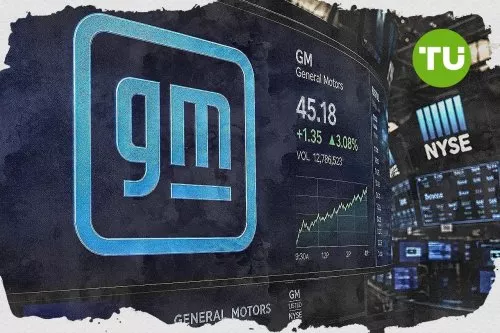
There are, however, clear winners. One of the main beneficiaries of Trump’s policies has been General Motors. The company reported quarterly earnings above expectations, sending its shares up 8.75% in a single day. The key driver was the administration’s more relaxed approach to environmental regulation, which allows automakers to sell more gasoline-powered vehicles without incurring additional costs.
Under Trump, General Motors does not have to purchase electric vehicle credits on the same scale as under stricter climate policies. This directly reduces expenses and improves margins, especially as demand for traditional vehicles remains strong. GM CEO Mary Barra has even said that 2026 could be an even better year, explicitly linking the outlook to the current business environment.
Another winner is steelmaker Nucor. Although its earnings came in slightly below expectations, the stock is up about 42% over the past year, largely thanks to the expansion of Section 232 tariffs. These tariffs have restricted imports of finished steel into the U.S., allowing Nucor and other domestic producers to gain market share and maintain higher prices at home.
The sharp decline in insurer stocks and the rise in industrial shares highlight a simple reality: under Trump, politics has become just as important to the market as earnings and forecasts. A single decision on tariffs, regulation, or government programs can prompt investors to reprice entire sectors in a matter of days—even when companies appear stable on paper.
The takeaway for investors is practical. It is no longer enough to focus solely on financial results. What matters is what a company’s business depends on—government funding and regulation, or regulatory relief and protection of the domestic market. In this environment, those tied to budgets and regulators suffer the most, while companies whose business models align with Washington’s political priorities stand to benefit.

 Afghanistan
 Albania
 Algeria
 Angola
 Argentina
 Armenia
 Australia
 Austria
 Azerbaijan
 Bahamas
 Bahrain
 Bangladesh
 Belarus
 Belgium
 Bolivia
 Botswana
 Brazil
 Brunei
 Bulgaria
 Cambodia
 Cameroon
 Canada
 Chile
Chile
 China
China
 Colombia
 Congo
Congo
 Costa Rica
 Cote d'Ivoire
 Croatia
 Cuba
Cuba
 Cyprus
 Czechia
 DR Congo
 Denmark
 Dominican Republic
 Ecuador
 Egypt
Egypt
 El Salvador
 Estonia
 Eswatini
 Ethiopia
 Finland
 France
 Georgia
 Germany
 Ghana
Ghana
 Greece
 Haiti
Haiti
 Hong Kong
 Hungary
 India
India
 Indonesia
 Iran, Islamic republic
 Iraq
Iraq
 Ireland
 Israel
 Italy
Italy
 Jamaica
 Japan
Japan
 Jordan
 Kazakhstan
 Kenya
Kenya
 Korea
Korea
 Kuwait
 Kyrgyzstan
 Laos
Laos
 Latvia
 Lebanon
 Lesotho
 Libya
Libya
 Lithuania
 Luxembourg
 Madagascar
 Malaysia
 Malta
Malta
 Mauritius
 Mexico
 Moldova
 Mongolia
 Montenegro
 Morocco
 Mozambique
 Myanmar
 Namibia
 Nepal
Nepal
 Netherlands
 New Zealand
 Nigeria
 North Macedonia
 Norway
 Oman
Oman
 Pakistan
 Palestine
 Panama
 Papua New Guinea
 Paraguay
 Peru
Peru
 Philippines
 Poland
 Portugal
 Puerto Rico
 Qatar
Qatar
 Reunion
 Romania
 Rwanda
 Saudi Arabia
 Serbia
 Singapore
 Slovakia
 Slovenia
 Somalia
 South Africa
 Spain
Spain
 Sri Lanka
 Sweden
 Switzerland
 Syria
Syria
 Taiwan
 Tajikistan
 Tanzania
 Thailand
 Trinidad and Tobago
 Tunisia
 Turkey
 UAE
UAE
 Uganda
 Ukraine
 United Kingdom
United States
United Kingdom
United States
 Uruguay
 Uzbekistan
 Venezuela
 Vietnam
 Yemen
Yemen
 Zambia
 Zimbabwe