The tweet was deleted by the author.
But we saved everything 🙂.

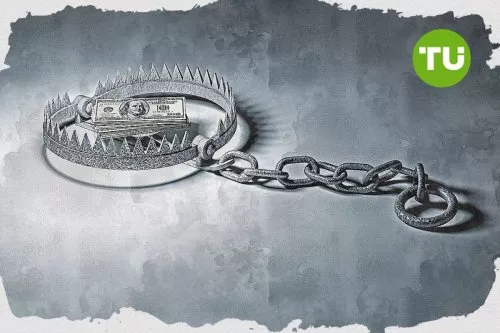
February 14 isn’t just about flowers, cards, and confessions of love. For cybercriminals, it marks the beginning of peak season. While some people are looking for romance, others are hunting for wallets. Modern romance scams are not amateur operations; they are structured systems, and in February they run at full capacity.
Behind them are scriptwriters, behavioral psychologists, chat operators, and even entire offices where people spend twelve hours a day maintaining “relationships” with victims across the globe. All of it builds toward a single moment.
That’s how the story began that ultimately led to a 20-year prison sentence for Chinese national Daren Li, one of the organizers of a large-scale crypto romance scam uncovered in 2024. Investigators found that his network used social media and dating platforms to persuade victims to invest in fake cryptocurrency trading platforms. Total losses exceeded $73.6 million.
This wasn’t a smash-and-grab scheme. Victims were cultivated for weeks, sometimes months. They received “good morning” texts, emotional support, and thoughtful questions about their day. Gradually, the topic of crypto investments entered the conversation. At first, small amounts, just to test the waters. On screen, profits appeared to grow. Seeing returns, victims invested more. When they tried to withdraw funds, they were told they needed to pay a tax or a release fee to unlock their accounts. After that final transfer, communication stopped.
The court described the scheme as a classic example of “pig butchering” — a long-term psychological manipulation in which trust is built slowly to maximize financial extraction.
An even larger operation emerged in Southeast Asia, where authorities uncovered scam centers operating like full-scale call centers between 2023 and 2024. Operators met victims on Tinder, Facebook, or Instagram, moved conversations to WhatsApp or Telegram, and methodically built emotional rapport.
According to investigators, roughly 5,000 Australians alone lost an estimated $15 million through these romance-driven crypto schemes. The victims were not naïve outliers; they included business owners, retirees, and IT professionals. Each of them heard the same storyline: “I trade crypto successfully,” “Let me show you how,” and “We can build a future together.”
Behind those romantic messages were coordinated teams following scripts and earning commissions on every successful transfer.
Some cases are especially painful. A 30-year-old businessman in India met a woman on a matrimonial website who spoke about a shared future and gradually convinced him to invest through a platform called Bakktcoin. Over several months, he transferred roughly $120,000.
The website showed steady profits. He believed he was building wealth and preparing for marriage. When he attempted to withdraw his funds, the platform required an additional payment to activate the transaction. Soon after, his account was frozen, and the woman disappeared.
A few years ago, a project called Valentine Coin began circulating online. Its concept sounded almost touching: create a unique Ethereum token that would store a personal love message permanently on the blockchain. It was marketed as a digital version of love locks on a bridge; only this time, no city workers could remove it.
Users were asked to submit their message wallet address and send 0.33 ETH. In return, they were promised an NFT containing their inscription and a “love certificate.” On the surface, everything looked technically legitimate: references to the ERC-721 standard, explanations of the mechanism, even instructions on how to verify the transaction on-chain. But beneath the romantic framing was a simple fact — hundreds of dollars for a technical operation that costs a fraction of that. It was emotion monetized in blockchain language.
Over time, these ideas evolved. If Valentine Coin sold the promise of “forever,” newer seasonal tokens sell the promise of profit. In the run-up to February 14, coins with names like Love, Cupid, or HEART appear and are aggressively promoted in Telegram groups and on smaller exchanges. They are framed as digital Valentine’s gifts or as an opportunity to “ride the holiday momentum.”
And the strategy isn’t random. A January Pollfish survey commissioned by crypto exchange OKX found that nearly one-third of young respondents said they would welcome cryptocurrency as a Valentine’s Day gift. Digital assets are increasingly part of the romantic vocabulary of a generation, signaling modernity, financial awareness, and even desirability.
That perception is precisely what pump organizers exploit. In the first days after launch, the token price is artificially inflated, creating urgency and hype. Then liquidity is pulled. The price collapses to near zero. On paper, it looks like a failed market experiment. In reality, it’s a classic rug pull, a calculated exit with investors’ money.
Valentine’s Day acts as a psychological amplifier. More people sign up for dating apps. More conversations begin. Trust builds faster. Loneliness feels sharper in February, and the promise of connection feels stronger.
Scammers aren’t selling tokens. They’re selling attention, reassurance, and the illusion of a shared future. Romance-driven crypto scams have grown into a global business generating billions in losses. As long as love remains a fundamental human need, it will remain an entry point for those willing to exploit it.
Valentine’s Day is meant to celebrate emotion. But in the digital age, emotion has become an asset, and, as these cases show, a remarkably profitable one.

 Afghanistan
 Albania
 Algeria
 Angola
 Argentina
 Armenia
 Australia
 Austria
 Azerbaijan
 Bahamas
 Bahrain
 Bangladesh
 Belarus
 Belgium
 Bolivia
 Botswana
 Brazil
 Brunei
 Bulgaria
 Cambodia
 Cameroon
 Canada
 Chile
Chile
 China
China
 Colombia
 Congo
Congo
 Costa Rica
 Cote d'Ivoire
 Croatia
 Cuba
Cuba
 Cyprus
 Czechia
 DR Congo
 Denmark
 Dominican Republic
 Ecuador
 Egypt
Egypt
 El Salvador
 Estonia
 Eswatini
 Ethiopia
 Finland
 France
 Georgia
 Germany
 Ghana
Ghana
 Greece
 Haiti
Haiti
 Hong Kong
 Hungary
 India
India
 Indonesia
 Iran, Islamic republic
 Iraq
Iraq
 Ireland
 Israel
 Italy
Italy
 Jamaica
 Japan
Japan
 Jordan
 Kazakhstan
 Kenya
Kenya
 Korea
Korea
 Kuwait
 Kyrgyzstan
 Laos
Laos
 Latvia
 Lebanon
 Lesotho
 Libya
Libya
 Lithuania
 Luxembourg
 Madagascar
 Malaysia
 Malta
Malta
 Mauritius
 Mexico
 Moldova
 Mongolia
 Montenegro
 Morocco
 Mozambique
 Myanmar
 Namibia
 Nepal
Nepal
 Netherlands
 New Zealand
 Nigeria
 North Macedonia
 Norway
 Oman
Oman
 Pakistan
 Palestine
 Panama
 Papua New Guinea
 Paraguay
 Peru
Peru
 Philippines
 Poland
 Portugal
 Puerto Rico
 Qatar
Qatar
 Reunion
 Romania
 Rwanda
 Saudi Arabia
 Serbia
 Singapore
 Slovakia
 Slovenia
 Somalia
 South Africa
 Spain
Spain
 Sri Lanka
 Sweden
 Switzerland
 Syria
Syria
 Taiwan
 Tajikistan
 Tanzania
 Thailand
 Trinidad and Tobago
 Tunisia
 Turkey
 UAE
UAE
 Uganda
 Ukraine
 United Kingdom
United States
United Kingdom
United States
 Uruguay
 Uzbekistan
 Venezuela
 Vietnam
 Yemen
Yemen
 Zambia
 Zimbabwe