The tweet was deleted by the author.
But we saved everything 🙂.
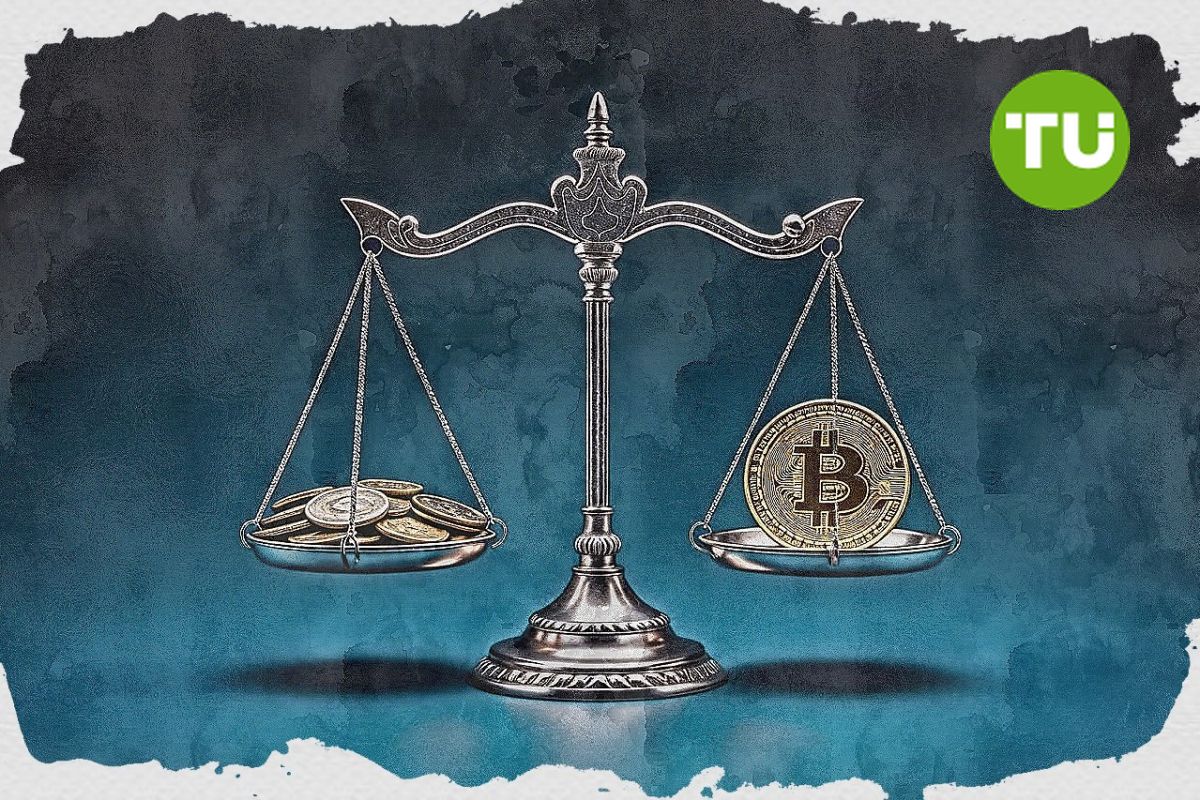
Startups are once again trying to bring stablecoins back to the Bitcoin ecosystem — this time through L2 protocols such as Taproot Assets, RGB, and Citrea. Tether is already backing the initiative, but the community still has questions: will this benefit the network, or turn Bitcoin into a platform for “dollar-denominated” traffic?
In 2014, Tether launched as the first notable stablecoin on Mastercoin, a Bitcoin metaprotocol later renamed Omni. However, most of its liquidity moved to Ethereum starting in 2018. Higher Bitcoin fees at the time contributed to the shift, as did efforts to protect Bitcoin's focus on pure decentralization and the avoidance of non-Bitcoin assets. Ethereum also provided more flexible smart contract tools that better supported interactions among different tokens in decentralized finance (DeFi) setups.
The stablecoin market has expanded significantly in the years since. Total capitalization across all dollar-pegged tokens has reached roughly $310 billion, and these assets collectively rank as the second most important development in cryptocurrency after bitcoin's initial role as digital gold. Tether's USDT and Circle's USDC together often exceed Ethereum's total market capitalization in value, which is a stat that underscores how essential stablecoins have grown for trading, payments, and liquidity across the crypto industry.
A number of startups are now working to reintroduce stablecoins back onto Bitcoin and to recreate DeFi features that have thrived on other networks. Some segments of the Bitcoin userbase, however, treat these tokens as little more than spam. These critics highlight the centralization inherent in issuer-controlled assets and insist that Bitcoin's scarce block space should remain reserved for native monetary transactions.
So, who is right and what does the potential future of stablecoins on Bitcoin look like?
Taproot Assets, RGB, Spark, Ark, and Citrea represent the primary protocols driving the renewed push for stablecoins on Bitcoin. Notably, Spark was developed by Lightspark, whose CEO David Marcus formerly ran Meta’s Libra project. Taproot Assets, RGB, Spark, and Ark are all designed for efficient, instant off-chain transfers of bitcoin, stablecoins, and other tokens with very low fees, while Citrea runs as a layer-two network compatible with the Ethereum Virtual Machine (EVM) and relies on a BitVM-based bridge to the Bitcoin main chain.
It’s also worth noting that stablecoins have already operated for years on federated sidechains such as Blockstream's Liquid and the EVM-compatible Rootstock, but activity levels on those networks are low.
Tether has already publicly committed to issuing USDT via Taproot Assets, RGB, and Ark. The company’s CEO, Paolo Ardoino, has repeatedly stated that Lightning's payment-channel model provides the most viable long-term scaling solution for this kind of infrastructure. Citrea, meanwhile, launched its native stablecoin ctUSD, which is issued by MoonPay and is compatible with the GENIUS Act, alongside mainnet last month.
Wallet teams plan to embed stablecoins like USDT alongside native bitcoin holdings so users manage both assets in the same interface. Synergies already exist because Tether includes bitcoin among the assets backing its reserves, and this sort of model where bitcoin acts as a reserve asset for new digital currencies could expand and persist for some time. On Citrea the focus lies in applications that pair ctUSD with Bitcoin for lending, trading, and other DeFi functionality.
Additionally, Amboss introduced RailsX last month to enable instant atomic swaps between Bitcoin and stablecoins directly on Lightning via Taproot Assets. For many, Lightning is viewed as the deliberate, secure path for scaling Bitcoin over the long haul. From this perspective, alternative crypto networks, such as Ethereum, have functioned largely as test environments for DeFi experiments while Bitcoin's development proceeds more cautiously.
While portions of the Bitcoin userbase look forward to holding stable value inside wallets powered by these various Bitcoin layer-two networks, others contend that these tokens will raise fees for everyone else and potentially create perverse incentives on the network. They note that stablecoins are centralized at the issuer level anyway, so placing them on Bitcoin adds little real security benefit and argue that separate chains or dedicated platforms would serve them better. Some also worry that dominant stablecoin volume could eventually tilt miner incentives away from Bitcoin itself, although the cryptocurrency has cultivated a dedicated base of users that seems resistant to such a scenario at this point.
USDT did indeed move in volume to the much more centralized Tron network after leaving Omni and then encountering elevated fees on Ethereum during the 2020 DeFi summer. Tether and Circle have each gone on to support or incubate their own specialized “stablechains” to eliminate unnecessary overhead and optimize for dollar-first design.
A few voices have gone even further with their contempt for non-Bitcoin use cases on Bitcoin, backing proposals such as Bitcoin Improvement Proposal (BIP) 110 to restrict activity through a soft fork. However, support for the fork from miners and economic nodes is roughly nonexistent at this point. This is largely due to the reality that spam on Bitcoin simply cannot be completely avoided. Instead, the block size limit acts as a mechanism for disincentivizing this sort of activity. One could make the argument that, if spam were persistently more prominent than Bitcoin transactions on the network, then Bitcoin as a whole would turn out to be a failed experiment.
That said, Ethereum offers a cautionary example to consider, as the majority of its on-chain economy now revolves around stablecoins rather than the native ETH cryptocurrency. Much of the DeFi activity built on Ethereum effectively depends on these centrally issued tokens instead of genuine growth around the base asset.
Currently, Bitcoin's current low levels of overall on-chain activity are likely a bigger issue than any stablecoin-related spam concerns. Despite earlier uproar over Ordinals and image inscriptions, demand for Bitcoin block space is still extremely low in the grand scheme of things. Stablecoins returning to Bitcoin do not pose an operational risk to the network today, especially when you consider that their impact on the base chain can remain limited when operating on various layer-two networks.
The benefits of using Bitcoin or an associated layer-two network for stablecoin issuers are also somewhat unclear. Instead, these dollar-pegged tokens may simply deepen their similarities to traditional finance through purpose-built, proprietary blockchains in the years ahead. Then again, Lightspark CEO David Marcus seems confident his layer-two Bitcoin platform will eventually become the dominant hub of stablecoin payments.
Over the long term, stablecoins’ relationship with bitcoin could be more financial than technical, as bitcoin becomes an increasingly used reserve asset for these sorts of new digital currencies.

 Afghanistan
 Albania
 Algeria
 Angola
 Argentina
 Armenia
 Australia
 Austria
 Azerbaijan
 Bahamas
 Bahrain
 Bangladesh
 Belarus
 Belgium
 Bolivia
 Botswana
 Brazil
 Brunei
 Bulgaria
 Cambodia
 Cameroon
 Canada
 Chile
Chile
 China
China
 Colombia
 Congo
Congo
 Costa Rica
 Cote d'Ivoire
 Croatia
 Cuba
Cuba
 Cyprus
 Czechia
 DR Congo
 Denmark
 Dominican Republic
 Ecuador
 Egypt
Egypt
 El Salvador
 Estonia
 Eswatini
 Ethiopia
 Finland
 France
 Georgia
 Germany
 Ghana
Ghana
 Greece
 Haiti
Haiti
 Hong Kong
 Hungary
 India
India
 Indonesia
 Iran, Islamic republic
 Iraq
Iraq
 Ireland
 Israel
 Italy
Italy
 Jamaica
 Japan
Japan
 Jordan
 Kazakhstan
 Kenya
Kenya
 Korea
Korea
 Kuwait
 Kyrgyzstan
 Laos
Laos
 Latvia
 Lebanon
 Lesotho
 Libya
Libya
 Lithuania
 Luxembourg
 Madagascar
 Malaysia
 Malta
Malta
 Mauritius
 Mexico
 Moldova
 Mongolia
 Montenegro
 Morocco
 Mozambique
 Myanmar
 Namibia
 Nepal
Nepal
 Netherlands
 New Zealand
 Nigeria
 North Macedonia
 Norway
 Oman
Oman
 Pakistan
 Palestine
 Panama
 Papua New Guinea
 Paraguay
 Peru
Peru
 Philippines
 Poland
 Portugal
 Puerto Rico
 Qatar
Qatar
 Reunion
 Romania
 Rwanda
 Saudi Arabia
 Serbia
 Singapore
 Slovakia
 Slovenia
 Somalia
 South Africa
 Spain
Spain
 Sri Lanka
 Sweden
 Switzerland
 Syria
Syria
 Taiwan
 Tajikistan
 Tanzania
 Thailand
 Trinidad and Tobago
 Tunisia
 Turkey
 UAE
UAE
 Uganda
 Ukraine
 United Kingdom
United States
United Kingdom
United States
 Uruguay
 Uzbekistan
 Venezuela
 Vietnam
 Yemen
Yemen
 Zambia
 Zimbabwe