The tweet was deleted by the author.
But we saved everything 🙂.

The U.S. and Israel’s strike on Iran triggered a sharp surge in oil prices and heightened fears of a new energy crisis. The conflict quickly expanded beyond a single country and is already affecting global markets: inflation risks are rising and pressure on the world economy is intensifying.
Over the weekend, the United States and Israel launched a large-scale military operation against Iran. Strikes targeted military infrastructure, Islamic Revolutionary Guard Corps facilities, air defense systems, missile launchers, and bases. As a result of the attacks, Iran’s Supreme Leader Ali Khamenei—who had been accused of repression and the violent suppression of protests—was killed.
U.S. President Donald Trump said the bombings would continue until the stated objectives are achieved. He emphasized that the operation is aimed at eliminating the military threat posed by Iran and its nuclear program. According to him, the campaign could last several weeks, with strikes carried out “at full force.”
The U.S. military reported that hundreds of targets have been hit since the operation began. These include command centers, weapons depots, naval facilities, and missile infrastructure. However, there have been losses on both sides. The deaths of three American service members have been confirmed, and several others were seriously wounded.
Khamenei’s death has created a power vacuum in Iran. His responsibilities have temporarily been transferred to a governing council consisting of the country’s president, the head of the judiciary, and a representative of the Guardian Council. However, the situation remains unstable, and military operations are continuing and expanding to other countries in the region.
Following the strikes, Iran launched large-scale retaliatory attacks. Missiles and drones were fired at Israel as well as at U.S. military facilities in the Middle East. The strikes hit bases in Kuwait and Bahrain, and explosions were reported in the UAE, Qatar, and other countries in the region.
At the same time, Iran stated that it had attacked vessels and maritime infrastructure in the Persian Gulf. Oil facilities in the region also came under attack. In particular, one of the refineries owned by Saudi Aramco in Saudi Arabia was targeted.
Tehran’s allies have also joined the conflict. Lebanon’s Hezbollah launched strikes on Israel, after which Israel expanded its operation and began targeting the group’s facilities in Beirut. Airspace over several countries was closed, and major airports, including Dubai, temporarily suspended operations.
The primary market reaction was a sharp rise in oil prices. When trading opened on Sunday evening, prices at one point jumped by as much as 13%, as the market quickly priced in the risk of supply disruptions from the region. Even before the strikes, oil had already gained about 20% since the start of the year and was trading around $73 per barrel, later briefly climbing above $82.
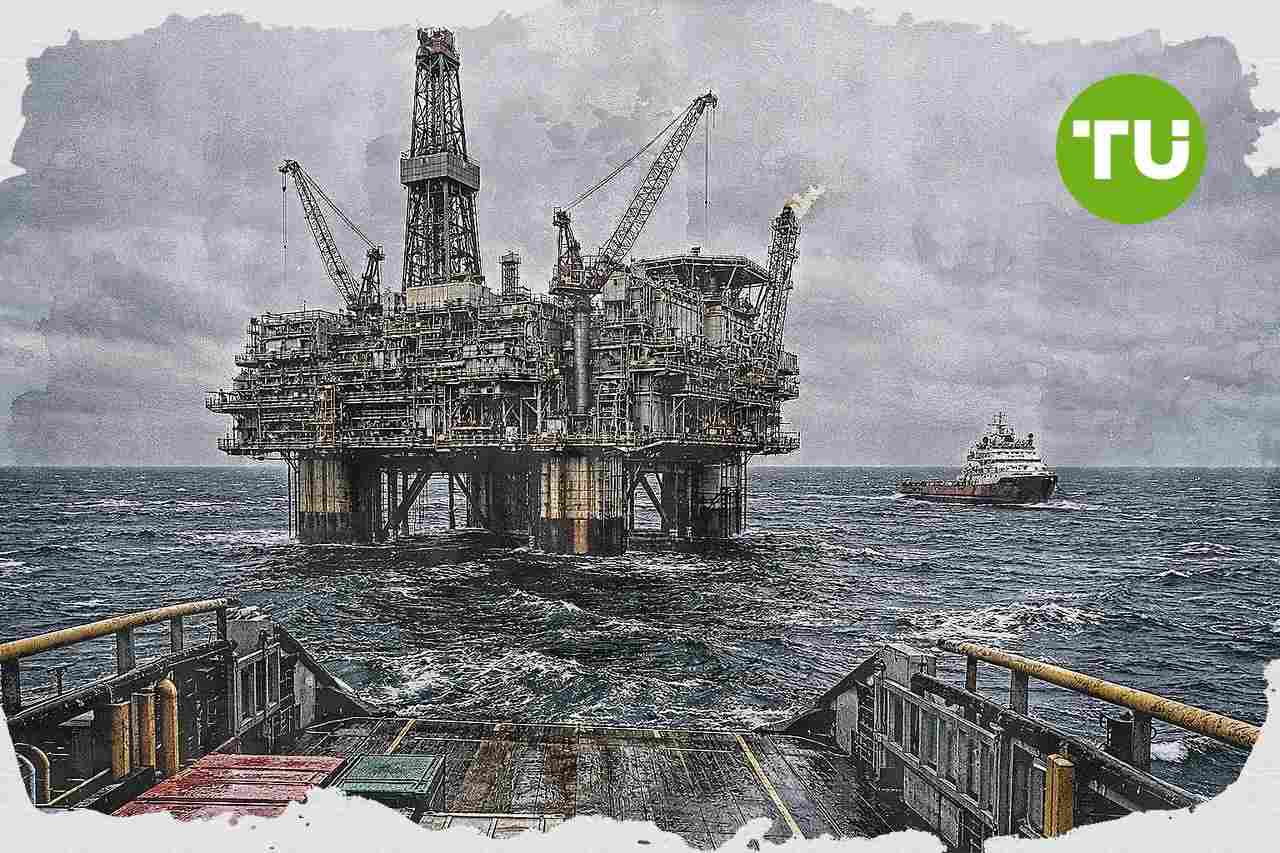
The key concern is the Strait of Hormuz. This narrow passage off Iran’s southern coast accounts for the transit of about 20% of the world’s oil supply. On Sunday, tanker traffic through the strait nearly came to a halt. If the situation drags on and traffic does not resume, oil prices could rise above $100 per barrel.
Other markets shifted into cautious mode. U.S. stock index futures declined, Asian markets opened lower, and gold and the U.S. dollar rose as safe-haven assets. Cryptocurrencies showed a surprisingly calm reaction: Bitcoin held around $67,000, quickly cooling after initial volatility and remaining within its local range while traditional markets prepared to digest the news.
The main question now is how the military conflict may end. The mildest scenario would be de-escalation in the coming days. In that case, maritime transport in the region would quickly normalize, and oil prices would gradually pull back. However, even under this scenario, tensions would not fully disappear: investors would continue pricing in the risk of renewed strikes, keeping prices higher than before the conflict.
A harsher scenario would involve a prolonged campaign lasting weeks, as Trump suggested, along with continued Iranian retaliation. In that case, oil could remain at elevated levels and, in the event of serious supply disruptions, move toward $90–100 or higher. This would quickly fuel inflation: gasoline, logistics, and air travel would become more expensive, followed by everyday goods in stores.
The most dangerous scenario would be the expansion of the war to neighboring countries and a new wave of attacks on infrastructure and transportation. In that case, the consequences would go beyond oil. Prolonged disruptions to aviation and trade are possible, along with rising insurance and shipping costs and increased pressure on energy-importing economies, particularly in Asia.
If supply disruptions persist, the world could face a new energy crisis—marked by rising oil and gas prices, surging fuel costs, and accelerating inflation. In such a situation, not only markets but also ordinary consumers would suffer: gasoline, transportation, and essential goods would become more expensive. Ultimately, developments in regional energy supply will determine whether this crisis remains a short-term shock or evolves into a full-scale global energy crisis.

 Afghanistan
 Albania
 Algeria
 Angola
 Argentina
 Armenia
 Australia
 Austria
 Azerbaijan
 Bahamas
 Bahrain
 Bangladesh
 Belarus
 Belgium
 Bolivia
 Botswana
 Brazil
 Brunei
 Bulgaria
 Cambodia
 Cameroon
 Canada
 Chile
Chile
 China
China
 Colombia
 Congo
Congo
 Costa Rica
 Cote d'Ivoire
 Croatia
 Cuba
Cuba
 Cyprus
 Czechia
 DR Congo
 Denmark
 Dominican Republic
 Ecuador
 Egypt
Egypt
 El Salvador
 Estonia
 Eswatini
 Ethiopia
 Finland
 France
 Georgia
 Germany
 Ghana
Ghana
 Greece
 Haiti
Haiti
 Hong Kong
 Hungary
 India
India
 Indonesia
 Iran, Islamic republic
 Iraq
Iraq
 Ireland
 Israel
 Italy
Italy
 Jamaica
 Japan
Japan
 Jordan
 Kazakhstan
 Kenya
Kenya
 Korea
Korea
 Kuwait
 Kyrgyzstan
 Laos
Laos
 Latvia
 Lebanon
 Lesotho
 Libya
Libya
 Lithuania
 Luxembourg
 Madagascar
 Malaysia
 Malta
Malta
 Mauritius
 Mexico
 Moldova
 Mongolia
 Montenegro
 Morocco
 Mozambique
 Myanmar
 Namibia
 Nepal
Nepal
 Netherlands
 New Zealand
 Nigeria
 North Macedonia
 Norway
 Oman
Oman
 Pakistan
 Palestine
 Panama
 Papua New Guinea
 Paraguay
 Peru
Peru
 Philippines
 Poland
 Portugal
 Puerto Rico
 Qatar
Qatar
 Reunion
 Romania
 Rwanda
 Saudi Arabia
 Serbia
 Singapore
 Slovakia
 Slovenia
 Somalia
 South Africa
 Spain
Spain
 Sri Lanka
 Sweden
 Switzerland
 Syria
Syria
 Taiwan
 Tajikistan
 Tanzania
 Thailand
 Trinidad and Tobago
 Tunisia
 Turkey
 UAE
UAE
 Uganda
 Ukraine
 United Kingdom
United States
United Kingdom
United States
 Uruguay
 Uzbekistan
 Venezuela
 Vietnam
 Yemen
Yemen
 Zambia
 Zimbabwe