The tweet was deleted by the author.
But we saved everything 🙂.

For decades, hedge funds have been seen as the domain of the wealthiest investors. They promised protection from market turmoil and access to sophisticated strategies. But something happened in July that made the advantages of this “club for the elite” look far less obvious.
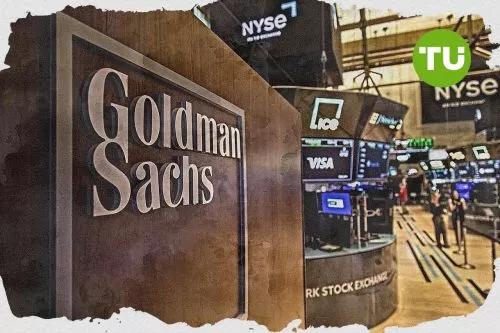
July became one of the worst months for hedge funds in decades. According to Goldman Sachs, the most popular hedge fund positions posted their worst performance relative to the S&P 500 in more than 20 years of tracking.
View post on X Loading...
The main reason was a reversal in AI-related stocks. Hedge funds had been actively increasing their exposure to the technology sector in the second quarter, while portfolio turnover reached its highest level since 2021. Goldman noted that semiconductor stocks and mega-cap technology companies were particularly popular. In July, funds began cutting these positions aggressively.
Specialized technology strategies were hit hardest. According to Hedge Fund Research, technology-focused hedge funds lost around 7% in July, their worst monthly performance since January 2008. For comparison, the Nasdaq 100 fell by more than 5% over the same period, while hedge funds overall lost an average of 1.1%.
Some managers suffered much larger losses. Altimeter Capital Management lost around 11% during the month, while Marshall Wace’s Eureka fund fell 6.9%. The most striking example was Situational Awareness, an AI-focused fund run by 24-year-old Leopold Aschenbrenner. Its value plunged by around 67%, forcing the manager to sell most of the portfolio to Citadel under pressure from lenders.
The July setback looks particularly striking against the previous quarter’s results. According to Hedge Fund Research, assets under management in the hedge fund industry increased by $409.3 billion between April and June, the largest quarterly gain on record. By the end of June, the industry was managing a record $5.6 trillion.
Those figures partly reflect the type of investors hedge funds attract. Their clients are primarily wealthy individuals, family offices, pension funds and other large institutional investors. They are willing to hand money to managers who can do more than simply buy stocks and bonds: hedge funds can short markets, use leverage and derivatives, and trade currencies and commodities. For most retail investors, this format remains out of reach, with minimum investments often running into hundreds of thousands of dollars.
In the second quarter, that freedom to use different strategies generated substantial gains. Of the total increase in assets, $364 billion came from investment performance, while another $45.2 billion came from new client money. Net inflows over the past three quarters reached $134 billion, the highest level for such a period since 2007.
One of the biggest sources of profit was the same AI boom that later hurt funds in July. The HFRI Equity Hedge Fund Technology Index gained 19% in the first half of the year. Other strategies also performed well: event-driven funds gained 7.4%, while distressed debt strategies rose 12.4%.
Additional money flowed into hedge funds as capital moved away from private equity and private credit. In those investments, money can remain locked up for five to seven years, while many hedge funds allow investors to redeem their capital within a few months.
Large investors are also attracted by the diversification hedge funds can provide. Managers can allocate capital across different markets and seek profits not only when assets rise, but also when they fall or when price discrepancies emerge.
For most private investors, hedge funds remain a closed market, but that does not mean it is impossible to build a diversified portfolio without them. The most direct option is to buy stocks and bonds independently. Stocks offer the potential to profit from business growth and dividends, while government and corporate bonds can provide more predictable income.
For those who do not want to pick individual companies, index ETFs are widely available. A single fund can hold hundreds of stocks and track, for example, the S&P 500 or the broader market. The entry threshold is usually limited to the price of a single share, and the investment can be sold during the trading day. Index fund fees are also typically much lower than hedge fund management costs.
The defensive part of a portfolio can be built with other instruments. Investors use gold, short-term government bonds, money market funds and bank deposits. REITs provide another way to gain exposure to real estate, allowing investors to receive a share of income generated by offices, warehouses, shopping centers or residential properties without buying property directly.
Many people have watched the TV series Billions, which romanticized the hedge fund world: enormous fortunes, complex trades and managers who always seem to stay one step ahead of the market. Reality is much harsher. July showed that even funds with access to top analysts, expensive data and sophisticated strategies can become too heavily committed to a single idea and suffer serious losses.
That does not make hedge funds useless. For large pools of capital, they remain a way to access strategies that are difficult to replicate independently. But most private investors simply do not need that level of complexity. Stocks, bonds, ETFs, gold and other accessible instruments make it possible to build a diversified portfolio without joining an expensive “club for the elite.”



 Afghanistan
 Albania
 Algeria
 Angola
 Argentina
 Armenia
 Australia
 Austria
 Azerbaijan
 Bahamas
 Bahrain
 Bangladesh
 Belarus
 Belgium
 Bolivia
 Botswana
 Brazil
 Brunei
 Bulgaria
 Cambodia
 Cameroon
 Canada
 Chile
 China
 Colombia
 Congo
 Costa Rica
 Cote d'Ivoire
 Croatia
 Cuba
 Cyprus
 Czechia
 DR Congo
 Denmark
 Dominican Republic
 Ecuador
 Egypt
 El Salvador
 Estonia
 Eswatini
 Ethiopia
 Finland
 France
 Georgia
 Germany
 Ghana
 Greece
 Haiti
 Hong Kong
 Hungary
 India
 Indonesia
 Iran, Islamic republic
 Iraq
 Ireland
 Israel
 Italy
 Jamaica
 Japan
 Jordan
 Kazakhstan
 Kenya
 Korea
 Kuwait
 Kyrgyzstan
 Laos
 Latvia
 Lebanon
 Lesotho
 Libya
 Lithuania
 Luxembourg
 Madagascar
 Malaysia
 Malta
 Mauritius
 Mexico
 Moldova
 Mongolia
 Montenegro
 Morocco
 Mozambique
 Myanmar
 Namibia
 Nepal
 Netherlands
 New Zealand
 Nigeria
 North Macedonia
 Norway
 Oman
 Pakistan
 Palestine
 Panama
 Papua New Guinea
 Paraguay
 Peru
 Philippines
 Poland
 Portugal
 Puerto Rico
 Qatar
 Reunion
 Romania
 Rwanda
 Saudi Arabia
 Serbia
 Singapore
 Slovakia
 Slovenia
 Somalia
 South Africa
 Spain
 Sri Lanka
 Sweden
 Switzerland
 Syria
 Taiwan
 Tajikistan
 Tanzania
 Thailand
 Trinidad and Tobago
 Tunisia
 Turkey
 UAE
 Uganda
 Ukraine
 United Kingdom
United States
 Uruguay
 Uzbekistan
 Venezuela
 Vietnam
 Yemen
 Zambia
 Zimbabwe