The tweet was deleted by the author.
But we saved everything 🙂.


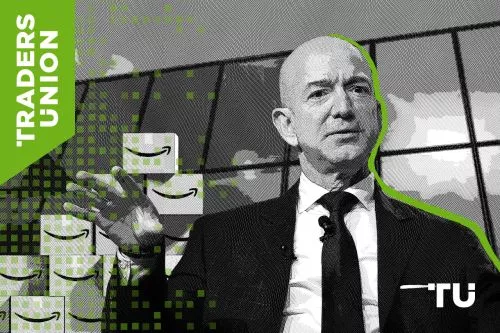
Amazon founder Jeff Bezos has argued that success and enormous wealth do not make someone a bad person. However, public attitudes toward billionaires are becoming increasingly divided. Why does wealth inspire admiration in some people and resentment in others?
The controversial statement came during an interview with Fox News, in which Jeff Bezos used the restaurant business as an example. According to him, an entrepreneur can start with a small food stand employing 10 people, turn it into a chain with thousands of locations, and eventually become a billionaire. He pointed to Raising Cane's, a popular American fast-food restaurant chain.
"There's nothing wrong with making unbelievably good chicken that people love. And it doesn't make him a bad person," Bezos said. He also criticized the idea that entrepreneurial success necessarily comes at the expense of others.
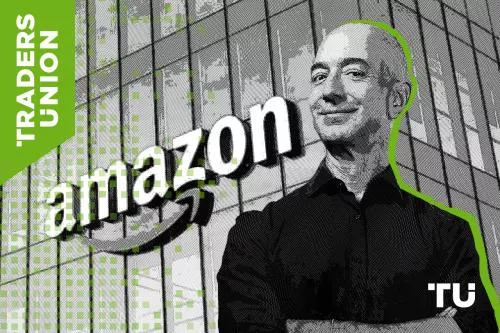
Bezos himself founded Amazon in 1994 as an online bookstore, and today the company ranks first on the Fortune 500 list. His personal fortune is estimated at around $380 billion. The businessman believes politicians should focus on solving real economic problems rather than blaming wealthy entrepreneurs.
Former Starbucks CEO Howard Schultz, whose net worth is estimated at $3.4 billion, shares a similar view. During a U.S. Senate hearing in 2023, he recalled growing up in federally subsidized housing and noted that his parents never owned a home. "Yes, I have billions of dollars. I earned it. No one gave it to me," Schultz said.
JPMorgan Chase CEO Jamie Dimon, who has a fortune of around $3 billion, has also spoken out against condemning people simply for their financial achievements. In an interview, he argued that society should not vilify those who have worked hard to achieve success.
Not everyone shares Bezos' views. According to a Pew Research Center study, 18% of Americans consider extreme wealth morally wrong. Among young adults aged 18 to 29, that figure rises to 33%, compared with just 10% among Americans aged 65 and older.
View post on X Loading...
One reason for this dissatisfaction can be found in the distribution of global wealth. According to the World Inequality Report 2026, the richest 10% of the population own 75% of the world's wealth. The wealthiest 1% alone hold 37%, while the poorest half of humanity owns just 2%.
One reason for this gap is that large amounts of capital are much easier to grow. For example, with an annual investment return of 10%, someone investing $10,000 would earn $1,000, while a person with $1 billion would make $100 million. Wealthy investors can also diversify their assets, borrow against their holdings, and participate in investment deals unavailable to most people.
This is why earning the first million is often harder than earning the next ones. Accumulating that initial sum may require years of work or building a business, while an established fortune can generate income without its owner's direct involvement.
Elon Musk remains one of the world's most controversial wealthy individuals. On October 5, his net worth once again exceeded $1 trillion after SpaceX shares jumped nearly 8%. However, criticism of his actions has grown alongside his wealth.
View post on X Loading...
One of the main controversies involves Twitter, which Musk acquired in 2022 for $44 billion and later renamed X. Following the acquisition, he laid off a significant portion of the workforce and relaxed content moderation rules. The platform faced growing criticism over misinformation and hate speech, while several major advertisers suspended their partnerships. Musk defended the changes as a way to protect freedom of speech.
Another major controversy involved the Starlink satellite system, which Ukrainian forces use for communications. As the Financial Times reported, during Ukraine's counteroffensive in autumn 2022, some military units experienced Starlink outages that complicated combat operations. Reports later emerged that Musk had personally ordered restrictions on Starlink coverage in certain areas of the front. However, his direct involvement in those particular outages was never established.
Critics also point to Musk's close ties to the U.S. government. SpaceX has secured billions of dollars in defense contracts, while Musk maintains relationships with the Donald Trump administration. By October 2026, SpaceX had received more than $12.7 billion in contracts from the U.S. Department of Defense.
Debates over billionaire fortunes increasingly lead to discussions about taxation. In May 2026, Jeff Bezos proposed eliminating federal income taxes for the lowest-earning half of Americans. According to him, this group accounts for just 3% of federal income tax revenue, meaning the government could afford to give up that money.
As an example, Bezos pointed to a nurse in New York City earning $75,000 a year while paying more than $1,000 a month in taxes. The billionaire believes that money would be better spent on housing, groceries, and other everyday expenses. Meanwhile, according to the Tax Foundation, the wealthiest 1% of U.S. taxpayers account for around 40% of federal individual income tax revenue.
However, another approach is to make billionaires pay higher taxes. In 2024, Brazil proposed that G20 countries introduce a minimum annual tax equivalent to 2% of billionaires' wealth. According to calculations by economist Gabriel Zucman, such a measure could generate between $200 billion and $250 billion annually for governments worldwide, affecting around 3,000 of the world's wealthiest individuals. The proposal has not yet become a binding international rule. Supporters believe it could help reduce inequality, while opponents warn of difficulties in valuing assets and the potential movement of capital to countries with lower taxes.
Wealth itself does not make someone a bad person, and a successful business can benefit millions of people. However, enormous fortunes also bring tremendous power that is not always easy to hold accountable. Musk's story illustrates how the decisions of a single entrepreneur can affect the interests of entire countries. That is why public criticism of billionaires is not only about how much money they have accumulated, but also about how they use their wealth and influence.


 Afghanistan
 Albania
 Algeria
 Angola
 Argentina
 Armenia
 Australia
 Austria
 Azerbaijan
 Bahamas
 Bahrain
 Bangladesh
 Belarus
 Belgium
 Bolivia
 Botswana
 Brazil
 Brunei
 Bulgaria
 Cambodia
 Cameroon
 Canada
 Chile
Chile
 China
China
 Colombia
 Congo
Congo
 Costa Rica
 Cote d'Ivoire
 Croatia
 Cuba
Cuba
 Cyprus
 Czechia
 DR Congo
 Denmark
 Dominican Republic
 Ecuador
 Egypt
Egypt
 El Salvador
 Estonia
 Eswatini
 Ethiopia
 Finland
 France
 Georgia
 Germany
 Ghana
Ghana
 Greece
 Haiti
Haiti
 Hong Kong
 Hungary
 India
India
 Indonesia
 Iran, Islamic republic
 Iraq
Iraq
 Ireland
 Israel
 Italy
Italy
 Jamaica
 Japan
Japan
 Jordan
 Kazakhstan
 Kenya
Kenya
 Korea
Korea
 Kuwait
 Kyrgyzstan
 Laos
Laos
 Latvia
 Lebanon
 Lesotho
 Libya
Libya
 Lithuania
 Luxembourg
 Madagascar
 Malaysia
 Malta
Malta
 Mauritius
 Mexico
 Moldova
 Mongolia
 Montenegro
 Morocco
 Mozambique
 Myanmar
 Namibia
 Nepal
Nepal
 Netherlands
 New Zealand
 Nigeria
 North Macedonia
 Norway
 Oman
Oman
 Pakistan
 Palestine
 Panama
 Papua New Guinea
 Paraguay
 Peru
Peru
 Philippines
 Poland
 Portugal
 Puerto Rico
 Qatar
Qatar
 Reunion
 Romania
 Rwanda
 Saudi Arabia
 Serbia
 Singapore
 Slovakia
 Slovenia
 Somalia
 South Africa
 Spain
Spain
 Sri Lanka
 Sweden
 Switzerland
 Syria
Syria
 Taiwan
 Tajikistan
 Tanzania
 Thailand
 Trinidad and Tobago
 Tunisia
 Turkey
 UAE
UAE
 Uganda
 Ukraine
 United Kingdom
United States
United Kingdom
United States
 Uruguay
 Uzbekistan
 Venezuela
 Vietnam
 Yemen
Yemen
 Zambia
 Zimbabwe