The tweet was deleted by the author.
But we saved everything 🙂.

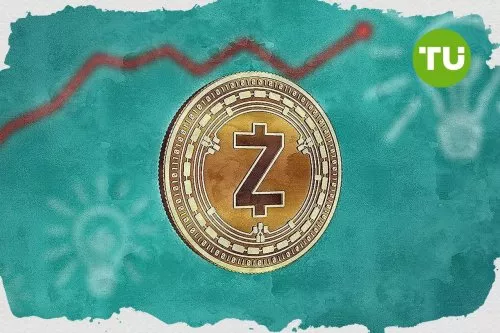
On October 2, the crypto world started talking about Zcash again. The privacy token, which many had already written off, surged more than 60%, reaching a three-year high of $158. Over the past week, it gained nearly 135%, making it one of the most dynamic altcoins of the season. The frenzy lifted the coin in the rankings from the 90s into the 60s among cryptocurrencies by market capitalization, while daily trading volumes jumped by 217%.
The main trigger was the launch of the Grayscale Zcash Trust (ZCSH), which opened access to Zcash for accredited investors without the need to purchase the token directly. This created a wave of interest among traditional market players. Adding fuel to the fire were social media discussions: well-known entrepreneurs and crypto influencers began openly comparing Zcash to Bitcoin and even calling it a “hedge against Bitcoin.”
To understand why this phrase resonates so strongly today, we need to look back nine years, to the birth of Zcash.
Zcash appeared in October 2016, when the crypto world was still young and full of romance. Its creator was cryptographer and information security specialist Zooko Wilcox, who assembled a team of researchers from leading universities — MIT, Johns Hopkins, Technion, and Tel Aviv University. Together, they aimed to accomplish what previous projects could not: to create a truly private blockchain. Thus was born the Electronic Coin Company, which raised several million dollars in funding and introduced the first protocol where privacy was mathematically guaranteed.
The launch was explosive. In the first days of trading, the coin shot up to nearly $6,000 — a figure that seemed incredible even in a heated crypto market. But euphoria quickly gave way to cold skepticism.
Controversy followed Zcash from the very beginning. The biggest questions revolved around the so-called “trusted setup” — the ceremony during which the network’s key parameters were generated. According to the rules, all keys had to be destroyed afterward. But what if someone kept them? Wouldn’t that make it possible to mint invisible coins? No evidence was ever found, but the mere possibility frightened investors.
Another problem was the difficulty of using shielded addresses. Although anonymity was supposed to be Zcash’s main advantage, most exchanges did not support shielded transactions. Users chose simplicity and stuck to transparent addresses. Meanwhile, competitor Monero was capturing the market with privacy that was easier and more intuitive.
The result was painful. From its record highs near $6,000, Zcash fell more than 97%, lingering in the shadows for a long time.
Yet despite the crash, the project continued to live and evolve. The network went through a series of upgrades: from Overwinter and Sapling to Blossom, Heartwood, and Canopy. Each was aimed at making the system simpler, faster, and more reliable. Equally important was the issue of funding. At the start, twenty percent of all new coins went to the so-called Founders Reward — for developers and early investors.
This decision provoked heavy criticism, with part of the community seeing it as a “tax” on users. In November 2020, the model was changed: 80% of rewards now go to miners, while the remainder is split among the grant fund, ECC, and the Zcash Foundation. After the halving, the block reward stood at 3.125 ZEC.
But even this model has not proven final. In 2025, the community is engaged in heated debates: should the so-called Dev Fund continue after November, when its term ends, or should all rewards return to miners? The outcome of this debate may be decisive — it will determine whether Zcash has the resources to keep developing in the future.
To understand why discussions about Zcash and Bitcoin never cease, one must look at how they work. Bitcoin is built on absolute transparency: every transaction can be traced, even if an address looks anonymous. This ensures trust, but it also makes Bitcoin a perfect target for analytics and regulators.Zcash chose a different path. It retained the same deflationary model with a limit of 21 million coins but added the zk-SNARKs technology. Thanks to these proofs, users can hide all transaction details — addresses, amounts, participants. The network confirms validity without revealing anything. If transparency is required, the owner can provide a so-called view key, which opens information for read-only access. In this way, Zcash became not just an anonymous asset but a flexible tool: it allows one to remain invisible, yet, if necessary, leave a “window” for auditing.
And here lies the paradox. Despite marketing itself as a privacy coin, over 99% of Zcash transactions remain transparent. This suggests that privacy is more rhetoric than practice. Yet in a world where governments are developing central bank digital currencies, even the simple right to remain invisible is gaining new value.
Now, after years of obscurity, Zcash is back in the spotlight. Its rapid rise in October 2025 serves as a reminder that demand for privacy never truly disappears. Whether this surge marks a new beginning or just another short-lived spike remains to be seen. But one thing is already clear: Zcash will always be more than just a coin. It is a symbol of the ongoing struggle between transparency and secrecy, between control and freedom.
Bitcoin became the banner of independence from the banking system. Zcash wants to become the banner of independence from total surveillance. And perhaps, that is its true mission.

 Afghanistan
 Albania
 Algeria
 Angola
 Argentina
 Armenia
 Australia
 Austria
 Azerbaijan
 Bahamas
 Bahrain
 Bangladesh
 Belarus
 Belgium
 Bolivia
 Botswana
 Brazil
 Brunei
 Bulgaria
 Cambodia
 Cameroon
 Canada
 Chile
Chile
 China
China
 Colombia
 Congo
Congo
 Costa Rica
 Cote d'Ivoire
 Croatia
 Cuba
Cuba
 Cyprus
 Czechia
 DR Congo
 Denmark
 Dominican Republic
 Ecuador
 Egypt
Egypt
 El Salvador
 Estonia
 Eswatini
 Ethiopia
 Finland
 France
 Georgia
 Germany
 Ghana
Ghana
 Greece
 Haiti
Haiti
 Hong Kong
 Hungary
 India
India
 Indonesia
 Iran, Islamic republic
 Iraq
Iraq
 Ireland
 Israel
 Italy
Italy
 Jamaica
 Japan
Japan
 Jordan
 Kazakhstan
 Kenya
Kenya
 Korea
Korea
 Kuwait
 Kyrgyzstan
 Laos
Laos
 Latvia
 Lebanon
 Lesotho
 Libya
Libya
 Lithuania
 Luxembourg
 Madagascar
 Malaysia
 Malta
Malta
 Mauritius
 Mexico
 Moldova
 Mongolia
 Montenegro
 Morocco
 Mozambique
 Myanmar
 Namibia
 Nepal
Nepal
 Netherlands
 New Zealand
 Nigeria
 North Macedonia
 Norway
 Oman
Oman
 Pakistan
 Palestine
 Panama
 Papua New Guinea
 Paraguay
 Peru
Peru
 Philippines
 Poland
 Portugal
 Puerto Rico
 Qatar
Qatar
 Reunion
 Romania
 Rwanda
 Saudi Arabia
 Serbia
 Singapore
 Slovakia
 Slovenia
 Somalia
 South Africa
 Spain
Spain
 Sri Lanka
 Sweden
 Switzerland
 Syria
Syria
 Taiwan
 Tajikistan
 Tanzania
 Thailand
 Trinidad and Tobago
 Tunisia
 Turkey
 UAE
UAE
 Uganda
 Ukraine
 United Kingdom
United States
United Kingdom
United States
 Uruguay
 Uzbekistan
 Venezuela
 Vietnam
 Yemen
Yemen
 Zambia
 Zimbabwe