
Tesla stock stabilizes above $430 amid renewed Dojo3 supercomputer development
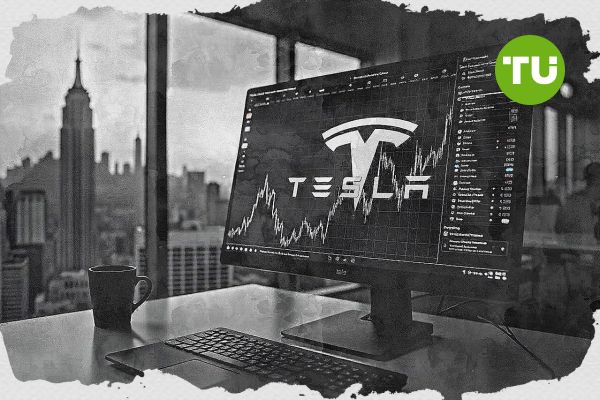
As of January 19, Tesla stock is trading at $437.44, down 0.3% in the past 24 hours, as investors weigh Elon Musk’s renewed push into the Dojo3 supercomputing project against mixed technical signals and market uncertainty.
Highlights
- Tesla is restarting development of its Dojo3 supercomputer, aiming to boost AI capabilities for FSD and robotics.
- The stock is consolidating near $437, facing resistance below the 200-day moving average.
- Investors remain cautious, awaiting clearer signals on execution and broader tech momentum.
Tesla (TSLA) shares have been consolidating within a range over the past several weeks, now hovering just below the 200-day moving average. As of the latest data, the 200-day MA sits at $457.21, while the 50-day MA is at $237.81, reflecting the elevated price range from the stock’s Q4 2023 rally. The stock’s current price of $437.44 places it in a tight band between short-term support near $430 and resistance at $460–$480, a region that aligns with its December highs.
Recent momentum indicators show neutral-to-slightly-bearish signals. The Relative Strength Index (RSI) is trending sideways near 49, neither oversold nor overbought, and the Moving Average Convergence Divergence (MACD) histogram has been flattening, indicating a lack of strong directional momentum. Volume remains steady but uninspiring, suggesting investor hesitation to commit in either direction ahead of key earnings or strategic developments.

Tesla stock price dynamics (November 2025 - January 2025). Source: TradingView
Support zones to watch are $420–$430, where the stock has recently found buying interest. If this level fails, a deeper retracement could target the $380–$400 region, where the last major demand cluster formed in October 2023. On the upside, bulls need a close above $460, followed by confirmation above the $480–$500 level to re-establish a bullish trend with strong conviction. Until then, the stock remains directionless in a broad consolidation channel.
Dojo3 Revival — AI supercomputing back on Tesla’s roadmap
Tesla's CEO Elon Musk announced that the company is restarting its efforts on the Dojo3 supercomputer project, reversing a prior decision to wind down its in-house AI training infrastructure. The new push is reportedly backed by “progress on the AI5 chip design,” which Musk cited as a catalyst for relaunching Dojo3 development.
This marks a significant strategic reversal. In 2025, Tesla halted development of its in-house Dojo supercomputer, originally launched in 2021 as an ambitious AI training platform for its Full Self-Driving (FSD) system and the Optimus humanoid robot. At that time, critics viewed the original Dojo cancellation as a concession that Tesla lacked the scale or hardware expertise to compete in custom AI infrastructure. The abrupt about-face now raises questions about continuity and execution, but it also revives the narrative that Tesla is building a vertically integrated AI stack — encompassing hardware, software, and training — to support its broader ambitions in autonomous driving and robotics.
If successful, Dojo3 could offer Tesla long-term strategic advantages. Proprietary compute hardware tailored for real-time video inference could enhance the scalability and cost efficiency of Tesla’s Full Self-Driving (FSD) platform, improve data training cycles, and reduce reliance on external vendors. However, the market reaction has been muted so far, reflecting skepticism about the near-term viability of the project or its earnings impact.
Breakout possible, but momentum lacking
In a bullish scenario, if Tesla delivers upside earnings surprises or makes visible progress on Dojo3 integration, buyers could step in above the 200-day MA, propelling the stock toward $500+, revisiting late-2023 highs. Sustained volume expansion and improved risk appetite in the broader tech sector would likely be required to support such a breakout.
In a bearish scenario, failure to regain the 200-day MA coupled with disappointing execution on Dojo3 or weakening EV delivery guidance could pull shares back to test the $400 level, with downside extending toward $380 under pressure. This move would likely be accelerated by broader market risk-off sentiment or renewed concerns over margins and pricing competition in the EV sector.
Tesla’s Model Y was the best-selling vehicle in the U.S. in 2025, marking a major win for the brand despite growing competition. However, overall Q4 deliveries fell 15% year-over-year, and Tesla lost its position as the world’s top EV maker to BYD.








-
 Afghanistan
-
 Albania
-
 Algeria
-
 Angola
-
 Argentina
-
 Armenia
-
 Australia
-
 Austria
-
 Azerbaijan
-
 Bahamas
-
 Bahrain
-
 Bangladesh
-
 Belarus
-
 Belgium
-
 Bolivia
-
 Botswana
-
 Brazil
-
 Brunei
-
 Bulgaria
-
 Cambodia
-
 Cameroon
-
 Canada
-
 Chile
Chile
-
 China
China
-
 Colombia
-
 Congo
Congo
-
 Costa Rica
-
 Cote d'Ivoire
-
 Croatia
-
 Cuba
Cuba
-
 Cyprus
-
 Czechia
-
 DR Congo
-
 Denmark
-
 Dominican Republic
-
 Ecuador
-
 Egypt
Egypt
-
 El Salvador
-
 Estonia
-
 Eswatini
-
 Ethiopia
-
 Finland
-
 France
-
 Georgia
-
 Germany
-
 Ghana
Ghana
-
 Greece
-
 Haiti
Haiti
-
 Hong Kong
-
 Hungary
-
 India
India
-
 Indonesia
-
 Iran, Islamic republic
-
 Iraq
Iraq
-
 Ireland
-
 Israel
-
 Italy
Italy
-
 Jamaica
-
 Japan
Japan
-
 Jordan
-
 Kazakhstan
-
 Kenya
Kenya
-
 Korea
Korea
-
 Kuwait
-
 Kyrgyzstan
-
 Laos
Laos
-
 Latvia
-
 Lebanon
-
 Lesotho
-
 Libya
Libya
-
 Lithuania
-
 Luxembourg
-
 Madagascar
-
 Malaysia
-
 Malta
Malta
-
 Mauritius
-
 Mexico
-
 Moldova
-
 Mongolia
-
 Montenegro
-
 Morocco
-
 Mozambique
-
 Myanmar
-
 Namibia
-
 Nepal
Nepal
-
 Netherlands
-
 New Zealand
-
 Nigeria
-
 North Macedonia
-
 Norway
-
 Oman
Oman
-
 Pakistan
-
 Palestine
-
 Panama
-
 Papua New Guinea
-
 Paraguay
-
 Peru
Peru
-
 Philippines
-
 Poland
-
 Portugal
-
 Puerto Rico
-
 Qatar
Qatar
-
 Reunion
-
 Romania
-
 Rwanda
-
 Saudi Arabia
-
 Serbia
-
 Singapore
-
 Slovakia
-
 Slovenia
-
 Somalia
-
 South Africa
-
 Spain
Spain
-
 Sri Lanka
-
 Sweden
-
 Switzerland
-
 Syria
Syria
-
 Taiwan
-
 Tajikistan
-
 Tanzania
-
 Thailand
-
 Trinidad and Tobago
-
 Tunisia
-
 Turkey
-
 UAE
UAE
-
 Uganda
-
 Ukraine
-
 United Kingdom
-
United States
-
 Uruguay
-
 Uzbekistan
-
 Venezuela
-
 Vietnam
-
 Yemen
Yemen
-
 Zambia
-
 Zimbabwe
- Forex
- Crypto











