
WTI crude oil price holds below $59 as demand concerns return
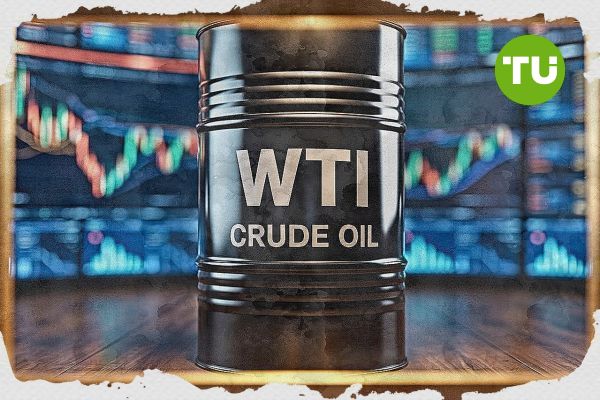
WTI crude oil is back under pressure after failing to build on its recent rebound, with prices trading just below $59 per barrel on Monday. The pullback follows a fourth straight weekly gain, but momentum has clearly stalled as the geopolitical risk premium fades and traders refocus on demand and supply balance, shifting the tone from cautious optimism to renewed hesitation.
Highlights
- WTI trades just under $59 after failing to hold gains from its recent rebound.
- Price remains capped by key EMAs, with resistance clustered near $60-$61.
- Cooling geopolitical risk and fresh trade tensions weigh on demand expectations.
The latest move reflects a market that has repriced risk lower and is now questioning whether recent gains can be sustained. With volatility easing and buying interest thinning, crude has slipped back into a consolidation that favors sellers unless new catalysts emerge.
Bearish structure caps recovery attempts
On the daily chart, WTI remains trapped in a broader downtrend despite the late-December bounce. Price continues to trade below all major EMAs, keeping the medium-term structure bearish. The 20-day EMA near $58.7 is offering near-term support, but the 50-day EMA around $58.9 and the 100-day EMA close to $60.1 have repeatedly capped upside attempts. Above that, the 200-day EMA near $62.5 stands as a distant ceiling, underscoring how far the market remains from restoring trend credibility.

WTI crude oil price dynamics (Source: TradingView)
This alignment keeps rallies suspect. As long as WTI remains below the $60-$61 zone, upside moves look corrective rather than trend-changing. The failure to establish acceptance above those levels has reinforced a sell-on-strength dynamic, with traders quick to fade advances as momentum wanes.
Momentum indicators mirror this indecision. Daily RSI is hovering just above 50, signaling neutral conditions after rebounding from oversold levels earlier in the move. While this suggests selling pressure has eased, it also confirms that buyers lack the strength needed to force a sustained breakout. There is no bullish momentum expansion in place, leaving downside risk active if support gives way.
Intraday price action reinforces the cautious tone. On the 30-minute chart, WTI briefly pushed toward the $60 area before rolling over again. Supertrend has flipped bearish, and Parabolic SAR sits above price, indicating sellers are regaining short-term control. Trading has turned choppy and overlapping, a hallmark of consolidation rather than directional conviction. Immediate support is forming in the $58.5-$58.7 zone, while $59.5-$60 remains firm resistance.
Fundamentals cool as demand risks resurface
Fundamental drivers are adding to the pressure. Geopolitical tension surrounding Iran has eased after President Donald Trump signaled a potential delay in military action, reducing immediate fears of supply disruptions. That shift has stripped away part of the risk premium that helped support crude earlier in the rally.
At the same time, demand-side concerns are resurfacing. The U.S. announcement of a 10% tariff on goods from eight European countries starting February 1 has raised the risk of renewed trade tensions, with the possibility of escalation later in the year. Markets are increasingly sensitive to signs that global growth could slow, particularly if trade frictions intensify.
Those concerns are colliding with expectations of a potential supply surplus. While regional disruptions persist, including export issues from Kazakhstan linked to Black Sea constraints, broader supply growth continues to loom. The balance between localized outages and global production has left traders reluctant to chase prices higher without clearer evidence of tightening fundamentals.
From a positioning standpoint, the market appears to be reassessing exposure. Recent gains attracted short-covering rather than fresh long accumulation, and as momentum faded, sellers re-emerged. This behavior aligns with the technical picture, where key resistance levels remain intact and rallies struggle to gain follow-through.
Market outlook
WTI remains a sell-the-rally market unless proven otherwise. Below $60, sellers retain control, with downside risk toward $58 and potentially $56.5 if support breaks. Those levels mark the next areas where buyers may attempt to defend price, but there is limited evidence so far of strong demand waiting below.
On the upside, a sustained daily close above $61 would be required to shift the bias toward a more durable recovery and challenge the broader downtrend. Without that confirmation, crude is likely to remain range-bound within a bearish framework.
Previously, we noted that WTI’s rebound was heavily dependent on elevated geopolitical risk and struggled to gain traction above declining moving averages. The latest pullback reinforces that view. With geopolitics no longer strong enough on their own to override structural weakness, the next move in crude is likely to hinge on demand signals, trade developments, and whether support near the high $58s can continue to hold.





Latest WTI News








-
 Afghanistan
-
 Albania
-
 Algeria
-
 Angola
-
 Argentina
-
 Armenia
-
 Australia
-
 Austria
-
 Azerbaijan
-
 Bahamas
-
 Bahrain
-
 Bangladesh
-
 Belarus
-
 Belgium
-
 Bolivia
-
 Botswana
-
 Brazil
-
 Brunei
-
 Bulgaria
-
 Cambodia
-
 Cameroon
-
 Canada
-
 Chile
Chile
-
 China
China
-
 Colombia
-
 Congo
Congo
-
 Costa Rica
-
 Cote d'Ivoire
-
 Croatia
-
 Cuba
Cuba
-
 Cyprus
-
 Czechia
-
 DR Congo
-
 Denmark
-
 Dominican Republic
-
 Ecuador
-
 Egypt
Egypt
-
 El Salvador
-
 Estonia
-
 Eswatini
-
 Ethiopia
-
 Finland
-
 France
-
 Georgia
-
 Germany
-
 Ghana
Ghana
-
 Greece
-
 Haiti
Haiti
-
 Hong Kong
-
 Hungary
-
 India
India
-
 Indonesia
-
 Iran, Islamic republic
-
 Iraq
Iraq
-
 Ireland
-
 Israel
-
 Italy
Italy
-
 Jamaica
-
 Japan
Japan
-
 Jordan
-
 Kazakhstan
-
 Kenya
Kenya
-
 Korea
Korea
-
 Kuwait
-
 Kyrgyzstan
-
 Laos
Laos
-
 Latvia
-
 Lebanon
-
 Lesotho
-
 Libya
Libya
-
 Lithuania
-
 Luxembourg
-
 Madagascar
-
 Malaysia
-
 Malta
Malta
-
 Mauritius
-
 Mexico
-
 Moldova
-
 Mongolia
-
 Montenegro
-
 Morocco
-
 Mozambique
-
 Myanmar
-
 Namibia
-
 Nepal
Nepal
-
 Netherlands
-
 New Zealand
-
 Nigeria
-
 North Macedonia
-
 Norway
-
 Oman
Oman
-
 Pakistan
-
 Palestine
-
 Panama
-
 Papua New Guinea
-
 Paraguay
-
 Peru
Peru
-
 Philippines
-
 Poland
-
 Portugal
-
 Puerto Rico
-
 Qatar
Qatar
-
 Reunion
-
 Romania
-
 Rwanda
-
 Saudi Arabia
-
 Serbia
-
 Singapore
-
 Slovakia
-
 Slovenia
-
 Somalia
-
 South Africa
-
 Spain
Spain
-
 Sri Lanka
-
 Sweden
-
 Switzerland
-
 Syria
Syria
-
 Taiwan
-
 Tajikistan
-
 Tanzania
-
 Thailand
-
 Trinidad and Tobago
-
 Tunisia
-
 Turkey
-
 UAE
UAE
-
 Uganda
-
 Ukraine
-
 United Kingdom
-
United States
-
 Uruguay
-
 Uzbekistan
-
 Venezuela
-
 Vietnam
-
 Yemen
Yemen
-
 Zambia
-
 Zimbabwe
- Forex
- Crypto












