


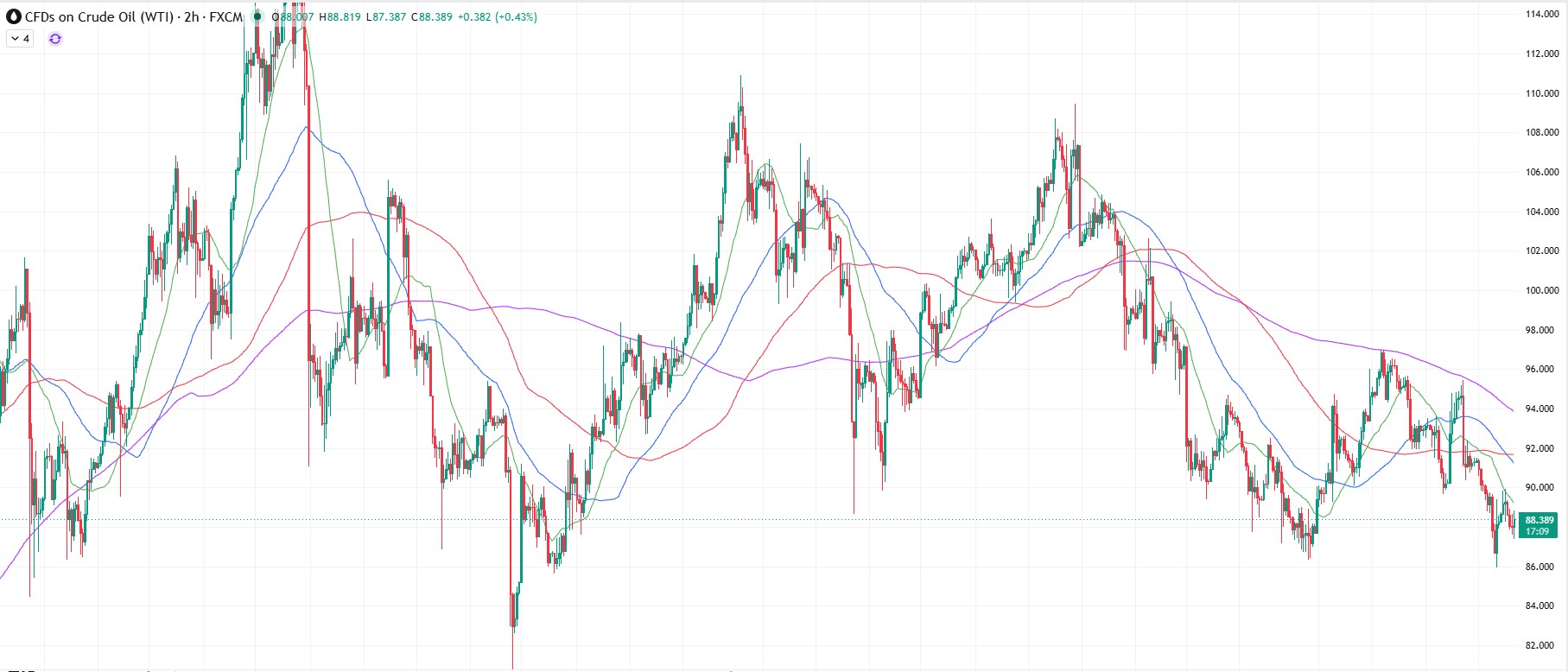
WTI continues to correct after the spike in volatility seen in May. As of June 10, prices fell into the $88–90 per barrel range, losing around 10% over the past month and more than 7% since the beginning of June, as the market gradually removes part of the geopolitical risk premium that had supported prices during the spring.
What's weighing on prices
The main factor remains deteriorating expectations for global demand. Weak crude oil import data from China have intensified concerns about the pace of recovery in the world's largest oil importer. In addition, investors are assessing the risks of a global economic slowdown and more cautious fuel consumption forecasts for the second half of the year.
In its May report, the International Energy Agency (IEA) revised down its outlook for global oil demand in 2026 and expects consumption to decline compared with last year's levels. The agency also highlighted the impact of high fuel prices and weaker economic activity.
Supply and inventory factors
Support for the market comes from the inventory situation in the United States. According to the latest API data, commercial crude oil inventories declined by more than 9 million barrels, reaching their lowest levels in roughly four months. However, even such a significant drawdown has not been enough to reverse bearish sentiment, as market participants view demand concerns as more important than localized inventory declines.
Another source of uncertainty remains the situation in the Middle East. Although concerns about regional supply disruptions have eased somewhat, any new disruptions could quickly restore a significant risk premium to the market. The EIA continues to note that prices remain highly sensitive to issues affecting oil transportation through key export routes.
Practical takeaway
In the short term, sellers still hold the advantage. As long as WTI remains below the $92–94 zone, the base-case scenario is continued trading within the $85–90 range, with the risk of testing the lower boundary. For a bullish reversal to develop, the market would need either signs of recovering Chinese demand or a new geopolitical catalyst capable of reigniting supply concerns.
The key drivers in the coming weeks will remain U.S. oil inventory data, Chinese import statistics, and any news related to oil supplies from Middle Eastern countries. At present, the fundamental backdrop favors consolidation or moderate downside rather than a sustained upward trend.
Near-term outlook
At the moment, pressure on WTI prices persists, although the risk of further escalation in the Middle East is limiting downside potential. Yesterday, buyers stepped in when WTI fell to $86 per barrel, and today support emerged again around $87.4 per barrel. If prices remain below $88.8, the risk of breaking current support and retesting yesterday's low will dominate. A breakout above this resistance level would open the way for a move toward the $89.6–90 range.
Further escalation of tensions in the Middle East, as discussed in WTI declines as geopolitical premium fades, could support a move back above $90 per barrel.





Latest WTI News




-
 Afghanistan
-
 Albania
-
 Algeria
-
 Angola
-
 Argentina
-
 Armenia
-
 Australia
-
 Austria
-
 Azerbaijan
-
 Bahamas
-
 Bahrain
-
 Bangladesh
-
 Belarus
-
 Belgium
-
 Bolivia
-
 Botswana
-
 Brazil
-
 Brunei
-
 Bulgaria
-
 Cambodia
-
 Cameroon
-
 Canada
-
 Chile
Chile
-
 China
China
-
 Colombia
-
 Congo
Congo
-
 Costa Rica
-
 Cote d'Ivoire
-
 Croatia
-
 Cuba
Cuba
-
 Cyprus
-
 Czechia
-
 DR Congo
-
 Denmark
-
 Dominican Republic
-
 Ecuador
-
 Egypt
Egypt
-
 El Salvador
-
 Estonia
-
 Eswatini
-
 Ethiopia
-
 Finland
-
 France
-
 Georgia
-
 Germany
-
 Ghana
Ghana
-
 Greece
-
 Haiti
Haiti
-
 Hong Kong
-
 Hungary
-
 India
India
-
 Indonesia
-
 Iran, Islamic republic
-
 Iraq
Iraq
-
 Ireland
-
 Israel
-
 Italy
Italy
-
 Jamaica
-
 Japan
Japan
-
 Jordan
-
 Kazakhstan
-
 Kenya
Kenya
-
 Korea
Korea
-
 Kuwait
-
 Kyrgyzstan
-
 Laos
Laos
-
 Latvia
-
 Lebanon
-
 Lesotho
-
 Libya
Libya
-
 Lithuania
-
 Luxembourg
-
 Madagascar
-
 Malaysia
-
 Malta
Malta
-
 Mauritius
-
 Mexico
-
 Moldova
-
 Mongolia
-
 Montenegro
-
 Morocco
-
 Mozambique
-
 Myanmar
-
 Namibia
-
 Nepal
Nepal
-
 Netherlands
-
 New Zealand
-
 Nigeria
-
 North Macedonia
-
 Norway
-
 Oman
Oman
-
 Pakistan
-
 Palestine
-
 Panama
-
 Papua New Guinea
-
 Paraguay
-
 Peru
Peru
-
 Philippines
-
 Poland
-
 Portugal
-
 Puerto Rico
-
 Qatar
Qatar
-
 Reunion
-
 Romania
-
 Rwanda
-
 Saudi Arabia
-
 Serbia
-
 Singapore
-
 Slovakia
-
 Slovenia
-
 Somalia
-
 South Africa
-
 Spain
Spain
-
 Sri Lanka
-
 Sweden
-
 Switzerland
-
 Syria
Syria
-
 Taiwan
-
 Tajikistan
-
 Tanzania
-
 Thailand
-
 Trinidad and Tobago
-
 Tunisia
-
 Turkey
-
 UAE
UAE
-
 Uganda
-
 Ukraine
-
 United Kingdom
-
United States
-
 Uruguay
-
 Uzbekistan
-
 Venezuela
-
 Vietnam
-
 Yemen
Yemen
-
 Zambia
-
 Zimbabwe
- Forex
- Crypto












